Safety Tips for Working in the Heat
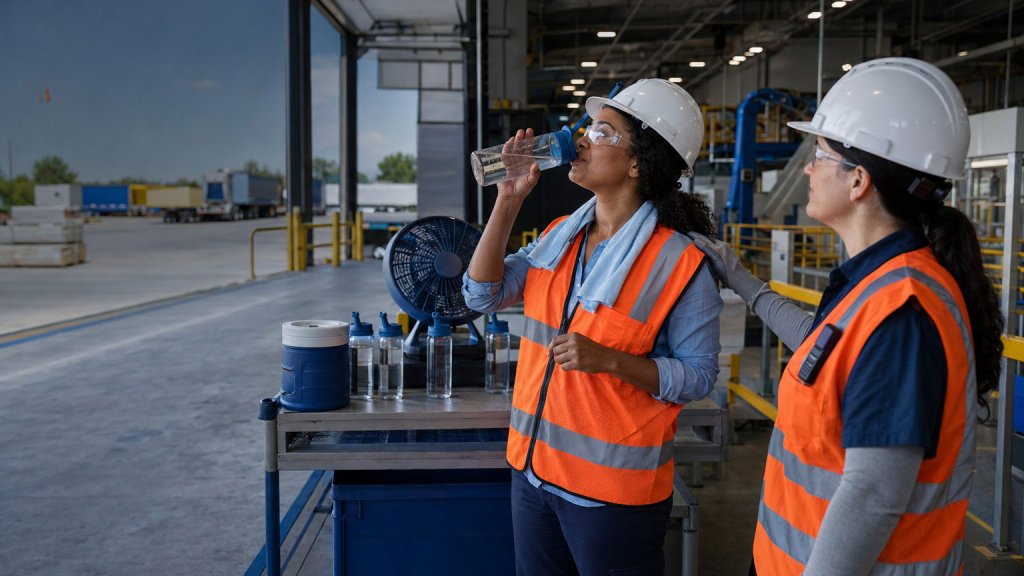
Hot weather and heat-producing indoor operations can expose workers to dangerous levels of heat. Warehouses, manufacturing facilities, fulfillment centers, distribution centers, construction sites, and other workplaces may all experience elevated heat risk, driven by temperature, humidity, physical workload, radiant heat, limited airflow, and required protective clothing or equipment.
At KPI Solutions, health and safety sit at the center of how we operate. Our commitment runs year-round, and we expect the same standards from the suppliers and subcontractors who work alongside us.
Heat stress is a serious risk to both health and performance. This guide explains what heat stress is, the forms it takes, and the dangers it creates, then covers how to plan ahead and walks through ten practical steps to keep you and your team safe and productive. It also covers where heat safety regulations stand in 2026, so safety leaders know what is expected of them right now.
Where Heat Safety Rules Stand
For years, heat protection on the job was guided mostly by best practices rather than a single national rule. That is still largely the case, but the landscape is changing, and employers should understand the current picture.
OSHA continues to work on a federal Heat Injury and Illness Prevention standard. The agency published its proposed rule in August 2024, held public hearings through mid-2025, and closed the post-hearing comment period in late 2025. As of July 2026, the rule remains proposed and has not been finalized. As written, it would require covered employers to build a written heat injury and illness prevention plan, with protective measures starting at a heat index of 80°F and stronger measures kicking in at 90°F.
Two points matter for employers in the meantime. First, OSHA can still cite heat hazards today under the General Duty Clause, which requires a workplace free from recognized hazards likely to cause serious harm. A federal heat standard is not required for the agency to act on dangerous heat conditions, and OSHA updated its heat-related National Emphasis Program in April 2026, renewing its enforcement focus ahead of the summer season. Second, several states already enforce their own heat illness prevention standards, including California, Oregon, Washington, Nevada, Colorado, and Maryland. Companies that operate in those states must meet state requirements regardless of where the federal rule lands.
The practical takeaway is simple. Building a strong heat safety program now protects your people, lowers your risk, and prepares you for whatever framework becomes law. The tips below are a solid foundation for that program.
What is Heat Stress?
Heat stress occurs when the body cannot cool itself fast enough and its core temperature climbs to an unsafe level. In warehouses and distribution centers, where indoor temperatures can run high during summer months, that loss of cooling capacity can quickly affect both health and productivity.
Plan Before Work Begins
Preventing heat-related illness starts before the shift does. Supervisors and safety personnel should build the following into planning whenever heat is a factor:
- Check the heat index or another appropriate heat-risk measure for the day and location.
- Look beyond air temperature. Consider humidity, radiant heat, physical workload, required PPE, and indoor heat sources together, since any one of them can raise risk on its own.
- Confirm water and recovery areas. Make sure cool drinking water and accessible shaded or cooled recovery areas are ready before work starts.
- Set work and rest schedules based on the day’s conditions and the intensity of the work.
- Plan the emergency response. Know in advance how emergency medical services will be contacted and how responders will be directed to the exact work location.
- Watch new and returning workers. Give extra attention to anyone new to the job or coming back after time away, since they have not yet adjusted to the heat.
- Account for individual risk factors. Certain medications and medical conditions can raise a person’s susceptibility to heat. Keep any personal medical information confidential while still planning for safety.
Remember that employers must follow applicable federal and state requirements. OSHA’s federal heat standard remains proposed as of July 2026, but the General Duty Clause and applicable state heat standards still apply, and OSHA updated its heat-related National Emphasis Program in April 2026.
Types of Heat-Related Illness
- Heat Rash: A common heat-related skin irritation that shows up as red clusters of small blisters or bumps. It develops when sweat ducts become clogged.
- Heat Cramps: Painful muscle spasms, usually the result of losing essential minerals and fluids through heavy sweating.
- Heat Exhaustion: A more serious condition caused by dehydration and electrolyte loss. Warning signs include heavy sweating, weakness, dizziness, nausea, and a rapid pulse.
- Heat Stroke: The most severe form of heat-related illness and a life-threatening emergency. It happens when the body’s temperature regulation fails, allowing core temperature to rise dangerously. Symptoms include confusion, loss of consciousness, seizures, and very high body temperature. If heat stroke is suspected, call 911 immediately. Move the person to a cooler area and begin rapid cooling with cold water, ice, wet towels, or cold packs, focusing on the head, neck, and armpits. Stay with the person until emergency help arrives. Do not give fluids to anyone who is confused, unconscious, or unable to drink safely. Note that sweating may still be present during heat stroke, so do not wait for hot, dry skin before acting.
Dangers of Heat Stress
Heat stress threatens both well-being and job performance in several ways:
- Health Issues: Prolonged exposure to high temperatures can trigger heat-related illnesses that range from mild discomfort to life-threatening emergencies.
- Reduced Productivity: Heat strains concentration, slows decision-making, and weakens physical performance, which drags down output and opens the door to safety hazards.
- Accidents and Injuries: Clouded judgment and reduced physical control raise the odds of workplace accidents and injuries.
10 Tips for Working Safely in the Heat
Use these precautions to protect yourself and your team when temperatures climb:
- Stay Hydrated: Drink water steadily through the day, and do not wait until you feel thirsty. A common guideline for moderate work in the heat is about 8 ounces of cool water every 15 to 20 minutes. When sweating continues for several hours, electrolyte-containing beverages may also be appropriate. Avoid alcohol and limit beverages that are very high in caffeine or sugar.
- Dress Appropriately: When the task and required PPE allow it, wear lightweight, breathable, light-colored clothing that helps your body shed heat. For outdoor work, use appropriate sun protection such as a brimmed hard-hat attachment, UV-protective safety eyewear, and sunscreen. If you need to modify or remove PPE to cool down, first move safely out of any area that requires the equipment you are taking off.
- Take Breaks: Build regular breaks into the schedule in shaded or air-conditioned areas so the body has time to recover. Allow for unscheduled breaks when someone needs one.
- Use Cooling Aids: Use cooling towels, misting systems, air conditioning, or other appropriate cooling methods to bring body temperature down. Fans can help under some conditions, but evaluate them carefully in extremely hot environments, since moving very hot air may actually increase heat strain.
- Avoid Peak Heat Hours: Schedule the most physically demanding tasks for the cooler parts of the day, such as early morning or evening, whenever the work allows it.
- Know the Signs: Learn the symptoms of heat stress and stay alert for early warning signs in yourself and your coworkers. Catching trouble early is what prevents an emergency.
- Use the Buddy System: Work in pairs or teams and watch each other for signs of heat-related distress. On extreme heat days, designate someone to monitor conditions and worker health.
- Acclimatize Gradually: When possible, gradually acclimatize both new and returning workers to hot conditions. Returning workers are vulnerable too, after illness, vacation, time away, or a sudden heat wave. A common approach for new workers is to begin with no more than 20 percent of the usual heat-exposure duration on the first day and increase by no more than 20 percent per day. Monitor workers closely during this period, which may take up to 7 to 14 days.
- Train for It: Make sure everyone knows the signs and symptoms of heat stress and understands first aid and emergency response, so the team can act fast when it counts.
- Report Concerns and Act Fast: If symptoms develop, stop work immediately and move to a cooler area. Notify a supervisor or designated safety representative, and do not leave the affected person alone. Call 911 immediately if the person shows confusion, abnormal behavior, loss of consciousness, seizures, or other signs of possible heat stroke.
Your health and safety matter to us above all else. Our Pledge to Safety commits KPI Solutions to setting the example for safe work practices, in every season.
Categories (tags):