What Operations Leaders Need to Know About Forklift and Racking Capabilities
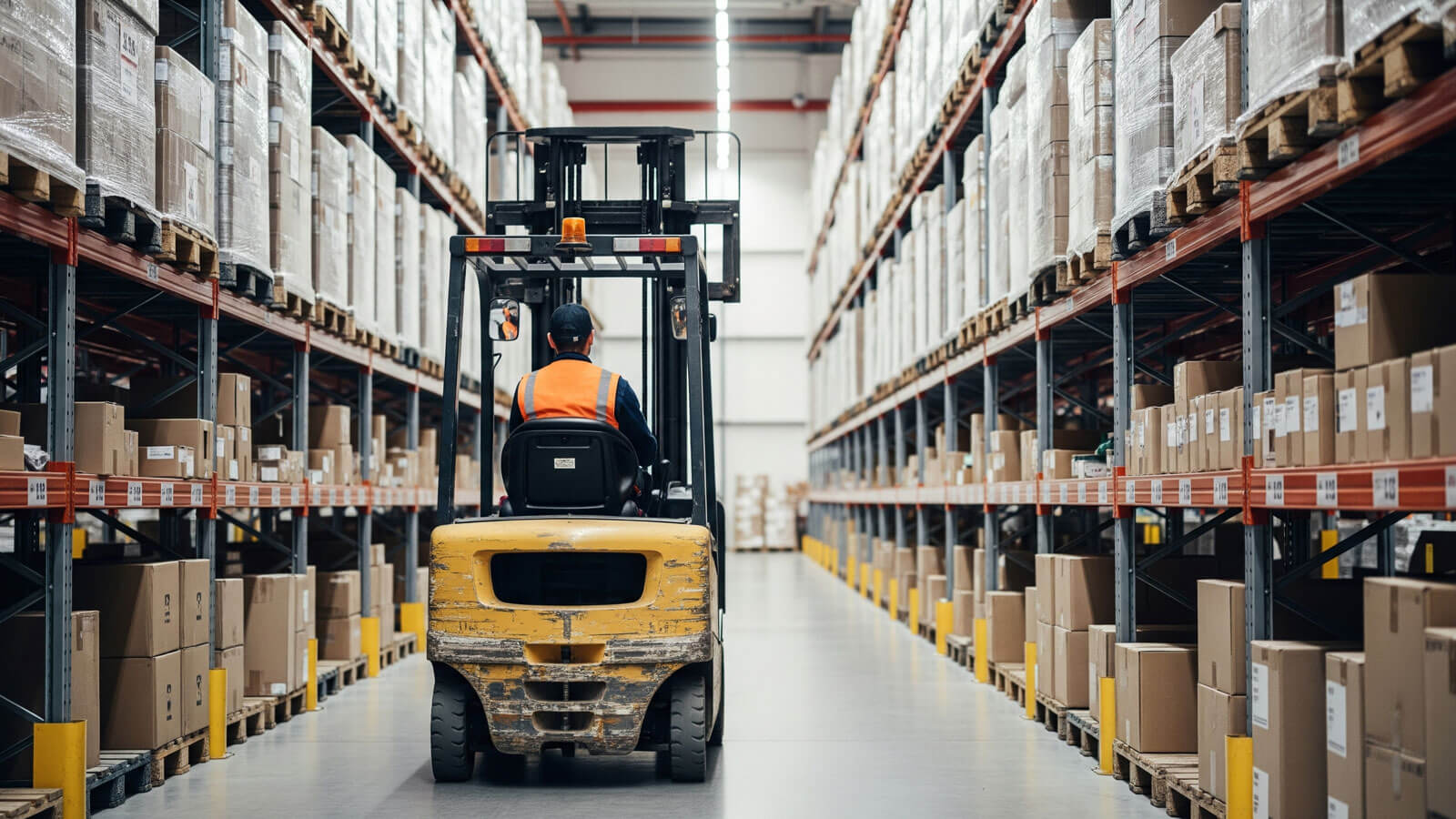
Warehouse performance is often measured by throughput, storage capacity, and labor efficiency. Yet many operational challenges trace back to a less obvious source: a mismatch between forklift capabilities and racking design.
As distribution centers push for higher storage density and productivity, operations leaders must understand how these two critical assets work together. A warehouse may have the newest forklifts or the most advanced racking system, but if they weren’t selected with each other in mind, efficiency, safety, and scalability can suffer.
The most successful facilities view forklifts and racking as parts of a single storage and retrieval system rather than independent investments.
Why Forklifts and Racking Must Be Evaluated Together
When designing warehouse layouts, discussions often focus on available floor space, pallet positions, SKU profiles, and inventory strategies. What often gets overlooked is how forklift specifications affect storage design.
Forklifts directly influence:
- Maximum storage height
- Aisle width requirements
- Load accessibility
- Throughput potential
- Rack damage risk
- Operator productivity
Likewise, the selected racking system dictates which equipment can effectively navigate and service storage locations.
A facility that increases storage density without evaluating forklift compatibility may find operators struggling to access pallets efficiently, increasing cycle times and creating safety concerns.
Key Forklift Capabilities That Impact Warehouse Operations:
Lift Height
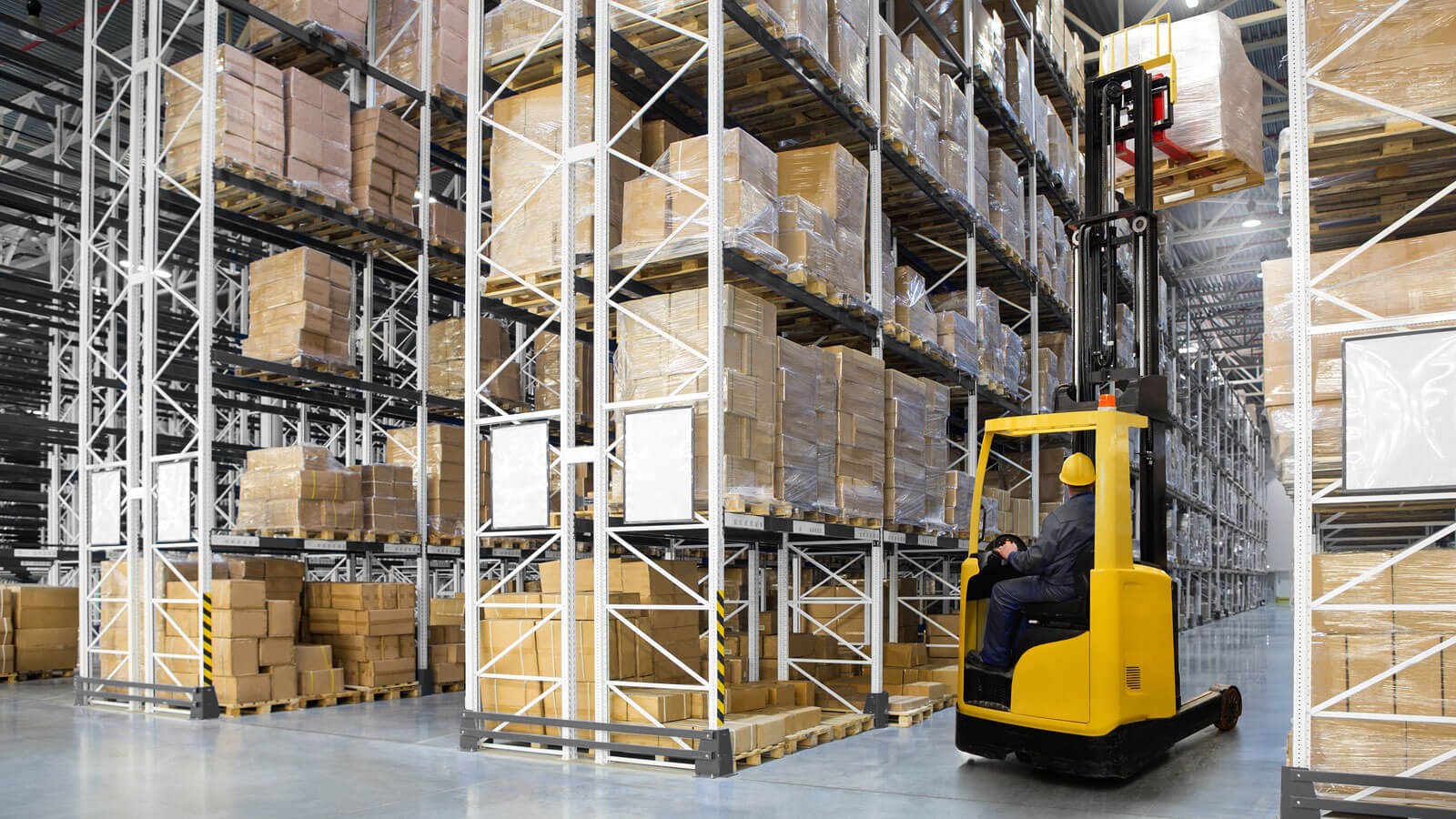
One of the most important considerations is how high a forklift can safely place and retrieve loads.
Higher rack elevations can add significant storage capacity, but only if the equipment can consistently service those locations. Facilities that design racking beyond a forklift’s capabilities risk creating storage positions that are difficult or inefficient to access. Maximum lift height directly affects how many usable storage levels a facility can install.
Load Capacity at Height
A forklift’s capacity is not constant throughout its entire lift range.
As loads are raised, effective capacity often decreases. Operations leaders should understand not only their equipment’s rated capacity but also how capacity changes at elevated storage positions. This is especially important when storing heavier products on upper rack levels.
Turning Radius
A forklift’s turning radius plays a major role in determining aisle widths throughout the facility.
Traditional counterbalance forklifts typically require wider aisles than reach trucks or very narrow aisle equipment. The right equipment choice affects how many rack bays you can install in the same warehouse footprint, directly influencing storage density and utilization.
Visibility and Precision
As rack heights increase, operators must place and retrieve loads with greater precision. Equipment features such as mast design, camera systems, guidance technology, and operator ergonomics can significantly impact performance in high-bay storage environments.
Matching Forklift Capabilities to Racking Systems
Different racking systems present different operational requirements. Understanding those requirements helps align equipment and storage strategies.
Selective Racking
Selective racking remains one of the most widely used storage systems because it provides direct access to every pallet position.
This design works well in facilities managing many SKUs and supports first-in, first-out inventory strategies. Both single-deep and double-deep configurations are available, though double-deep applications typically require specialized reach capabilities.
Push Back Racking
Push back systems offer greater storage density by storing pallets several positions deep within each lane.
Because pallets move through gravity-assisted mechanisms, operations teams must ensure forklifts meet system design requirements. Equipment must place pallets precisely and generate enough force to load deep lanes efficiently.
Pallet Flow Racking
Pallet flow systems support high-volume operations through gravity-driven pallet movement and are often utilized in FIFO inventory environments.
These systems deliver strong throughput and inventory-rotation benefits but require careful planning for pallet quality, forklift handling, and replenishment processes.
High-Density Storage Systems
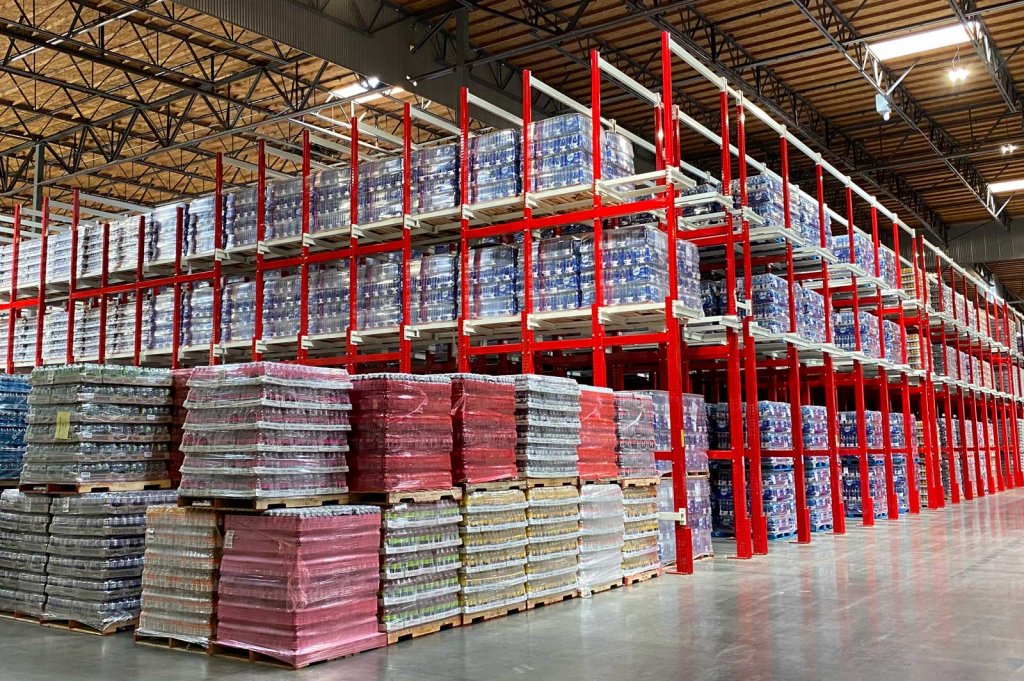
Drive-in, drive-through, and other high-density solutions maximize storage capacity by reducing aisle space.
These systems can dramatically improve space utilization, but they also place additional demands on forklift operators and equipment. Selecting the proper truck type is critical to maintaining productivity and minimizing rack impacts in these environments.
Common Warning Signs of a Mismatch
Operations leaders should periodically evaluate their facilities for signs that forklifts and racking may no longer align.
Some common warning signs include:
- Frequent rack damage
- Excessive maneuvering during pallet placement
- Inconsistent storage location utilization
- Congested aisles
- Slow putaway or retrieval times
- Increased operator frustration or fatigue
These issues often indicate that operational requirements have evolved while equipment and storage infrastructure have remained unchanged.
Planning for Future Growth
Many warehouses grow through SKU expansion, shifting inventory profiles, or rising order volumes. Unfortunately, storage and equipment decisions made years earlier may not support current operational demands.
When evaluating facility improvements, operations leaders should ask:
- Can current forklifts safely service all storage locations?
- Is aisle width limiting storage density?
- Will future inventory profiles require different rack configurations?
- Are throughput requirements increasing faster than storage capacity?
- Could alternative equipment improve space utilization?
Taking a long-term view helps prevent costly redesigns and supports sustainable operational growth.
The Bottom Line
Forklifts and racking systems work best when designed to work together.
Rack selection influences equipment requirements. Equipment capabilities influence storage design. Evaluating one without the other can lead to lost capacity, reduced productivity, and unnecessary operational challenges.
For operations leaders focused on maximizing warehouse performance, understanding the relationship between forklift capabilities and racking systems is a key step toward a safer, more efficient, and more scalable operation.
Looking at Storage Improvements?
Twinlode Automation helps distribution centers evaluate storage requirements, inventory profiles, and operational workflows to identify racking solutions that support both current performance and future growth. Whether you’re expanding capacity, reconfiguring storage, or planning for automation, our team can help develop a solution tailored to your operation.
Categories (tags):