
In today’s fast-paced supply chain environment, organizations are under pressure to move goods faster, more accurately, and with greater efficiency. Traditional picking methods, where employees walk long distances to retrieve items, are increasingly difficult to sustain as order volumes rise and labor shortages persist.
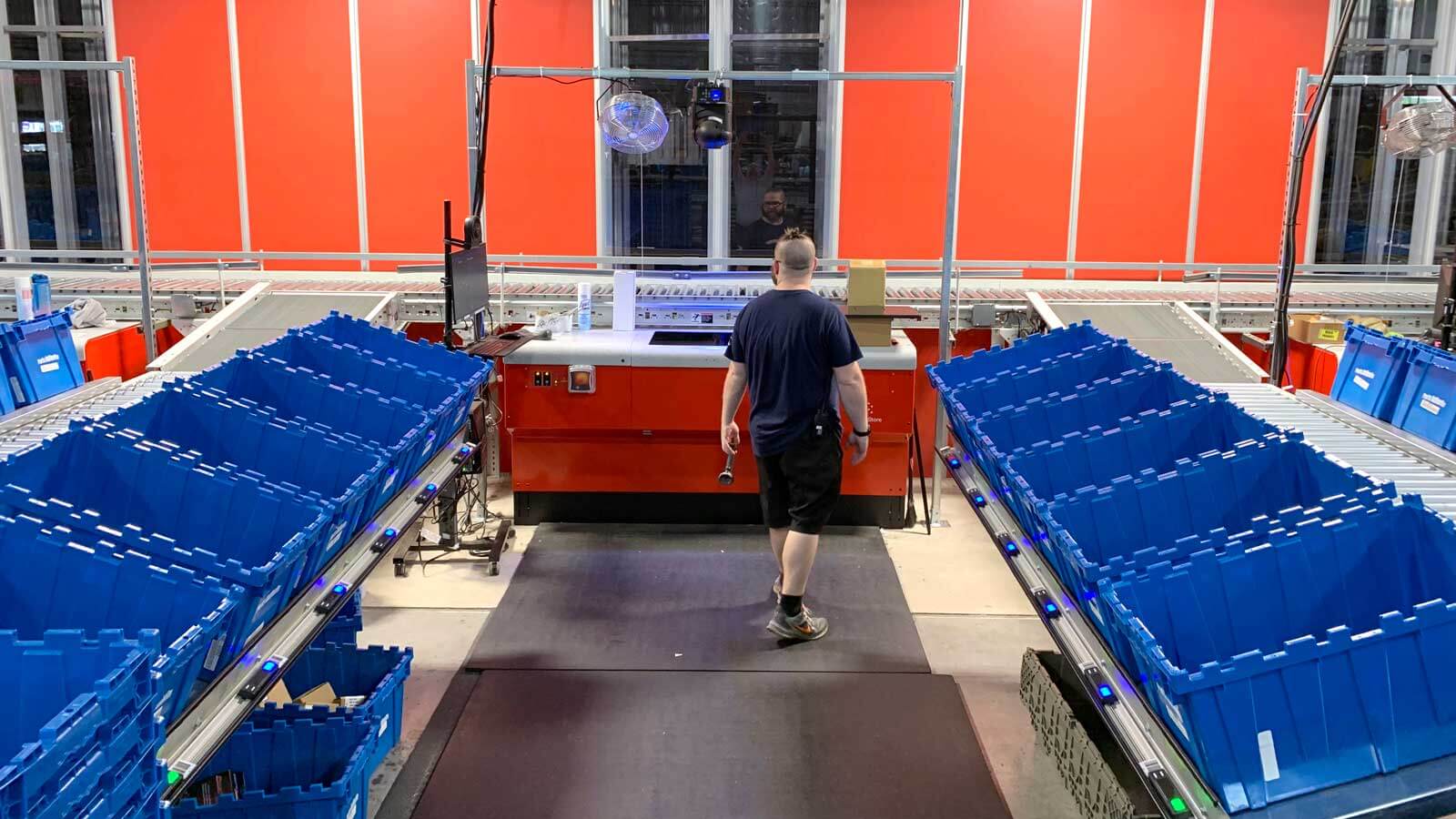
Goods-to-Person (GTP) systems offer a proven solution. By automating storage and retrieval, these systems bring inventory directly to the operator at a workstation. Workers no longer waste time traveling between aisles. Instead, they remain in a safe, ergonomic environment focused solely on accurate picking.
This shift does more than increase efficiency. It transforms the warehouse into a more productive, scalable, and resilient operation; exactly what modern supply chains require.
How Goods-to-Person Systems Work
At the core of every GTP system is automation that manages storage, movement, and retrieval. Items are stored in high-density systems such as Automated Storage and Retrieval Systems (ASRS), shuttle systems, or carousels. When an order is placed, the system identifies the required items and delivers them directly to a picking station.
This process reduces travel time to near zero and ensures operators handle only the final step: selecting and verifying the item. Advanced software integration, such as warehouse management systems, orchestrates the process to ensure inventory accuracy and seamless order fulfillment.
The result is higher throughput, consistent accuracy, and an operation designed to adapt quickly to changing business demands.
KPI Solutions’ Approach to GTP Integration
KPI Solutions does not believe in one-size-fits-all warehouse automation. Each facility has unique needs based on its order profiles, SKU mix, labor market, and physical layout. That’s why we begin every project with a consultative process, aligning system design with long-term business goals.
Our GTP solutions often combine:
- Automated Storage and Retrieval Systems (ASRS): High-density storage with fast retrieval speed.
- Shuttle Systems: Multi-level, high-speed transport of totes or trays.
- Autonomous Mobile Robots (AMRs): Flexible robotic transport to connect storage and picking zones.
- Conveyors and Sortation Systems: Continuous, high-speed product movement across the facility.
All these technologies integrate seamlessly with control software and existing equipment, creating a unified, high-performance system. From concept and installation to lifetime services, KPI Solutions ensures each solution delivers immediate and long-term value.
Click to Learn More About Our GTP Partners



The Benefits of Goods-to-Person Systems
Adopting GTP creates measurable improvements across multiple areas of warehouse performance:
- Productivity Gains: Eliminating worker travel increases pick rates significantly.
- Improved Accuracy: Automated retrieval minimizes human error, reducing costly mistakes and returns.
- Optimized Labor: With fewer employees required for higher output, businesses can address labor shortages more effectively.
- Scalable Growth: Modular design allows easy expansion as order volumes grow.
- Enhanced Safety and Ergonomics: Bringing goods to the worker reduces repetitive strain and workplace injuries.
These advantages translate directly into stronger financial performance. Lower operating costs, faster order cycles, and higher customer satisfaction all contribute to a more competitive and resilient supply chain.
Where Goods-to-Person Systems Deliver the Most Value
Goods-to-Person systems can be applied across industries where speed and accuracy are critical. Examples include:
- eCommerce and Retail Fulfillment: High order volumes and rapid shipping demands make GTP essential for competitive service levels.
- Consumer Packaged Goods (CPG): Complex SKU assortments benefit from efficient, accurate picking.
- Manufacturing: GTP supports just-in-time delivery of components, keeping production lines running smoothly.
- Healthcare and Pharmaceuticals: Accuracy and traceability are critical, making GTP a strong fit for compliance-driven industries.
KPI Solutions has implemented goods-to-person strategies in a wide range of environments, always tailoring the system to the business’s unique requirements.

Frequently Asked Questions (FAQ)
- What is a Goods-to-Person (GTP) system in warehouse automation?
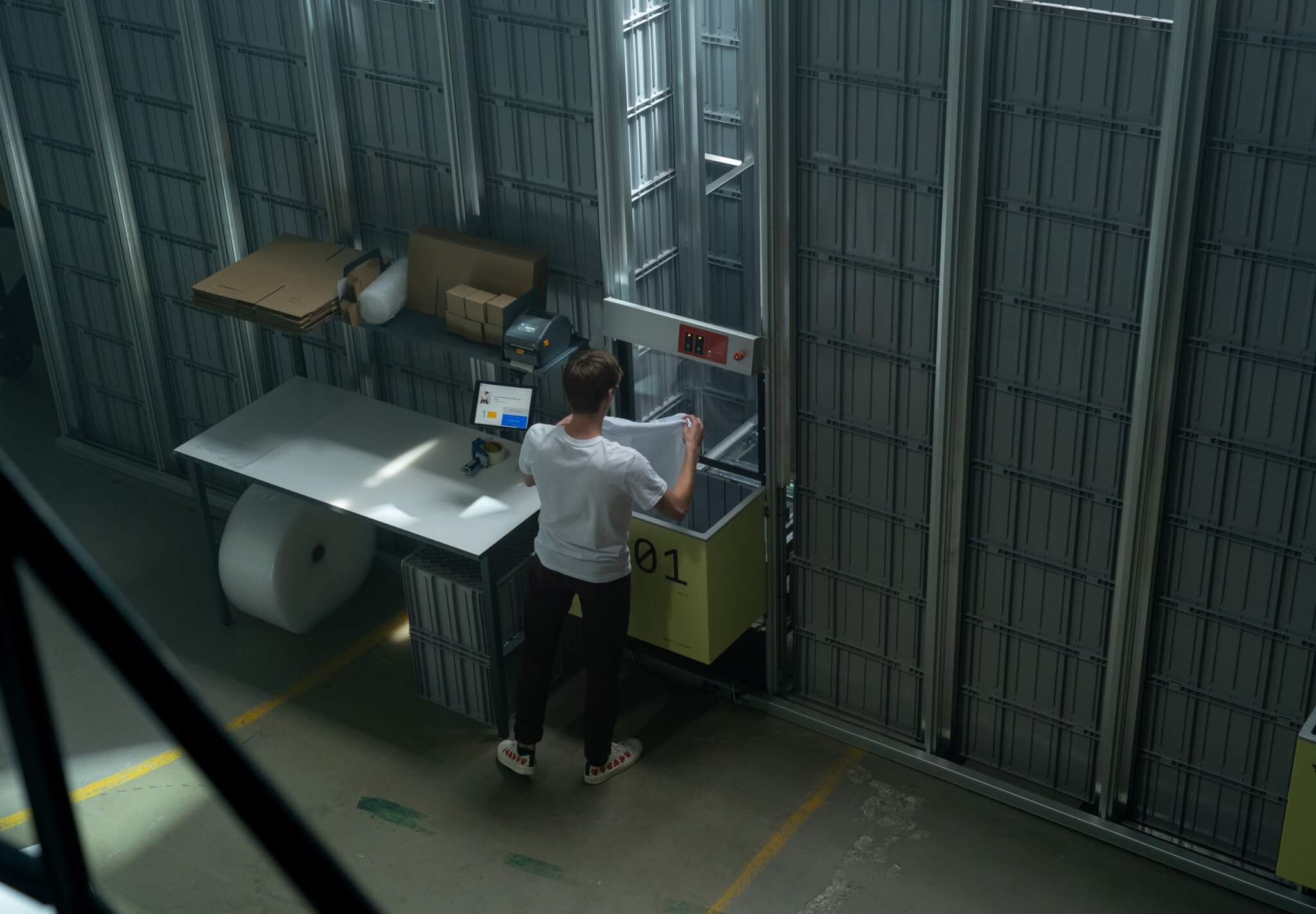
A Goods-to-Person (GTP) system brings inventory directly to a worker at a picking station, eliminating the need for employees to walk through aisles. Using automation like AS/RS, shuttles, vertical lifts, or robots, GTP moves items quickly and accurately. This reduces travel time and manual handling, boosting productivity, enhancing accuracy, and supporting high-volume fulfillment.
- How do Goods-to-Person systems work?
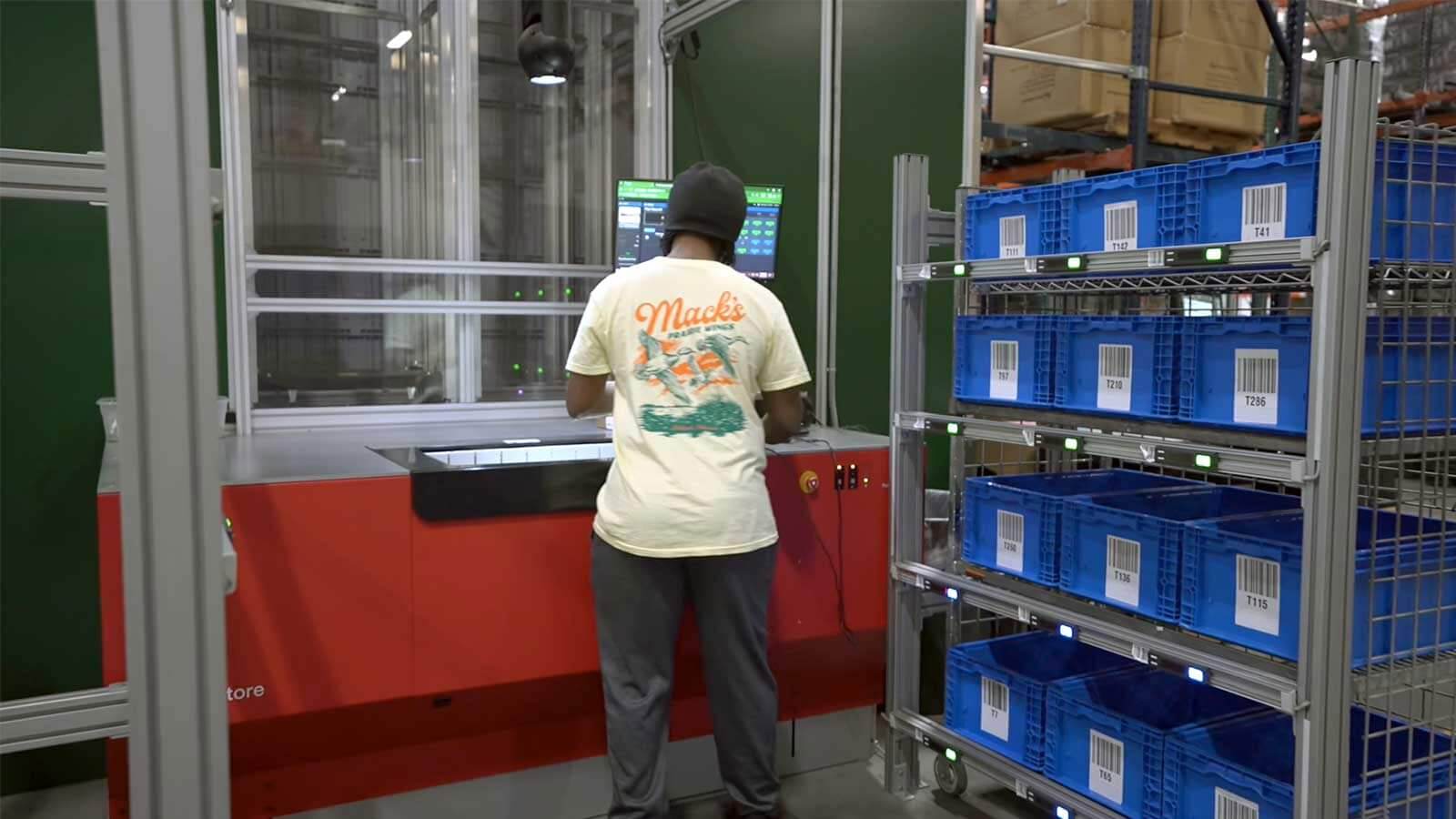
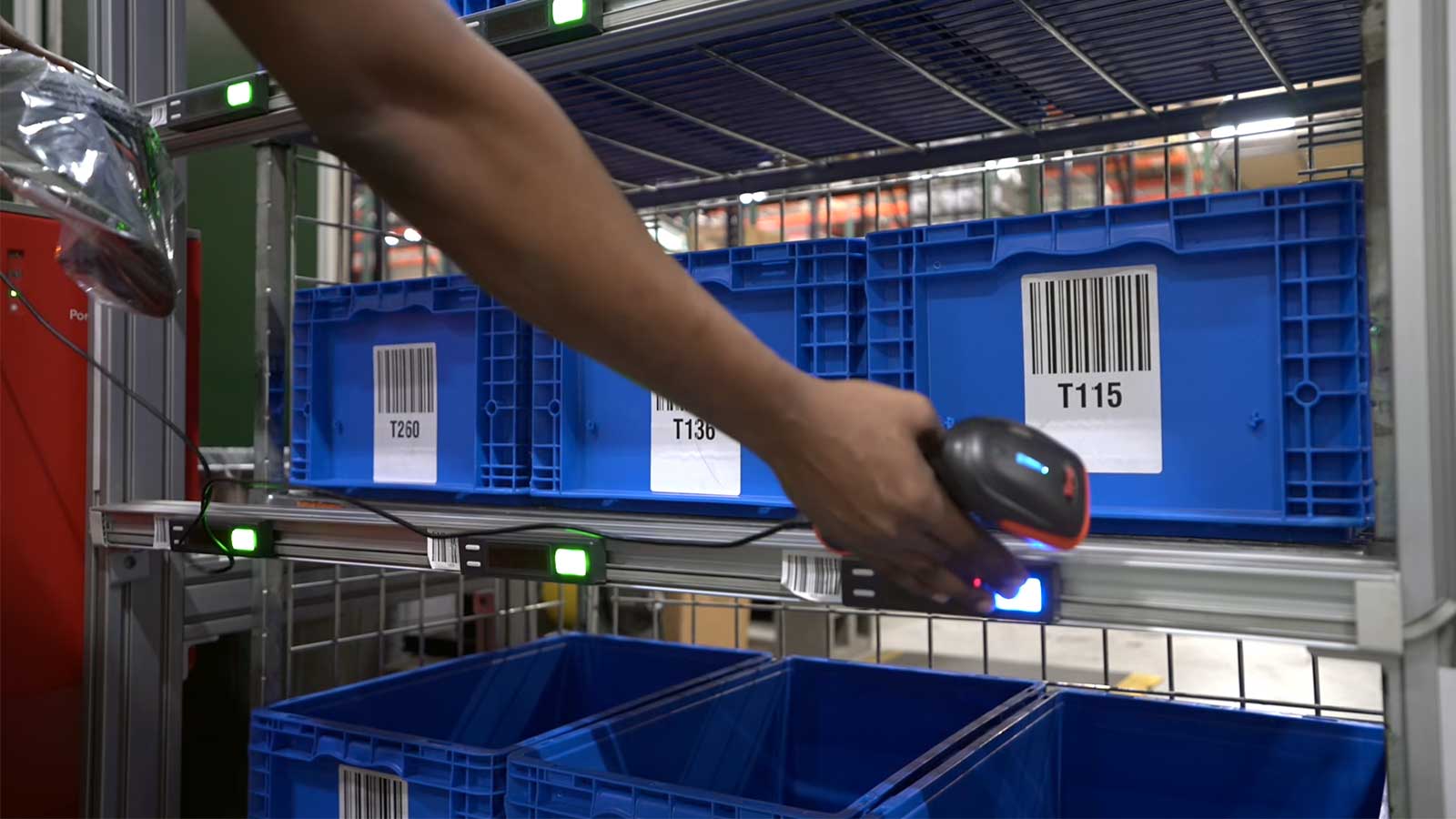
Goods-to-Person systems use automation and software to efficiently fetch items. Inventory is stored in dense automated storage, and machines retrieve the needed SKUs as directed by the control software. Items are delivered to workstations, where operators follow guided picking steps with screens or lights. This flow reduces congestion and idle time. KPI Solutions helps design GTP systems tailored to SKU velocity, order profiles, and growth goals.
- What are the main benefits of implementing a Goods-to-Person system?
The primary benefits of a Goods-to-Person system include higher picking productivity, improved order accuracy, better space utilization, and reduced labor strain. Because workers no longer spend most of their shift walking, they can process significantly more orders per hour. Accuracy improves through system-directed picking and barcode validation, reducing costly errors and returns. Additionally, automated storage allows for higher-density inventory layouts, helping facilities maximize cubic space. Over time, these gains contribute to stronger operational performance and a measurable return on investment.
- What types of warehouses benefit most from Goods-to-Person automation?
Goods-to-Person systems benefit eCommerce, retail, CPG, healthcare, and other operations with many SKUs and high throughput. Facilities with labor shortages or limited space gain most, as GTP boosts output without more workers and offers high-density storage.
- How does a Goods-to-Person system improve warehouse efficiency?
A Goods-to-Person system improves warehouse efficiency by eliminating non-value-added travel time and creating a structured, repeatable picking workflow. In traditional operations, employees may spend more than half their time walking between pick locations. With GTP automation, that travel time is largely removed, allowing operators to focus exclusively on picking and order processing. The system also optimizes retrieval sequencing, ensuring items arrive in the most efficient order. The result is faster order cycle times, more predictable throughput, and better visibility into performance metrics.
- Can Goods-to-Person systems help address labor shortages?
Yes, Goods-to-Person systems are often implemented to mitigate labor challenges. By increasing the number of picks per hour per operator, companies can fulfill more orders with fewer workers. The structured, ergonomic nature of GTP workstations also reduces physical strain, which can improve employee retention and reduce injury risk. In competitive labor markets, automation provides operational stability by reducing dependence on large seasonal workforces. KPI Solutions works with organizations to analyze labor trends and develop automation strategies that balance capital investment with sustainable long-term labor savings.
- What technologies are used in a Goods-to-Person system?
GTP systems use automated storage, shuttles, vertical lifts, robots, conveyors, and software to store and retrieve inventory. The setup depends on SKU size, order volume, facility size, and throughput needs. KPI Solutions provides system integration and support for a unified warehouse.
- What is the ROI of a Goods-to-Person system?
ROI for GTP systems depends on labor savings, speed, accuracy, and space use. Many achieve ROI through less travel, faster picks, fewer errors, and by avoiding expansions. Although initial costs are high, long-term efficiencies often justify investment. KPI Solutions helps model projected savings for automation cases.
- How do Goods-to-Person systems improve order accuracy?
GTP systems boost accuracy with software-directed picking, barcode scanning, and guided workstations, reducing human error. Fewer errors lead to lower returns, less rework, and higher customer satisfaction. Automation also improves traceability, which is important for regulated industries.
- How do you determine if a Goods-to-Person system is right for your operation?
Determining whether a Goods-to-Person system is the right solution requires a thorough evaluation of order volume, SKU count, growth projections, labor availability, and facility constraints. Operations with high-order complexity, rapid fulfillment requirements, or space limitations are often strong candidates. A comprehensive operational assessment can identify bottlenecks, quantify potential productivity gains, and evaluate integration requirements. KPI Solutions partners with organizations to design customized, flexible, and scalable warehouse automation strategies, providing consulting, system integration, and ongoing support to ensure long-term performance and adaptability.