Effective, efficient, and system-agnostic solutions for your unique needs.

3PL Consulting Strategies
At KPI Solutions, our Third Party Logistics strategy uses a data-driven approach to help companies correctly identify their needs and determine which third-party logistics provider will best meet those needs.
Our 3PL consultants will provide you with the operations, engineering, and 3PL selection expertise necessary to achieve your objectives. We understand that several scenarios could occur and offer flexibility to work in a manner best suited for both parties to address the level of support required.

Our 3PL Strategy:
- Independent and objective recommendations
- A complete analysis of provider options
- Business case and deliverables to support the decision
- Help in the next phase, 3PL Selection, if needed
Benefits of Partnering With
Us for 3PL Selection
Market
|
Independent
|
Expert
|
Commitment
|
Tailored 3PL
|
Streamlined
|
Questions to Ask When Developing a 3PL Strategy
How much would it cost annually if I were to manage distribution internally?
How much labor is required when utilizing a 3PL compared to owning our distribution?
What additional costs should I consider in a transition?
How much can I expect to spend for a 3PL, and what services do they provide?
What service levels could I achieve in each scenario?
What are the key characteristics of my business that may impact each scenario?
Streamline Your Supply Chain with Confidence
KPI Solutions’ Consulting
We will explore the many aspects of this decision and provide you with the information to make a confident decision along with an action plan to move forward.
We can also assist you with 3PL Selection. KPI provides that service independently and with objectivity.

Why Choose KPI Solutions to Help You Evaluate & Select a 3PL Provider?
-
Market Awareness: KPI Solutions’ Consulting team has forward-leaning market knowledge, providing engineering teams with expert insights into logistics providers, technological trends, and supply chain best practices.
-
Independent Analysis: We conduct an objective, independent analysis of your business to determine the most suitable 3PL provider to meet your needs.
-
Expert Guidance: Our team of experienced consultants provides insightful, objective advice to empower your decision-making in 3PL agreements.
-
A Commitment to Your Growth: Partnering with KPI Solutions equates to aligning with a team dedicated to your business’s expansion.
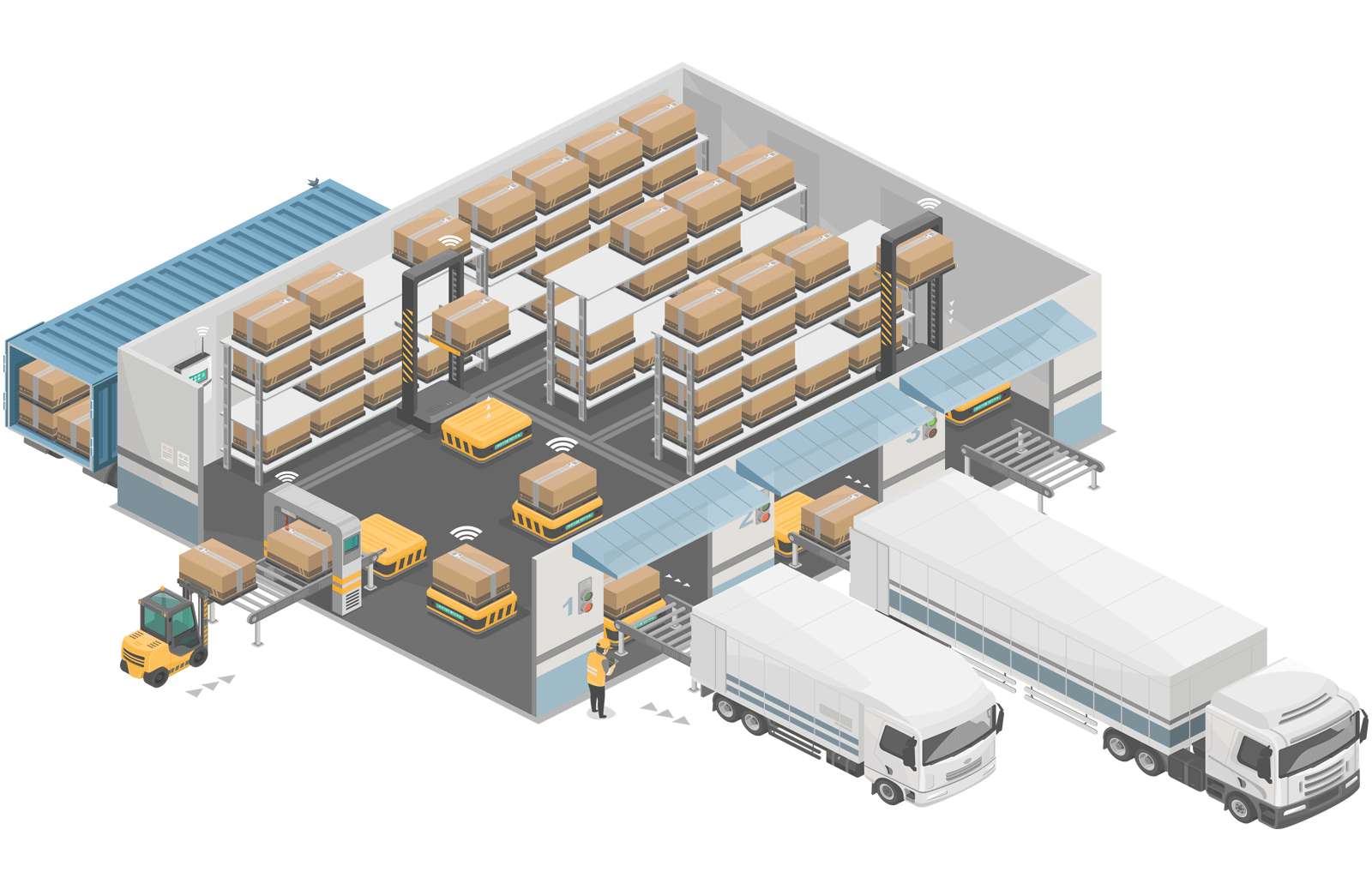
Should You Use A 3PL To Distribute Products Or Manage That Service In-House?
When to Start Using a 3PL:
- Assessing Needs: If handling logistics in-house is becoming too complex, costly, or inefficient.
- Business Growth: When scaling up operations and needing a broader reach or specialized logistics services.
- Focus on Core Business: To outsource logistics operations by concentrating on core business activities.
- Access to Advanced Technology: If you need advanced logistics technology and expertise.
When to Keep Your Current 3PL Provider:
- Consistent Performance: If the provider consistently meets or exceeds service level agreements and expectations.
- Scalability and Flexibility: The provider can effectively scale and adapt to your business’s changing needs.
- Assertive Communication: There is open, transparent, and effective communication, fostering a strong partnership.
- Technological Alignment: The provider’s technology integrates well with your systems, offering efficiency and visibility.
- Customer Satisfaction: Your customers are satisfied with the delivery and handling of your products, indirectly indicating the 3PL’s efficiency.
- Continuous Improvement: The provider is committed to constant improvement, innovation, and staying abreast of industry trends.
When to Change 3PL Providers:
- Service Level Issues: Consistent failure in meeting delivery, inventory management, or service quality standards.
- Lack of Scalability: The current provider cannot scale services with business growth.
- Cost Inefficiencies: High or increasing costs without corresponding benefits.
- Technological Limitations: Lack of modern logistics technology and integration capabilities.
- Poor Communication: Inadequate responsiveness and transparency.
- Geographic Limitations: Need more reach for expanding business operations.
When to Stop Using a 3PL:
- In-house Capabilities: Develop robust in-house logistics capabilities that are more cost-effective or efficient.
- Business Model Changes: When a fundamental shift in the business model exists, 3PL services are redundant or misaligned.
- Control and Oversight: Desire for greater direct control over logistics and supply chain operations.
- Cost-Benefit Analysis: If the overall cost of outsourcing outweighs the benefits, considering in-house management might be more advantageous.
The KPI Solutions Consulting team is here to help you manage these complex decisions and give you a clear understanding of where your organization is and where your business goals need to take you.

Frequently Asked Questions
- How do I determine if my company should use a 3PL or keep logistics in-house?
The decision to outsource to a 3PL or maintain in-house operations depends on a cost-benefit analysis of your core competencies, scaling needs, and capital availability. You should consider a 3PL if your internal logistics are becoming too complex to manage, if you require rapid geographic expansion, or if you want to shift capital from warehouse real estate into product development and marketing. - What are the most important criteria when selecting a 3PL provider?
The most critical selection criteria include industry-specific expertise, technological compatibility (WMS/ERP integration), scalability, and cultural fit. A successful selection process evaluates not just the rate card but also the provider’s ability to handle your SKU complexity, seasonal volume spikes, and specific service-level agreements (SLAs). - What is the difference between an asset-based and a non-asset-based 3PL?
An asset-based 3PL owns the physical trucks and warehouses used to manage your supply chain, offering more direct control over capacity. A non-asset-based 3PL (or freight broker) focuses on managing logistics through a network of partners, often offering greater flexibility and a wider geographic reach without the overhead of physical assets. - How long does the 3PL selection and RFP process typically take?
A comprehensive 3PL selection process typically takes 3 to 6 months, depending on the complexity of your requirements. This timeframe includes defining your operational profile, issuing a Request for Proposal (RFP), conducting site visits, performing a final evaluation, and negotiating the contract. - How can 3PL selection consulting reduce my logistics costs?
Consultants reduce costs by conducting a technology-neutral, data-driven analysis that prevents over-investment in unnecessary services. By leveraging market knowledge and structured RFP processes, consultants help you negotiate more competitive rates and avoid the massive hidden costs of a “bad fit” provider, such as inventory errors and missed shipping windows. - What role does technology play in choosing a 3PL partner?
Technology is the backbone of the 3PL relationship, as your provider’s Warehouse Management System (WMS) must integrate seamlessly with your ERP or e-commerce platform. During selection, you must verify the 3PL’s ability to provide real-time inventory visibility, automated order status updates, and advanced data analytics to ensure your supply chain remains transparent. - Should I work with one large 3PL or multiple regional providers?
A single national 3PL simplifies management and data integration, which is often ideal for companies seeking streamlined operations. However, a multi-node regional strategy can be more cost-effective for high-volume shippers looking to reduce last-mile delivery times and costs by positioning inventory closer to specific customer clusters. - How do I manage the transition from my current 3PL to a new one?
Transition management requires a detailed project plan that includes inventory audits, data integration testing, and a phased “go-live” to minimize service disruptions. Professional 3PL consultants often oversee this “Phase 2” to ensure a seamless operational handover and that the new provider meets performance benchmarks from day one. - What are the common pitfalls to avoid during a 3PL RFP?
The most common pitfalls include providing vague operational data, over-emphasizing the lowest price over service quality, and failing to involve IT and finance stakeholders early in the process. Without precise data on SKU velocity and order profiles, providers are forced to make assumptions that lead to inaccurate pricing and service gaps later on. - How do 3PL consultants ensure their recommendations are objective?
Objective consultants utilize a “provider-agnostic” approach, meaning they do not receive commissions from 3PLs. Their recommendations are based solely on a mathematical and operational match between your business requirements and the provider’s proven capabilities, ensuring that the selected partner is truly the best fit for your long-term growth.