Scroll Down

Improving warehouse performance
Automated Mobile Transportation is a Necessity
Employee resources are limited. Using valuable staff to perform low-value tasks, like material transport, is a costly and inefficient way to do business. The use of automated mobile transportation vehicles, such as autonomous robots, in a warehouse, distribution center, or manufacturing facility to transport goods and materials within the facility have become a necessity.
Automated Mobile Transportation
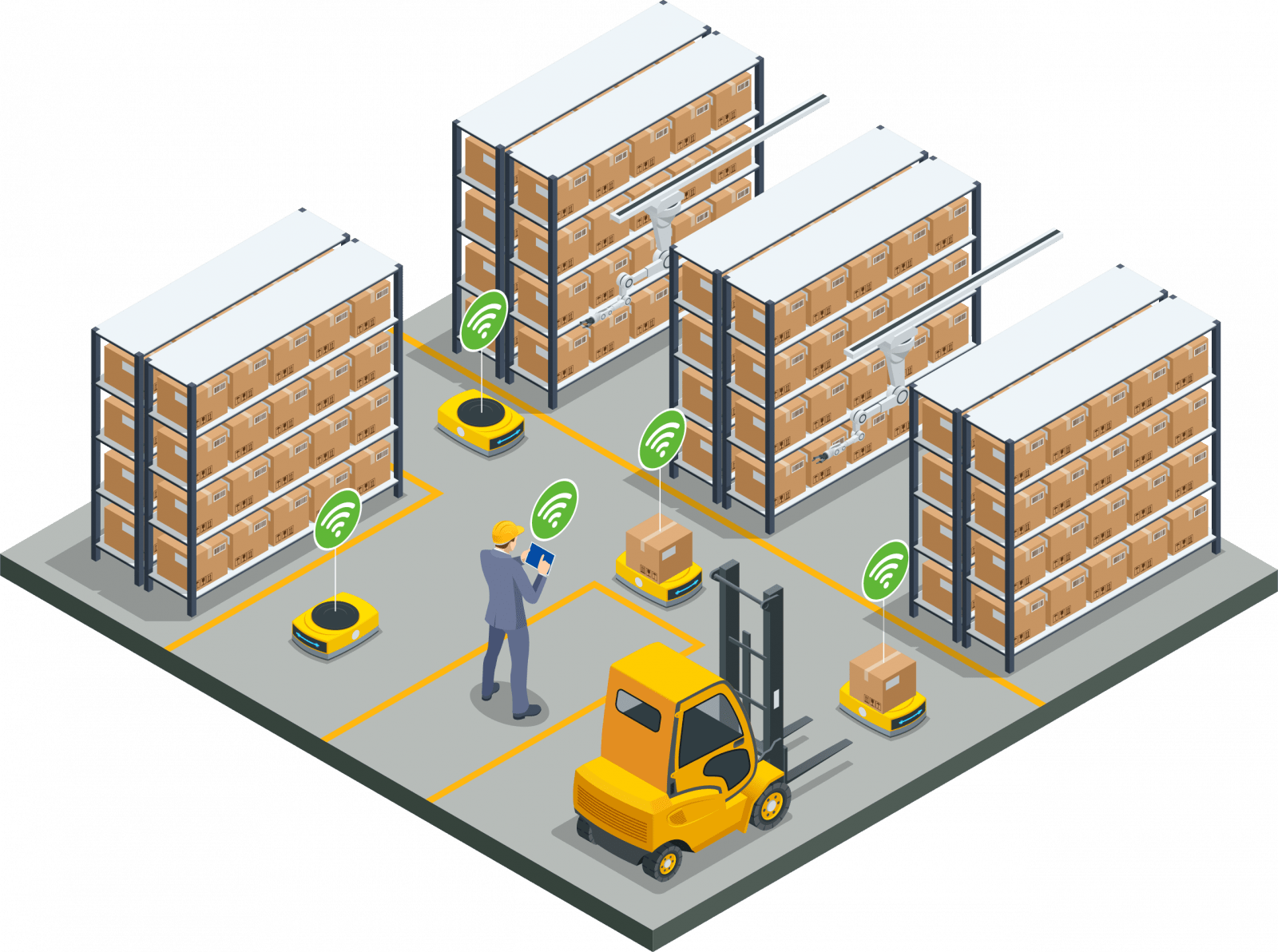
Automated mobile transportation systems can increase efficiency, reduce errors, and lower costs. They can also be integrated with other technologies, such as inventory management systems and automated picking and packing systems, to create a highly efficient and streamlined operation.
-
 Increased Efficiency: Move goods around the facility faster and more efficiently than manual labor, reducing the time needed to complete tasks and improving overall productivity.
-
 Improved Safety: Risk of accidents involving forklifts or other manual handling equipment can be minimized, creating a safer working environment for employees.
-
 Costs Savings: Reduce labor costs and improve the utilization of warehouse space, as the vehicles can work continuously without the need for breaks or rest periods.
-
 Higher Accuracy: Programmed to move goods with precision, ensuring they are placed in the correct location and reducing the risk of errors that can lead to delays or damaged goods.
Optimize Picking Efficiency and Increase Storage Capacity
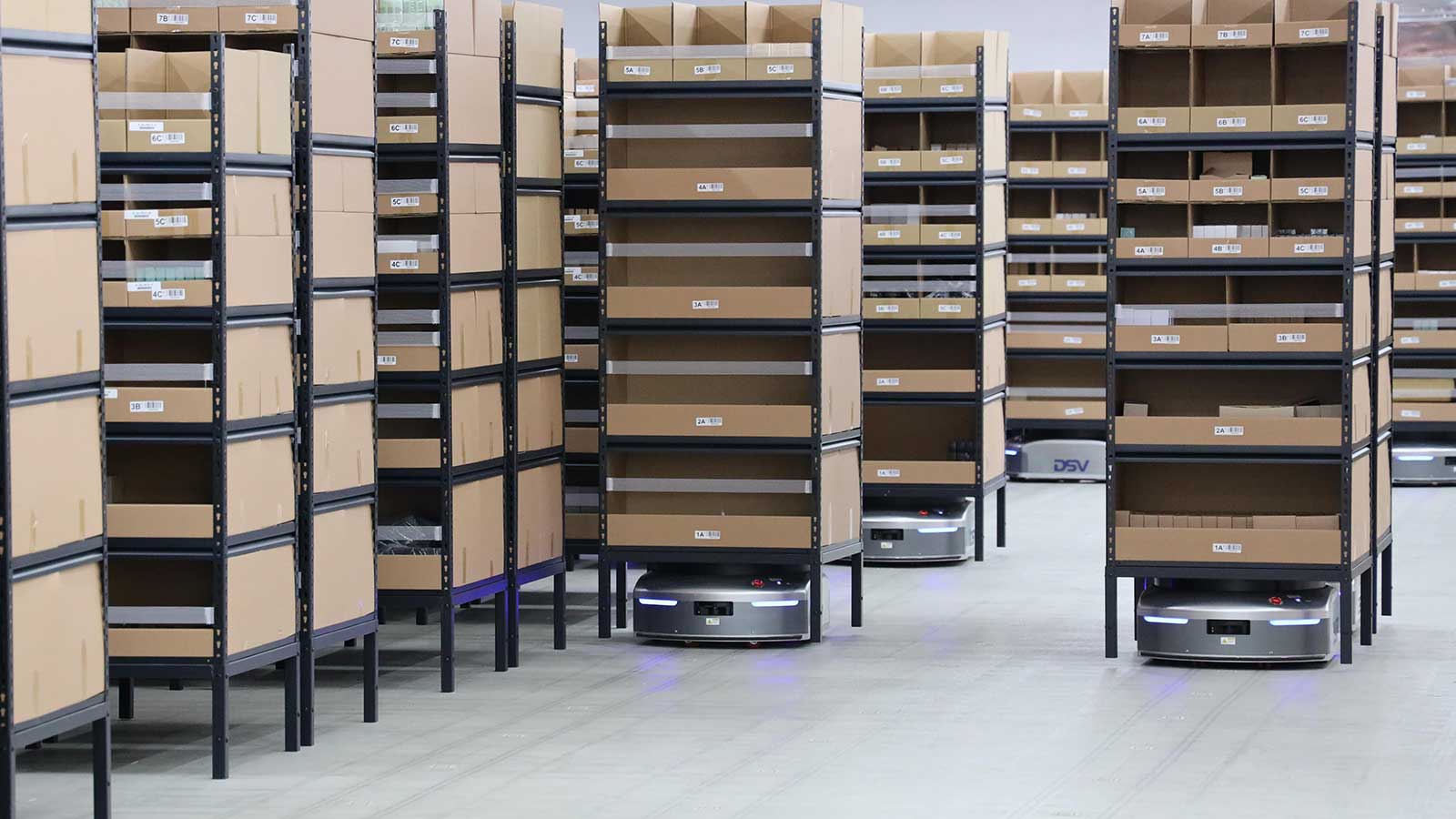
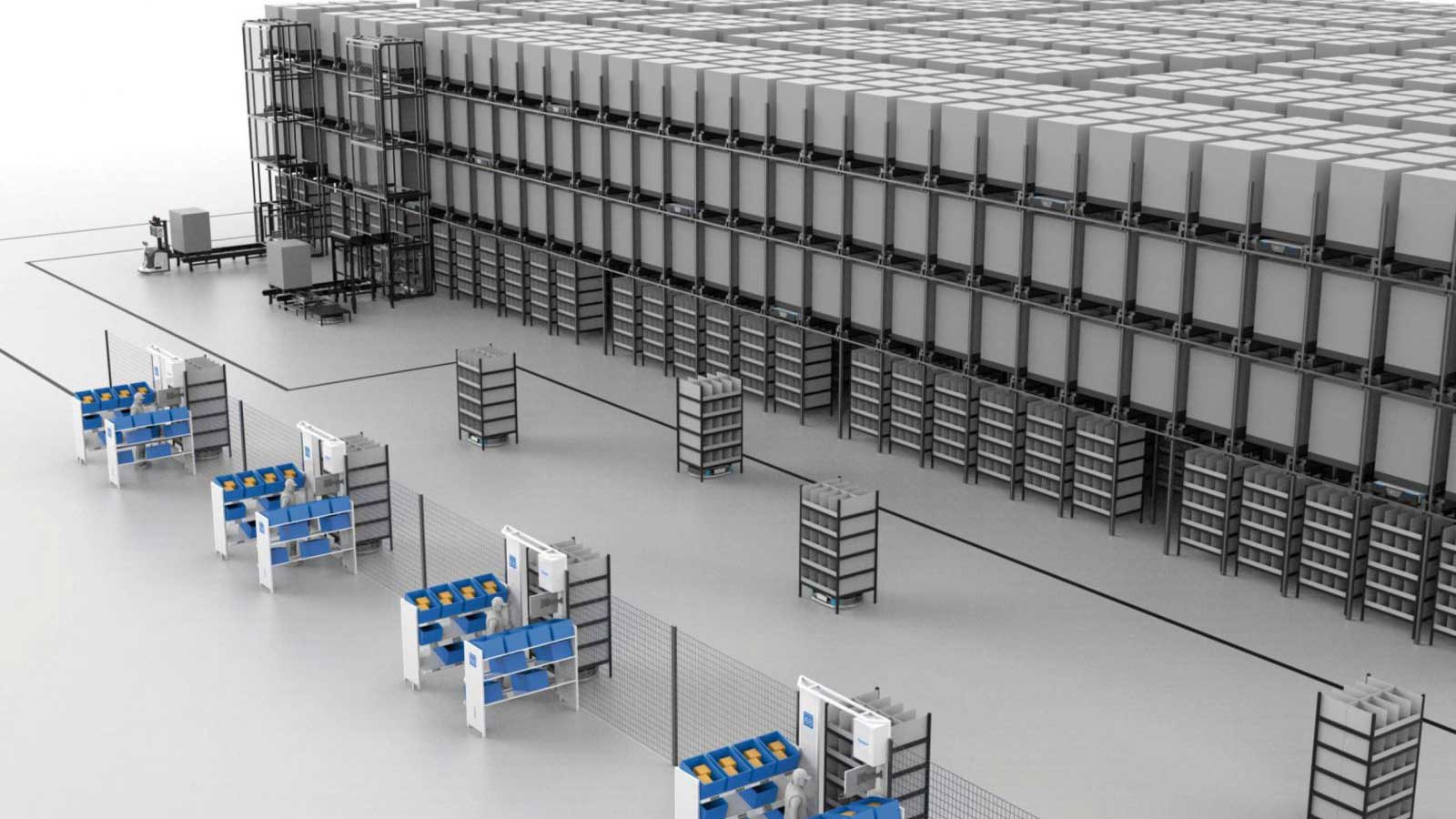
Goods-to-Person AMR Picking Systems
Eliminate the need for workers to travel to retrieve items.
- Reduce the time required to fulfill an order, increase productivity, and minimize the risk of errors or accidents.
- Can be programmed to move between storage locations and picking stations and can even transport items between different areas of a warehouse, distribution center or manufacturing facility.
- Reduce labor costs by automating repetitive tasks, allowing workers to focus on more complex or higher-value tasks.
- Reduce risk of worker injury by performing tasks that may be physically demanding or require workers to operate heavy machinery.
Benefits of AGVs and AMRs
Increased Productivity
Reduced Operating Costs
Create Flexibility
Decrease Damage & Improve Safety
Enhanced Inventory Control
Scalable Throughput
Mobile Automation instead of Fixed Automation
Goods-To-Person Case Study
Outdoor Network
U.S. dealer and distributor of vehicles, original equipment manufacturer (OEM) parts
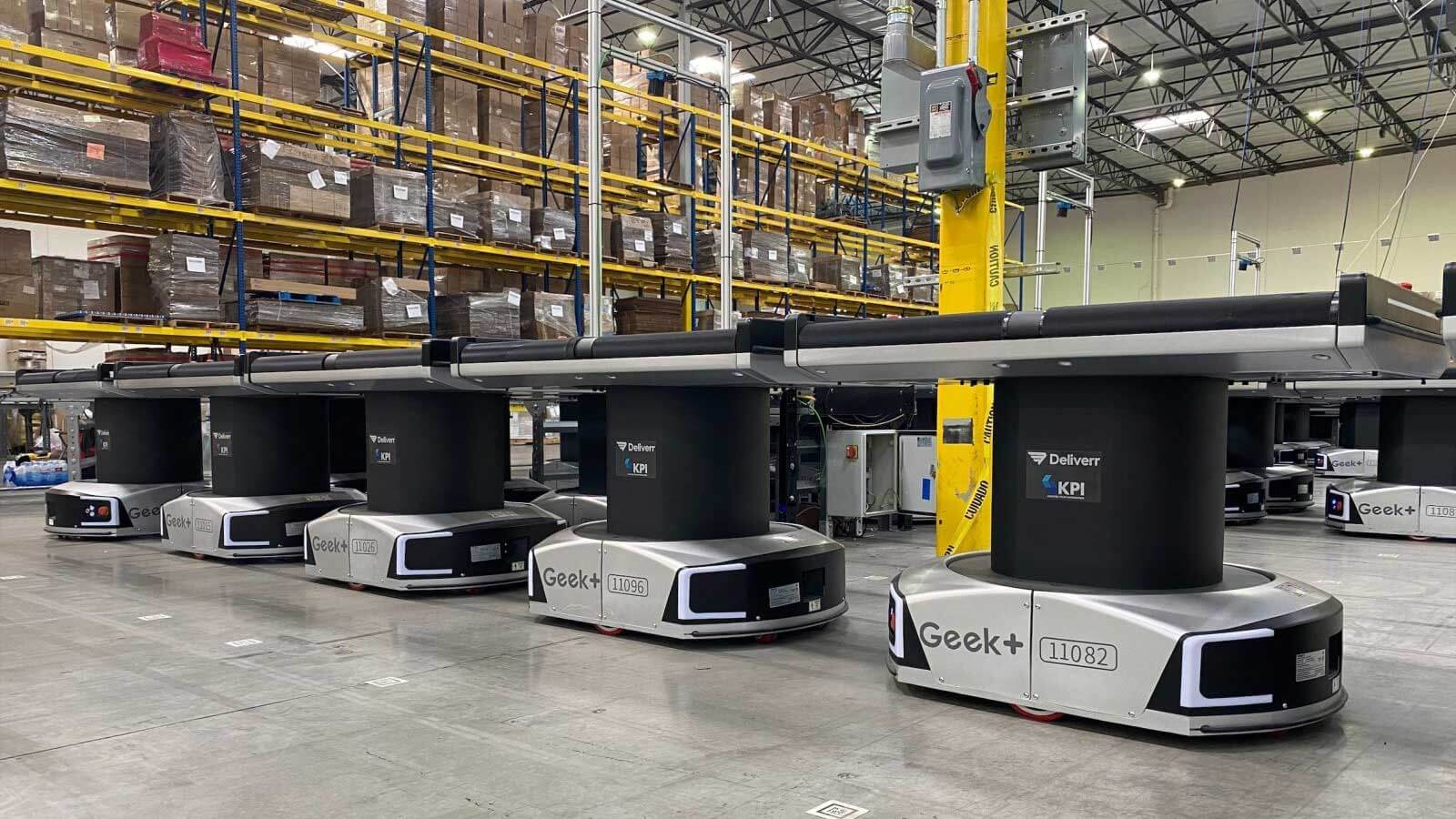
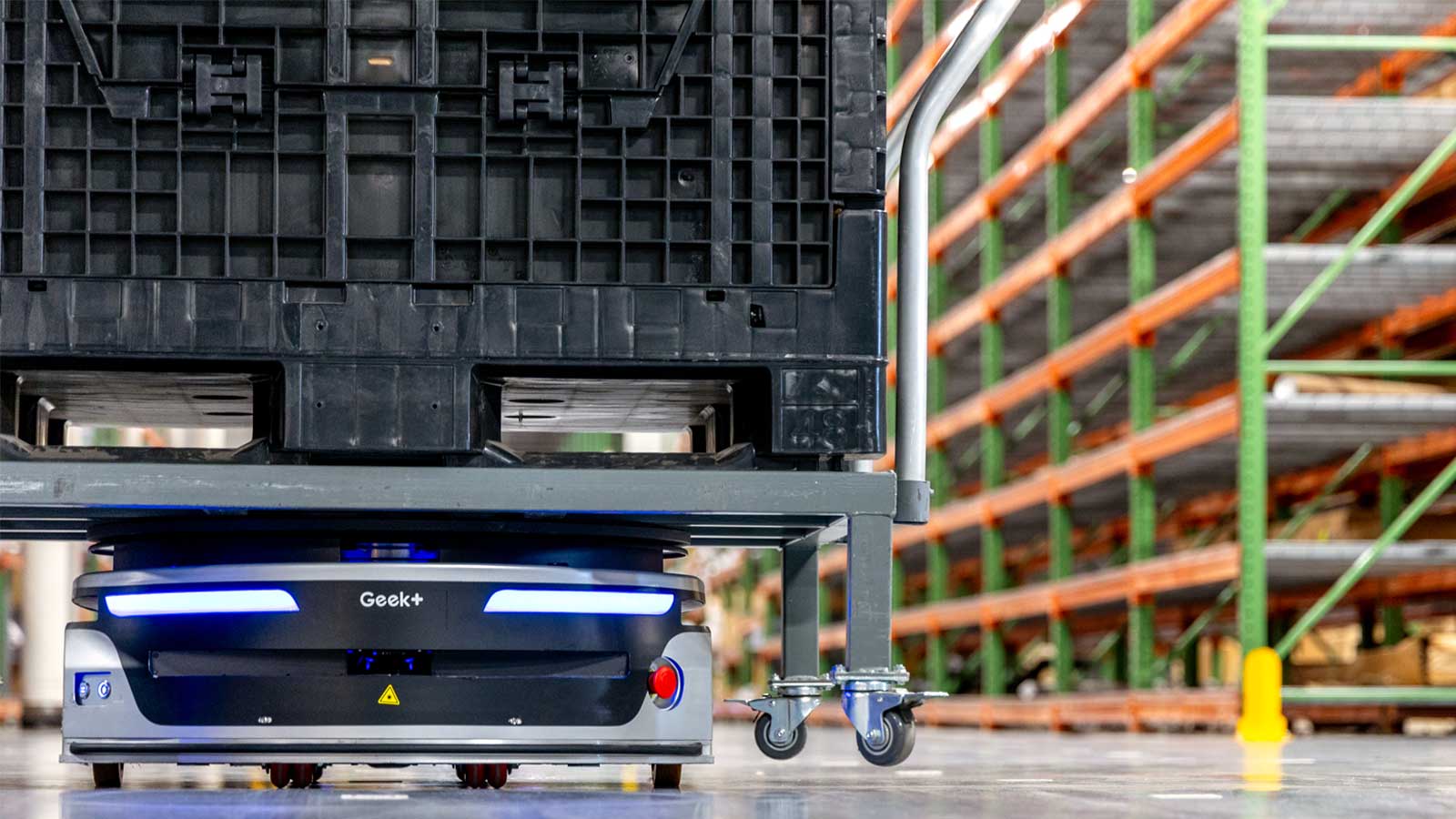
Ten Geek+ autonomous mobile robots (AMRs) transport 75 carts of oversized items to static shelving and pallet rack for putaway, and move oversized picks in carts to a consolidation area for outbound shipping.
“The technology makes our pick and pack process so simple.”
– Warehouse Manager, 3PL Provider
How and Where Are Automated Mobile Transportation Technology Used?
AGVs and AMRs increase efficiency and reduce costs by automating material movement in warehousing/distribution and manufacturing. They handle a broad variety of materials and are ideal applications characterized by:
- Regular delivery of stable loads
- Medium throughput and volume rates
- Processes that critically require on-time deliveries and accurate material tracking
- Frequent, repetitive movement of materials over a distance
Frequently Asked Questions (FAQ)
- What is the main difference between an AGV and an AMR?
Automated Guided Vehicles (AGVs) follow fixed paths (using wires, magnetic strips, or sensors) and stop if they encounter an obstacle. Autonomous Mobile Robots (AMRs) use onboard navigation (LiDAR and cameras) to navigate dynamically; if an AMR encounters an obstacle, it can calculate a path around it. AGVs are often best for consistent, heavy-duty material loops, while AMRs offer greater flexibility for complex, changing environments. - How does “Goods-to-Person” AMR technology improve picking efficiency?
In a traditional warehouse, pickers spend up to 70% of their time walking. Goods-to-Person (G2P) systems reverse this: AMRs transport entire shelving units or bins directly to a stationary pick station. This eliminates worker travel time, reduces fatigue, and can increase picking productivity by 2x to 3x while significantly improving order accuracy. - Can automated mobile robots be integrated with my existing WMS?
Yes. KPI Solutions specializes in integrating AGVs and AMRs with your Warehouse Management System (WMS) or Warehouse Execution System (WES). This integration ensures that the robots receive real-time task assignments, update inventory levels instantly, and coordinate seamlessly with manual labor or other automated systems like conveyors. - Are AGVs and AMRs safe to operate alongside human workers?
Absolutely. Modern automated vehicles are equipped with advanced safety sensors, including 360-degree LiDAR, emergency stop buttons, and pressure-sensitive bumpers. They are designed to operate safely in “co-botic” environments, slowing down or stopping instantly when they detect a human or another vehicle in their path. - Why should I choose mobile automation over fixed automation like conveyors?
Mobile automation is modular and scalable. Unlike fixed conveyors, which require permanent floor space and are difficult to move, AMRs and AGVs can be deployed quickly and relocated as your business needs change. You can also start with a small fleet and add more robots as your volume grows, avoiding the high upfront cost of over-engineering a fixed system. - What are the ideal applications for automated mobile transportation?
The best applications involve frequent, repetitive material movements over long distances. Common use cases include transporting pallets from receiving to storage, moving finished goods to shipping docks, cross-docking, and “point-to-point” delivery in manufacturing environments where stable, predictable loads are moved regularly. - How do AMRs and AGVs handle oversized or heavy items?
There are specialized mobile robots designed specifically for heavy-duty applications. For example, some AMRs can transport oversized carts or heavy pallet loads (up to 3,000+ lbs) to static shelving or consolidation areas. This reduces the need for manual forklift operation in high-traffic zones, further increasing safety and efficiency. - What is the typical maintenance requirement for a mobile robot fleet?
Maintenance for AMRs and AGVs is generally lower than that of internal combustion forklifts. It primarily involves routine sensor cleaning, battery health monitoring, and software updates. Most modern systems utilize opportunity charging (charging during breaks), ensuring the fleet remains operational 24/7 without manual intervention. - How long does it take to deploy an AMR system compared to traditional automation?
Because AMRs do not require physical floor infrastructure (like tracks or wires), they can often be deployed in weeks rather than months. The “setup” involves driving a robot through the facility to create a digital map, after which the entire fleet can be synchronized and put to work without major construction or downtime. - How does KPI Solutions help me choose the right mobile transportation technology?
We take a technology-neutral approach, analyzing your specific facility data, throughput requirements, and load profiles. We don’t just sell robots; we design the entire workflow—evaluating whether AGVs, AMRs, or a hybrid solution provides the best ROI for your unique business use case today and into the future.