
Scroll Down

Warehouse Palletizing & Depalletizing Solutions
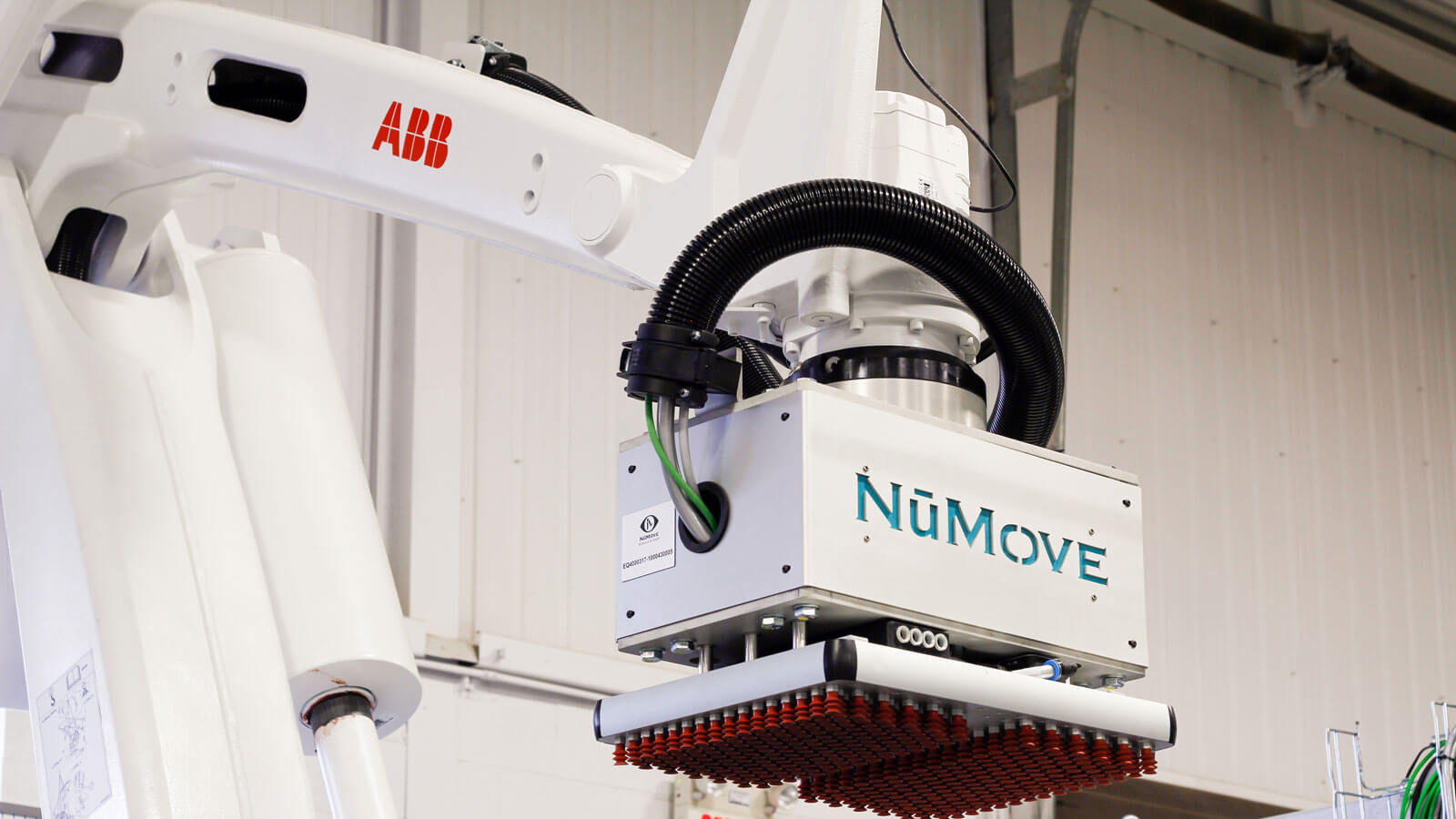
- A robotic palletizer offers the ability to act with agility, no matter where or what direction your supply chain turns.
- Updates to product lines or warehouse layouts can be completed through reprogramming, unlike conventional automated palletizers that require complex rebuilds of the entire system.
(Images courtesy of NūMove Robotics & Vision)
Benefits of a Robotic Warehouse Palletizing & Depalletizing System
Robotic palletizers offer 24-hour solutions, providing reliable predictability that allows you to know exactly how long it takes to complete a shipment
Reduced Manual Labor with Automated Palletizers and Depalletizers
- Removing the tasks of manually stacking pallets will improve employee morale and develop the opportunity for more meaningful work for warehouse employees.
- Additionally, costly labor injuries can be prevented by automating much of the heavy lifting and manual repetitive tasks
Mixed-Case Palletizing
- Robotic palletizers can easily prepare multi-SKU pallets. No programming is required as software optimizes the products.
- Automating the process enables your warehouse to ship pallets with greater speed, efficiency, and accuracy.
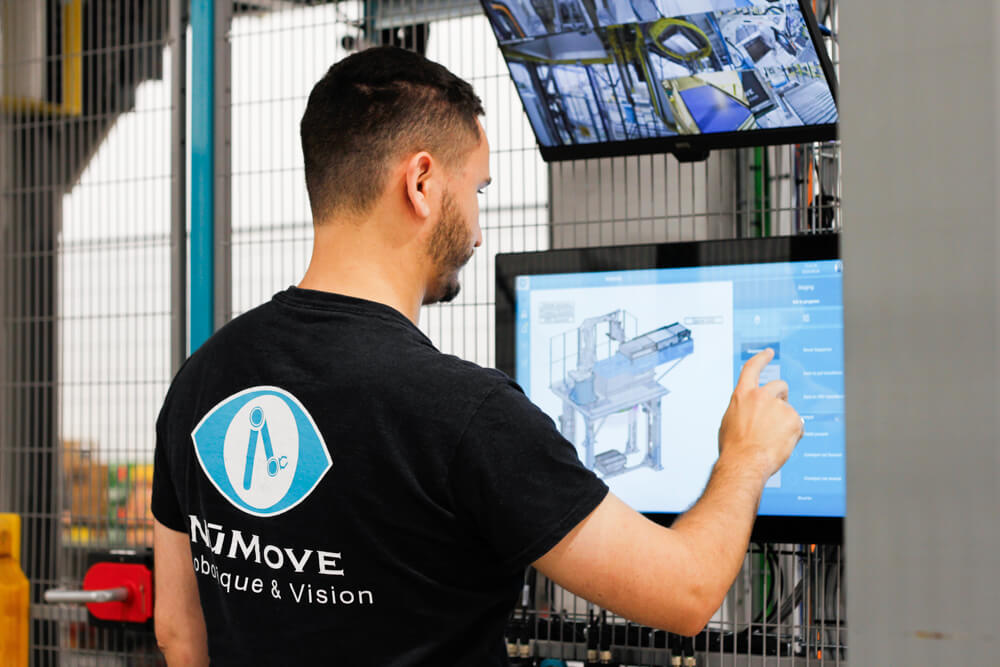
Image courtesy of NūMove Robotics & Vision.
Decreased Shrinkage
- Robotic solutions ensure efficiency and proper handling of products to lower the impact of damages on your bottom line.
- Products are reliably palletized appropriately and systems are configured to apply proper pressure to move and position items, without breakage.
Streamlining the Pallet Building Process
Creekstone Farms Premium Beef
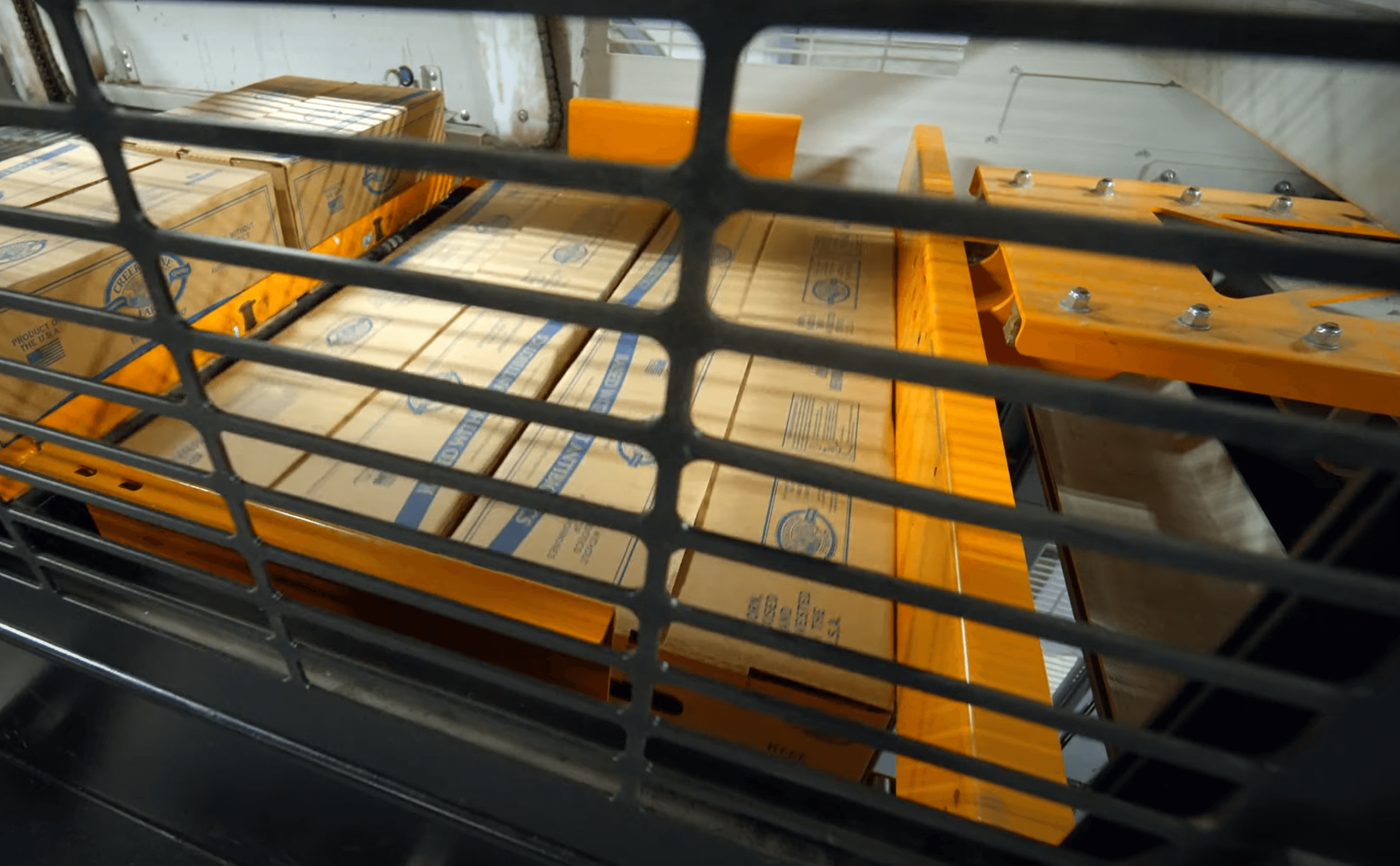
Creekstone Farms partnered with KPI Solutions to design and implement a greenfield facility that will allow for flexibility and future growth. The automated system features two palletizers to achieve enhanced throughput and high accuracy.

Frequently Asked Questions (FAQ)
- What is the difference between palletizing and depalletizing in a warehouse?
Palletizing is the process of systematically stacking goods (cases, bags, or crates) onto a pallet for shipment or storage. Depalletizing is the opposite—unloading goods from a pallet to be inducted into a storage system or production line. While they are mirror processes, depalletizing is often more complex because it requires advanced vision systems to identify and locate products that may have shifted during transport.
- Why should I automate my palletizing process?
Manual palletizing is one of the most physically demanding and injury-prone tasks in a warehouse. Automating this process significantly reduces workplace injuries (like back strain), lowers labor costs, and provides 24/7 predictability. Unlike manual stacking, robotic palletizers build perfectly uniform, stable loads that are safer to transport and store.
- What is “Mixed-Case Palletizing” and how does it work?
Mixed-case palletizing involves building pallets containing multiple different SKUs of varying sizes and weights. This is highly common in retail and grocery fulfillment. KPI Solutions utilizes intelligent software that calculates the most stable stacking pattern—placing heavier items at the bottom and lighter items at the top—ensuring the pallet arrives at its destination intact.
- Can a single robot handle both palletizing and depalletizing?
Yes. Depending on your facility’s layout and throughput needs, a single robotic cell can be designed to perform both tasks. These “dual-purpose” cells are highly space-efficient and can switch between tasks through simple software reprogramming or specialized end-of-arm tooling.
- How do robotic palletizers handle different product types like bags, boxes, or pails?
The versatility of a robotic palletizer lies in its End-of-Arm Tooling (EOAT). We design custom grippers—including vacuum suction, mechanical claws, or side-shrouds—that can be swapped or adjusted automatically to handle everything from delicate electronics to 50lb bags of grain without damaging the product.
- What role does vision technology play in depalletizing?
Vision systems act as the “eyes” for the robot. In depalletizing, 3D cameras and AI-driven software identify the orientation and dimensions of each item on a pallet, even if they aren’t perfectly aligned. This allows the robot to accurately “pick” items from a donor pallet and place them onto a conveyor for the next stage of fulfillment.
- How much floor space does an automated palletizing system require?
Modern robotic cells are surprisingly compact, often occupying a footprint as small as 2,500 square feet. Because robots can stack higher and more densely than humans, they often free up floor space that was previously used for staging manual work. We can also design overhead or gantry-style systems for facilities with extremely limited floor space.
- Can I retrofit an existing palletizing system with newer technology?
Absolutely. KPI Solutions offers upgrades and modernizations to existing systems by retrofitting older cells with the latest sensors, high-speed grippers, or updated safety controllers. This allows you to meet modern production demands and handle new product mixes without the full cost of a brand-new system.
- How do automated palletizers improve “shrinkage” and product damage?
Human error in manual stacking often leads to “leaning” pallets that collapse in transit. Robotic systems apply precise, consistent pressure and use pre-programmed patterns to ensure every load is stable. This reliability drastically reduces product damage (shrinkage) and the costly shipping claims associated with collapsed pallets.
- What is the typical ROI for a robotic palletizing solution?
Most operations see a return on investment in 18 to 36 months, though some high-volume facilities see it in as little as 9 months. The ROI is driven by eliminating direct labor costs, achieving a significant reduction in worker compensation claims, and running multiple shifts with zero downtime or performance drops.