seamless-icon

Effective, efficient, and system-agnostic solutions for your unique needs.
More options and benefits icon

End-to-end solutions, from consulting to LifeTime Services.​

seamless-icon3

Cohesive collaboration from day one.​

Utilize your space wisely, maximize labor efficiency, and fulfill orders with speed and precision.

Optimizing Facility Design

Effective facility design is foundational to the success of any operation, whether you’re building a new warehouse or upgrading an existing distribution center. At KPI Solutions, we leverage decades of expertise and data-driven strategies to create environments that enhance productivity, ensure safety, and adapt to future business needs. Our approach not only optimizes the use of space but also strategically aligns every aspect of the facility with your long-term business objectives.

  • s-icon3 Methodical Engineering Approach for Facility Design: KPI offers an independent, methodical approach for designing greenfield or retrofitting facilities.
  • s-icon2 Data-Driven Facility Design for Meeting Business Goals: KPI’s facility designs are powered by data and focus on meeting business goals.
  • s-icon1 Validation and Optimization of Facility Design: KPI’s simulation and modeling capabilities validate designs, assess staffing and identify bottlenecks before implementation.
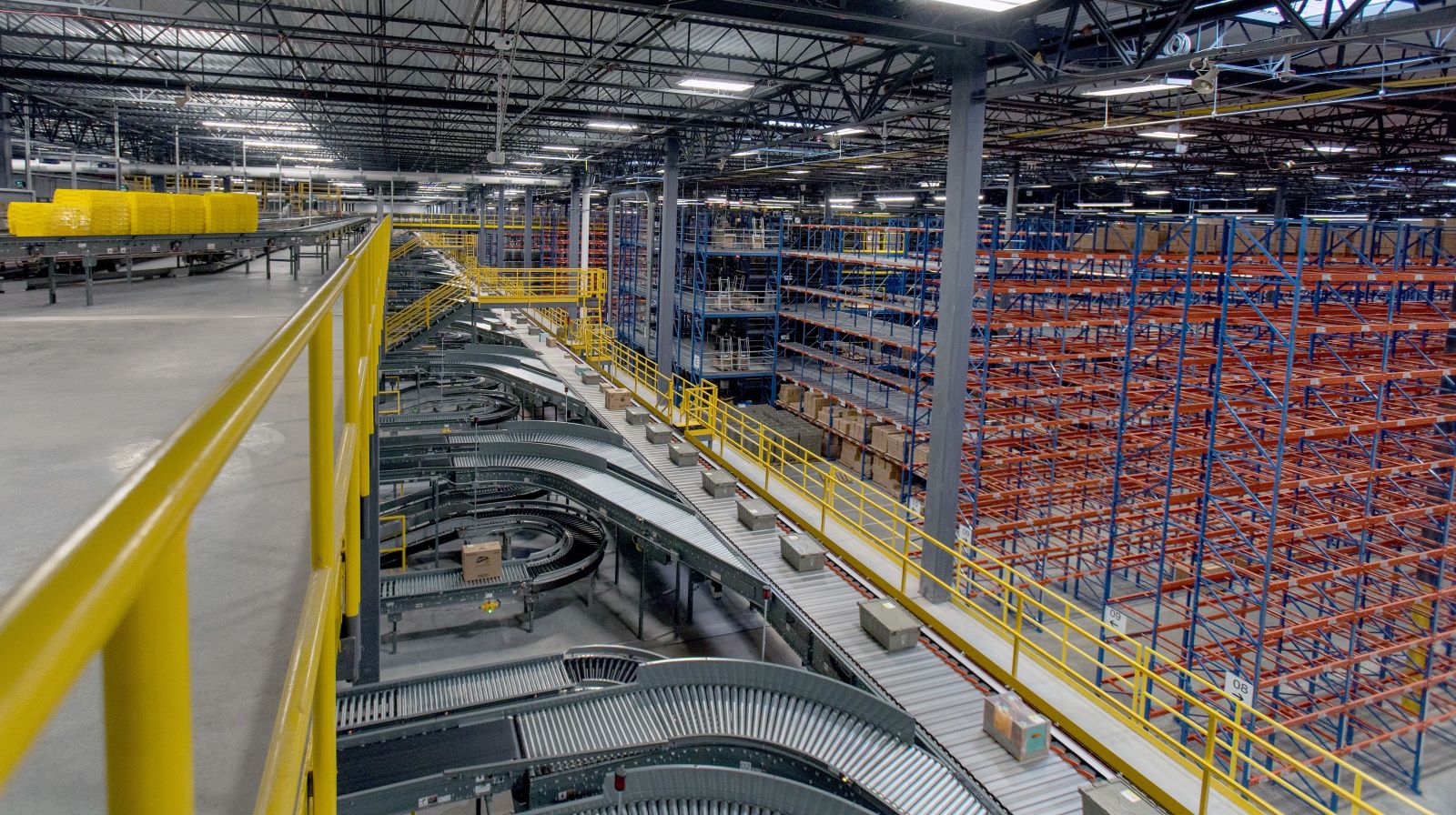
High-speed sliding shoe sorters and storage racking

Our DC & Warehouse Design
Services Will Help You Answer Questions Like These:

Our services provide expert guidance on determining the optimal size, technology, and layout for your facility while addressing potential bottlenecks, ensuring future flexibility, and calculating ROI.
Collaboration-Icon

What size distribution center is required to support current and future volumes?

What distribution center processes will drive service and volume targets at the least cost?

Does the solution involve efficient processes alone or is enabling technology required?

How can existing equipment be re-used to reduce cost?

Can current technology be modified or upgraded to meet the requirements?

What interfaces will need to be created to integrate with existing software systems?

What is the appropriate design and specification for storage and handling technology?

Where will potential bottlenecks develop and how can they be addressed?

Transform Your
Warehouse & DC Operations
with Expert Facility Design

Align your facility design with business goals for long-term success.

Space
Optimization

Maximize space utilization for
efficiency and storage.

Scalable
Facility Design

Design facilities to adapt and
scale with growth.

Operational
Efficiency

Streamline operations to reduce
bottlenecks and increase productivity.

Financial Impact Business Agility Icon

Cost-Effective
Solutions

Implement cost-saving strategies to
maximize ROI.

Data-Driven
Decisions

Leverage data for informed
and strategic decisions.

Future-Proofing
& Agility

Create adaptable designs for
evolving business needs.

Providing Strategic Guidance & Tactical Execution

Our Approach to Distribution Center Design

We assist clients with facility and process design evaluation, facility visualization, capacity analysis, optimization, controls and system emulation, troubleshooting, capital project evaluation, and process re-engineering.

KPI’s design considerations for greenfield sites and retrofits are numerous and not limited to:

  • Facility size and physical attributes
  • Site, process, and material flow patterns
  • Order fulfillment design
  • Slotting strategies
  • Layout and storage planning
  • Materials handling equipment specifications & RFP
  • Storage equipment definition
  • Docks and loading positions
  • Productivity and labor calculations

Enhance your Facility’s Capabilities with Our Distribution Center Design Consulting Services

Solutions are designed using empirical analysis, operating expertise, and a proven methodology.

Your new facility or retrofit design will be:

  • Created by distribution professionals with real-world operations experience
  • Agile to scale as business requirements change
  • Designed with an independent approach to suppliers and technology
  • Aligned with your company’s business goals

KPI’s Neutral Approach to Technology Evaluation

  • Automation Evaluation Mitigating labor challenges and meeting customer service requirements by evaluating all feasible automation technology solutions.
  • Technology Selection KPI’s technology-neutral approach evaluates automation options to ensure they meet business goals.
  • Materials Handling Visit the Systems Integration page to learn more about KPI’s materials handling evaluation and selection service.
KPI Solutions Design Consulting
Group 13551-min

Maximize Operational Efficiency While Minimizing Costs

KPI evaluates fixed and variable costs over a design horizon resulting in a cumulative investment and OPEX forecast.

Why Choose KPI Solutions for Facility Design?

We modify existing distribution centers or design new ones to accommodate growth, channel demand shifts, acquisitions, new service requirements, or cost reduction mandates.

With decades of proven experience from over 500 projects across 30 countries, our team delivers unmatched expertise in facility design. Our solutions offer significant advantages:

  • Data-Driven and Outcome-Focused: We employ data-driven strategies to drive key outcomes, enhancing distribution strategy and operational efficiency.
  • Independent and Unbiased Consulting: As a trusted consultant for leading companies in North America’s beverage distribution networks, we offer independent, unbiased advice to ensure the best results for your business.
  • Engineered Solutions with Operational Excellence: Our solutions are crafted with an unmatched level of detail, based on in-depth analysis and operational excellence, tailored to your specific needs.
  • Phased Capital Planning: Our strategic planning aligns with your operational phases and budgetary requirements, enhancing efficiency and cost-effectiveness over time.

Frequently Asked Questions (FAQ)

  1. What is the difference between greenfield and brownfield warehouse design?
    Greenfield design involves building a brand-new facility on undeveloped land, offering total freedom to optimize layout and technology from scratch. Brownfield design (or retrofit) involves optimizing an existing facility, which is often more cost-effective but requires working within the constraints of existing columns, ceiling heights, and dock locations.
  2. How do I determine the optimal square footage for a new distribution center?
    Optimal square footage is calculated by modeling your peak inventory levels, projected growth over 5–10 years, and required throughput speeds. Rather than just looking at “footprint,” we analyze cubic volume utilization to ensure you aren’t paying for empty air or building more floor space than your SKU velocity requires.
  3. When should I consider automation in my warehouse design?
    Automation should be considered when labor costs, throughput requirements, or land prices reach a point where manual operations are no longer competitive or scalable. A data-driven design process identifies the specific “tipping point” where the ROI of technologies like AS/RS or AMRs outweighs the initial capital investment.
  4. How does warehouse design impact labor productivity?
    Design impacts productivity by minimizing “travel time”—the most expensive non-value-added activity in any warehouse. By strategically placing high-velocity pick zones, optimizing dock-to-stock paths, and reducing manual touches, a well-designed facility can increase pick rates by 20% to 50% without adding staff.
  5. What are the biggest mistakes to avoid in distribution center planning?
    The most common mistakes include underestimating future growth, failing to account for SKU proliferation, and designing a layout around a specific vendor’s equipment rather than your actual data. “Dead space” and bottlenecked shipping docks are often the result of planning for today’s volume instead of tomorrow’s requirements.
  6. How do you “future-proof” a warehouse design?
    Future-proofing is achieved through modular design and flexible infrastructure that allows for easy equipment upgrades or layout changes. We design facilities with “expansion knock-outs” and scalable power/data grids so that a manual warehouse today can seamlessly transition into a highly automated one five years from now.
  7. How does a “technology-neutral” approach benefit the design process?
    A technology-neutral approach ensures that the facility is designed around your unique data and operational needs, not a specific manufacturer’s sales quota. This allows you to select the best-of-breed equipment—from racking to conveyors—that offers the best performance and ROI for your specific SKU profile.
  8. What role does sustainability play in modern warehouse design?
    Modern design incorporates sustainability through energy-efficient LED lighting, solar-ready roofing, and high-efficiency HVAC systems for climate-controlled zones. Beyond “being green,” these features significantly reduce long-term operational costs and help meet increasingly strict corporate ESG (Environmental, Social, and Governance) goals.
  9. How do you optimize “dock-to-stock” flow in a new facility?
    Optimizing flow requires a linear or U-shaped design that prevents inbound and outbound congestion. We analyze dock door requirements based on vehicle turn times and use simulation to ensure that receiving, staging, and put-away processes happen in a continuous motion without backtracking or staging-area bottlenecks.
  10. Why is warehouse simulation necessary during the design phase?
    Simulation acts as a “digital stress test” for your design, allowing us to run years of operational data through the virtual layout in minutes. It identifies hidden bottlenecks—like a sorter that can’t handle a holiday surge—before a single cubic yard of concrete is poured, saving millions in post-construction modifications.

Discover Our Services

At KPI Solutions, we provide data-driven analysis and unbiased solutions that drive operational excellence and build resilience.