


Scroll Down

Enable faster and more accurate handling of goods
Automated Storage and Retrieval Systems Overview
Many warehouses, distribution centers, and manufacturing facilities struggle with managing large volumes of inventory and fulfilling client orders accurately and on time. This can be especially challenging when there is a high volume of small, medium, and large-sized items to be stored and retrieved quickly and efficiently. Implementing an AS/RS system provides a more efficient, cost-effective, and reliable solution for managing inventory and fulfilling client orders.
Automated Storage and Retrieval Systems (AS/RS)
Manual handling of goods can be time-consuming, labor-intensive, and error-prone, leading to inefficiencies and delays in the supply chain. This can result in lost revenue, decreased customer satisfaction, and increased costs. Implementing an AS/RS system provides many benefits.
-
 Increased Efficiency: AS/RS enables faster and more accurate storage and retrieval of goods, reducing the time and labor required for these tasks.
-
 Improved Space Utilization: AS/RS systems can store goods more densely than manual storage systems, maximizing the use of available floor space.
-
 Enhanced Safety: AS/RS minimizes the risk of workplace accidents by reducing the need for manual material handling and increasing overall safety.
-
 Increased Productivity: By automating storage and retrieval processes, AS/RS systems allow warehouse staff to focus on more valuable tasks, leading to increased productivity.
Select the AS/RS technology that works best for your specific needs
Types of Automated Storage and Retrieval Systems
From mini-load AS/RS operating on lightweight products to unit-based storage designed for high-density use cases, AS/RS installs are customized to serve facility goals
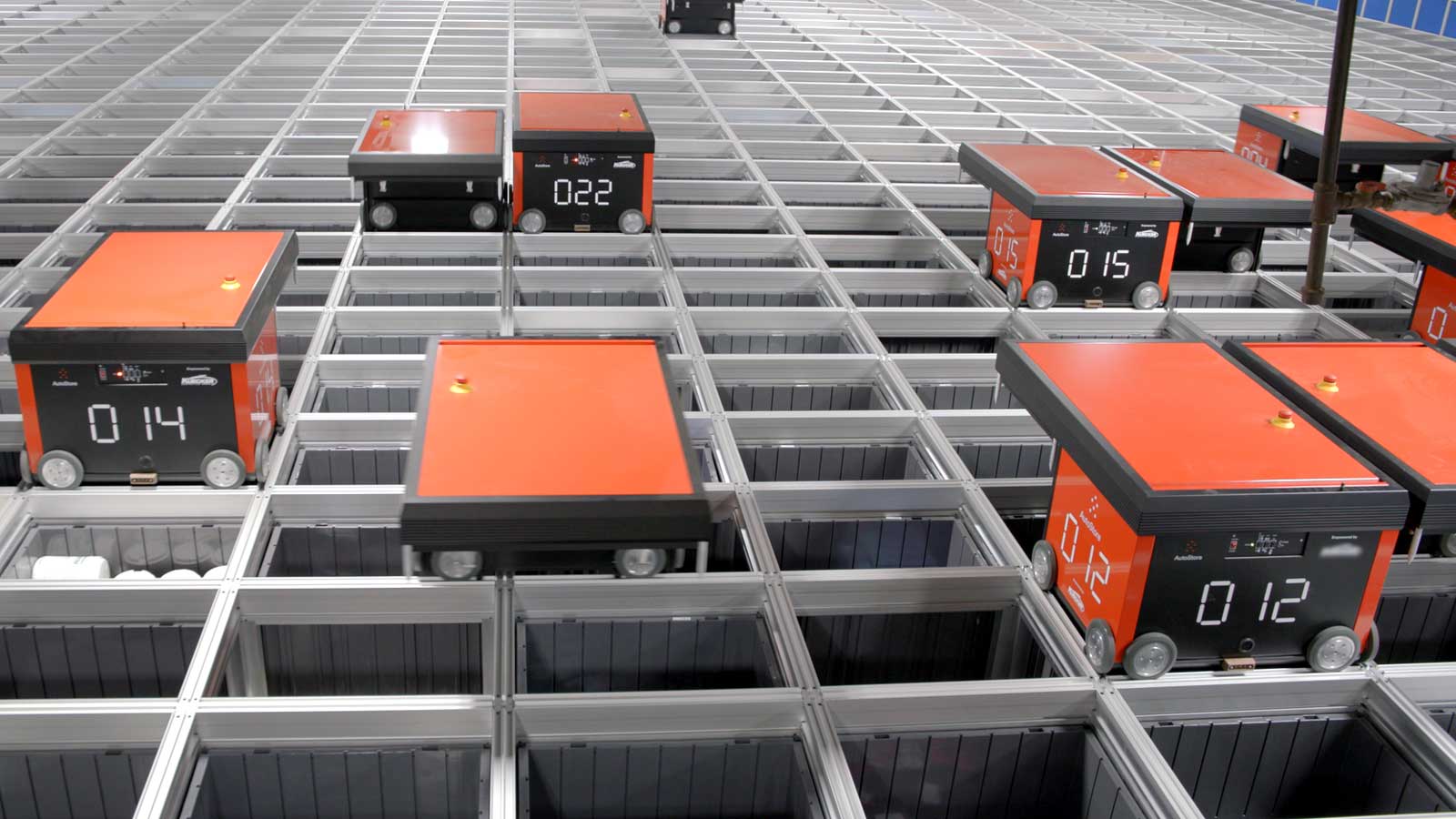
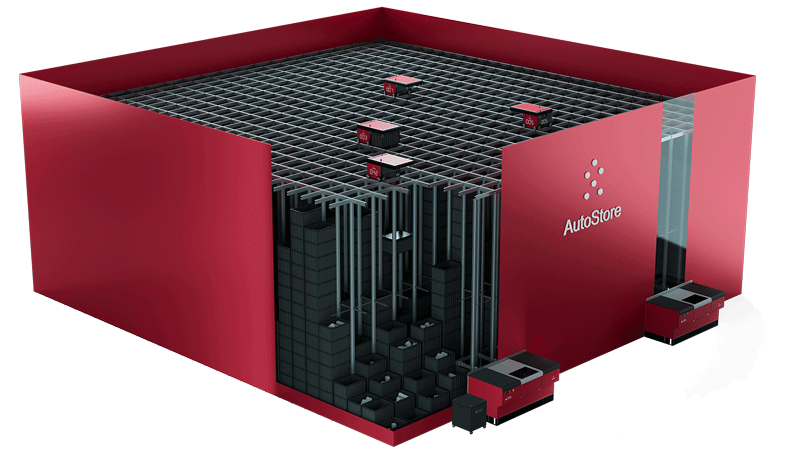
AutoStore Cube-Based AS/RS
- Powered by KPI Solutions
- Ultra-high density goods-to-person piece picking system which utilizes robots to store and retrieve bins from a cubical storage grid.
- Cube-based AS/RS systems are commonly used in high-density storage applications, such as manufacturing and distribution centers, where space is at a premium and materials need to be stored and retrieved quickly and efficiently.

Unit-Load AS/RS
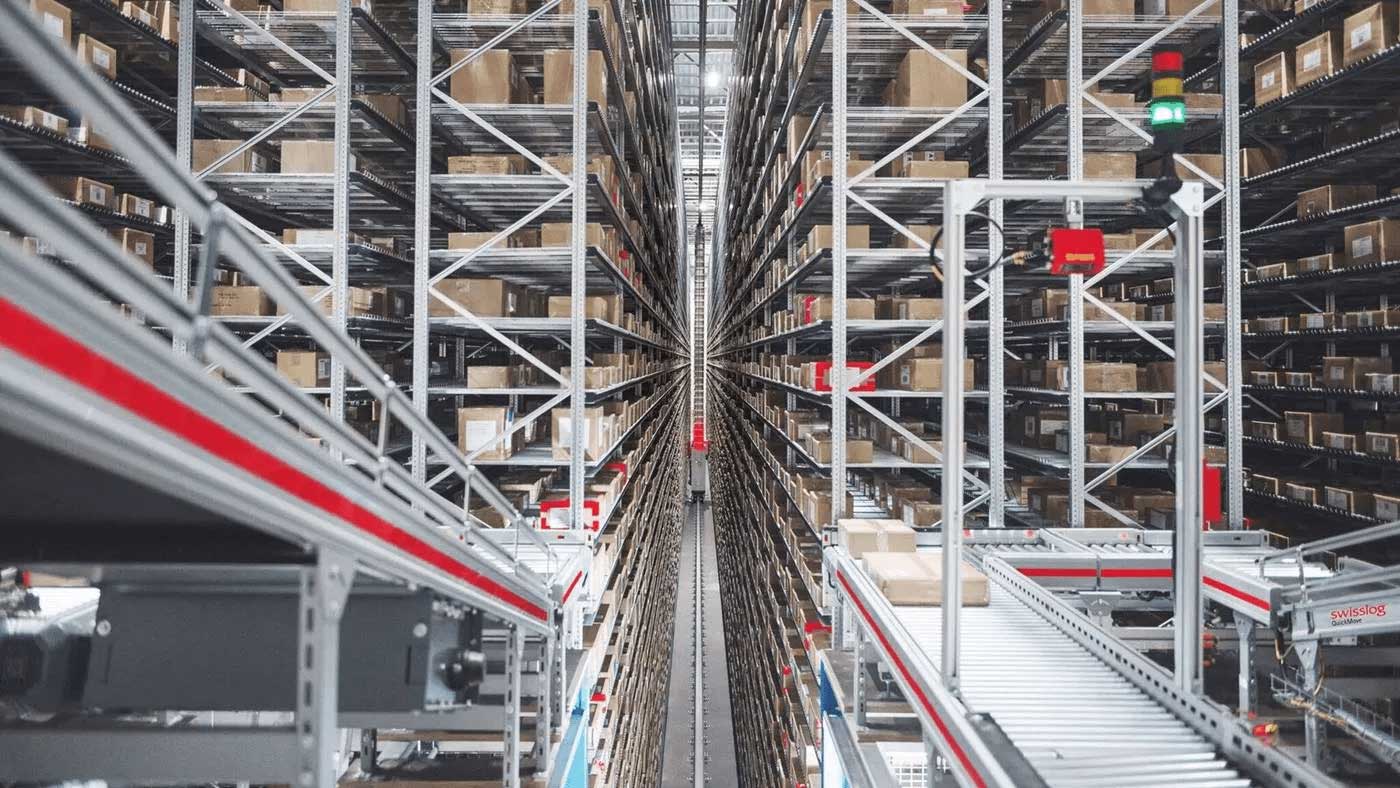
- Designed to handle large, heavy loads, such as pallets, crates or large containers.
- Unit-load AS/RS systems are often used in high-volume distribution centers or manufacturing facilities where large quantities of goods need to be stored and retrieved quickly and efficiently.
Scroll Down
Mini-Load AS/RS
- Designed to handle smaller loads, typically in boxes, totes, or trays.
- Mini-load AS/RS systems are often used in e-commerce or order fulfillment operations where high accuracy and speed are required.
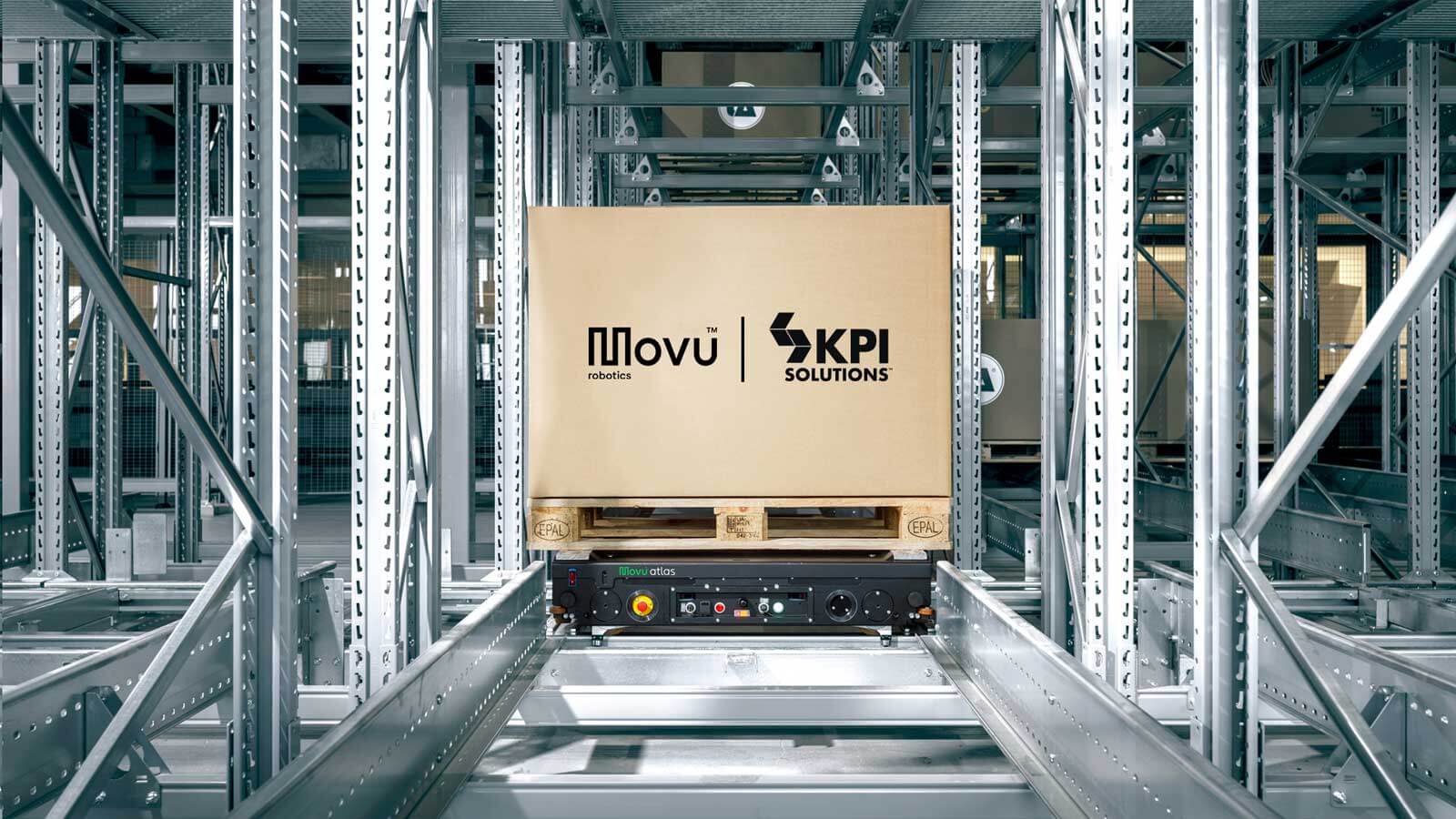
4-way Pallet Shuttle System
- Used for high-density storage of palletized goods.
- Designed to move horizontally and vertically within the racking system, allowing it to access and retrieve pallets from any position within the storage lanes.
- This provides a high level of flexibility and enables efficient use of available storage space.
Our 4-Way Shuttle System Experience
300K Pallet Positions Across All Projects | 300 Shuttles | 7 Sites
Industry |
Pallet Positions |
4-Way Shuttles |
| Pharmaceutical Manufacturer | 12,000 | 12 |
| Food Manufacturer | 14,171 | 10 |
| CPG Site #1 | 129,000 | 100 |
| CPG Site #2 | 62,000 | 70 |
| Ambient Supermarket | 23,000 | 53 |
| Refrigerated Supermarket | 5,000 | 23 |
| Frozen Supermarket | 13,000 | 18 |
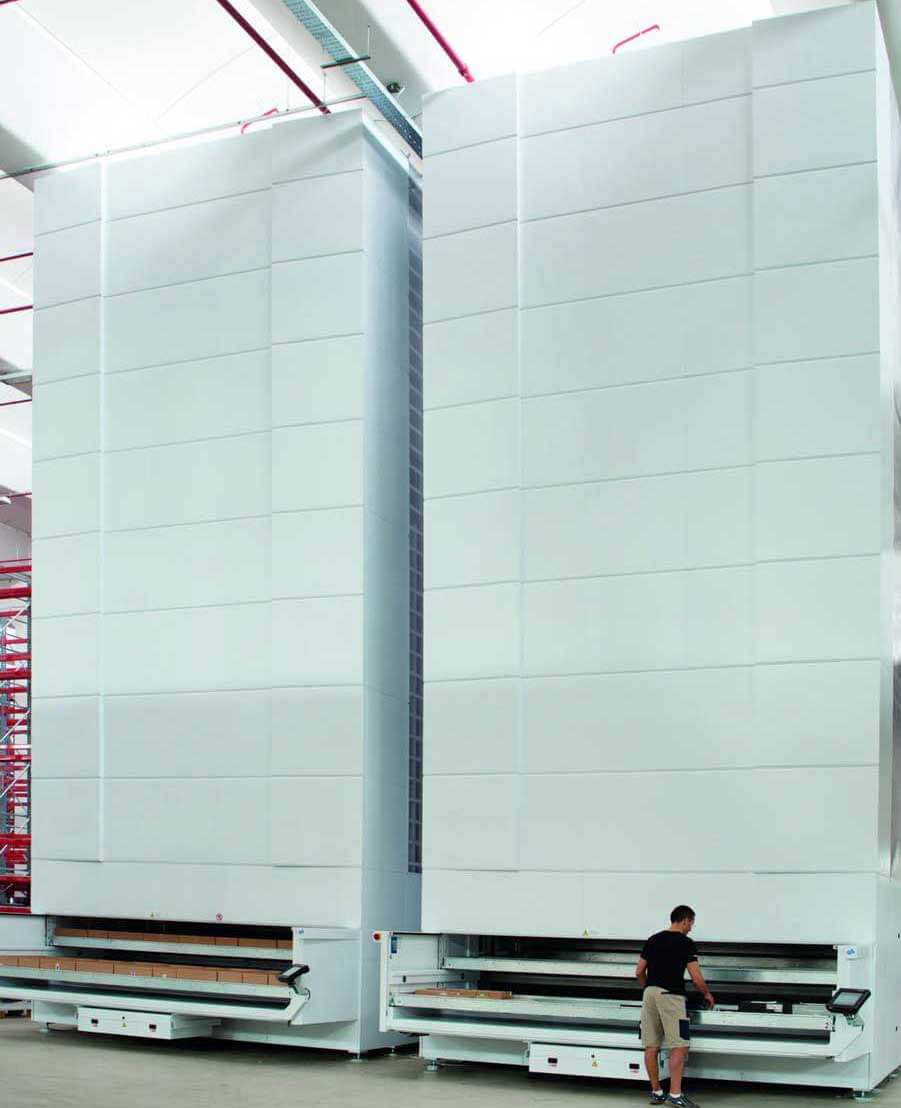
Vertical Lift Modules (VLMs)
- Optimize storage capability by reducing footprint by up to 90%
- Streamline inventory management and reduce picking errors
- Reduce manual picking inefficiencies with a goods-to-person solution
Click to Learn More About Our AS/RS Partners
Benefits of Automated Storage and Retrieval Systems

Reduce labor costs

Increase inventory storage density

Provide a high ROI on facility improvements

Improve inventory management

Effectively use available floor space
Warehouse automation solutions
Throughout the years, we implemented a full range of customized safe and scalable solutions that elevated distribution performance
Frequently Asked Questions (FAQ)
- What is an Automated Storage and Retrieval System (AS/RS)?
AS/RS refers to a variety of computer-controlled systems that automatically place and retrieve loads from specific storage locations. These systems replace manual picking with high-speed automated equipment, enabling significantly higher storage density, greater inventory accuracy, and faster throughput.
- What are the primary types of AS/RS technology?
AS/RS technologies are generally categorized by the size of the load they handle:
- Unit-Load AS/RS: For large, heavy loads like full pallets.
- Mini-Load AS/RS: For smaller loads like totes, trays, or cases.
- Cube-Based (e.g., AutoStore): Ultra-high density storage using robots on a grid.
- Vertical Lift Modules (VLMs): Enclosed systems that deliver trays to an operator at a waist-high window.
- Pallet Shuttles: Deep-lane storage systems that move pallets via robotic shuttles within the racking.
- How much space can I save by implementing an AS/RS?
Because AS/RS utilizes vertical space and operates in much narrower aisles than human-operated forklifts, it can reduce your required storage footprint by up to 40% to 90%, depending on the specific technology. This allows companies to stay in their existing facilities longer or build much smaller new buildings.
- What is Cube-Based AS/RS, and how does it differ from other systems?
Cube-Based systems, like AutoStore, store bins in a dense, stacked grid with no aisles. Robots travel across the top of the grid to retrieve bins and deliver them to picking ports. This is currently the densest storage technology available, making it ideal for e-commerce and high-SKU piece picking where floor space is at a premium.
- How does AS/RS improve inventory accuracy?
In an AS/RS environment, the system has total control over every SKU location. Every movement is logged by the WES/WMS, virtually eliminating “lost” inventory and manual entry errors. This high level of precision allows for real-time inventory visibility and reduces the need for frequent physical cycle counts.
- Can AS/RS handle cold storage and refrigerated environments?
Yes. AS/RS is particularly valuable in cold storage because it maximizes the use of expensive refrigerated volume. Automated systems can operate continuously in sub-zero temperatures that are difficult for human workers, reducing the “door-open” time and significantly lowering energy costs by keeping the storage area compact.
- What is the difference between Unit-Load and Mini-Load AS/RS?
The difference is scale. Unit-Load systems are heavy-duty, often reaching heights of 100 feet or more to store full pallets weighing thousands of pounds. Mini-Load systems are designed for high-speed handling of smaller items (under 100 lbs) in totes or boxes, making them perfect for order fulfillment and kitting operations.
- How do Vertical Lift Modules (VLMs) benefit a warehouse?
VLMs are “Goods-to-Person” systems that store items on vertically stacked trays. When a part is needed, the system brings the specific tray to the operator. This eliminates walking and searching, protects inventory from dust and theft, and can reduce the storage footprint of small parts by up to 90% compared to standard shelving.
- Is AS/RS a good fit for high-velocity (fast-moving) items?
AS/RS is highly effective for high-velocity items when configured correctly. Shuttles and cube-based systems are engineered for high-throughput environments where thousands of lines must be picked per hour, ensuring that fast-moving SKUs are always available at the pick face.
- What is the typical ROI for an AS/RS investment?
The ROI for AS/RS is usually driven by labor savings, space consolidation, and increased accuracy. While the initial capital investment is higher than manual racking, most companies see a full return in 3 to 5 years. Beyond the financials, AS/RS provides “operational insurance” against labor shortages and allows for rapid scaling during peak seasons.