How Warehouse Execution Systems Transform Retail and E‑Commerce Fulfillment in 2026


The explosive growth of e‑commerce has fundamentally reshaped retail logistics. As online sales approach $6.88 trillion globally in 2026 and account for 21.5% of total retail sales, retailers face unprecedented pressure to fulfill orders faster, more accurately, and more cost‑effectively than ever before. At the center of this transformation is the Warehouse Execution System—intelligent software that orchestrates every moving part of modern fulfillment operations.
The E‑Commerce Mandate
The statistics tell a compelling story. Global e‑commerce sales are projected to reach $6.88 trillion in 2026, representing a 7.2% increase from the previous year. Mobile commerce now drives over 60% of all e‑commerce transactions worldwide, while retailers managing omnichannel operations must simultaneously serve online customers expecting same‑day delivery and brick‑and‑mortar stores requiring frequent replenishment.
The warehouse execution system market reflects this urgency. Valued at $3,626.23 million in 2026 and projected to reach $5,600 million by 2030 at a CAGR of 11.4%, it continues to expand rapidly. The growth of e‑commerce and omnichannel retail remains the primary driver, forcing organizations to prioritize efficiency, agility, and real‑time visibility in warehouse operations.
For retailers juggling thousands of SKUs, seasonal demand spikes, and persistent labor shortages, traditional warehouse management approaches have become insufficient. This is where WES delivers transformative value.
What Makes WES Critical for Retail
A Warehouse Execution System acts as the orchestration layer between high‑level inventory management (WMS) and the physical execution of warehouse tasks. It manages the real‑time flow of orders and activities, directing work to human workers, robots, automated storage systems, and material‑handling equipment in the most efficient sequence possible.
Unlike traditional warehouse management systems, which determine what needs to happen, WES ensures that execution occurs in the most efficient way. It balances order flows, equipment usage, and labor resources in real time, creating a steady, predictable workflow that maximizes capacity.
Modern WES solutions excel at managing the specific complexities of retail fulfillment:
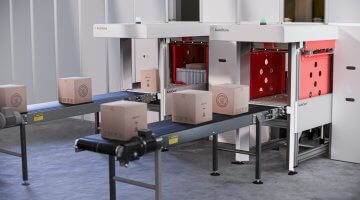
- Dynamic Task Orchestration: The system coordinates multiple automation technologies—conveyors, sorters, autonomous mobile robots, and automated storage and retrieval systems—into unified workflows. This integration delivers levels of speed and accuracy impossible with siloed systems, making WES indispensable for enterprises supporting both in‑store and e‑commerce fulfillment.
- Waveless Order Processing: Traditional batch‑based picking struggles with the pace of omnichannel retail, where customer orders must be fulfilled immediately rather than held for wave release. WES supports waveless processing, releasing orders based on downstream throughput and enabling faster turnaround times while prioritizing high‑value direct‑to‑consumer orders.
- Real‑Time Visibility: Warehouse managers gain live operational data that allow them to track order progress, identify bottlenecks, and make immediate decisions. When delays are detected, WES dynamically reassigns tasks to available resources to prevent missed deadlines.
- Predictive Intelligence: Advanced WES platforms incorporate machine learning and predictive analytics to forecast demand, optimize resource allocation, and identify potential issues before they occur. Predictive algorithms can anticipate labor shortages and automatically redistribute work to robotics or alternative warehouse zones.
Retail‑Specific Advantages
- Omnichannel Excellence: WES orchestrates fulfillment across multiple channels simultaneously, building store‑replenishment pallets sequenced by aisle while also processing individual e‑commerce orders. This capability is essential as retailers serve customers who browse online, buy in‑store, or order online for home delivery—with behaviors shifting constantly.
- Peak Season Resilience: Retailers face extreme seasonality during holidays, promotional events, and viral product surges. A robust WES ensures that e‑commerce spikes, seasonal peaks, and labor fluctuations do not lead to bottlenecks or missed deliveries. The system scales operations 24/7 without fatigue and adapts to real‑time shifts in order mix.
- Labor Optimization: Labor shortages continue to challenge the retail sector. Automated workflows coordinated by WES help offset staffing gaps while enabling available workers to focus on higher‑value activities such as quality control, customer service, and exception handling rather than repetitive manual tasks.
- Inventory Accuracy: Real‑time inventory visibility reduces excess stock and carrying costs. WES maintains optimal inventory levels, preventing overstocking and stockouts—critical when mobile shoppers expect accurate, real‑time inventory counts online.
- Speed to Market: For fast‑fashion retailers, seasonal merchandise, and limited‑edition products, speed directly impacts revenue. Automated systems coordinated by WES can reduce fulfillment cycle times from days to hours, ensuring products reach consumers while demand peaks.
- Returns Management: With U.S. e‑commerce returns approaching $849.9 billion for 2025 and nearly 15.8% of online purchases returned, efficient reverse logistics is essential. WES streamlines returns processing and routes products quickly back into sellable inventory or appropriate disposition channels.
Integration and Scalability
Cloud‑based WES platforms support multi‑site operations, enabling optimization insights and real‑time data to flow across entire distribution networks. This capability is especially valuable for enterprises that operate multiple fulfillment centers serving different regions or product categories.
WES integrates seamlessly with existing WMS, ERP, and order management systems, as well as with warehouse control systems that manage conveyors, sortation equipment, and other material‑handling automation.
The Competitive Imperative
The integration of AI, real‑time orchestration, and intelligent automation transforms fulfillment from a cost center into a strategic advantage. Retailers capable of offering same‑day or next‑day delivery gain market share, while those that cannot often compete only on price—an increasingly unsustainable position.
Companies that fully embed AI into their customer journey report 15% to 25% revenue increases, while AI‑driven predictive analytics can reduce inventory holdings by 20% to 30%. WES serves as the execution engine that enables these improvements.
As e‑commerce continues to grow and consumer expectations evolve, warehouse execution systems have shifted from competitive advantage to competitive necessity. For retailers still relying on disconnected systems and manual processes, the window to modernize is narrowing rapidly.
The future of retail fulfillment is already here—powered by intelligent orchestration, real‑time visibility, and seamless automation.
Ready to transform your retail fulfillment operations?
The KPI Solutions Opto™ WES delivers enterprise‑grade orchestration for your automation investments. Contact us today to learn how intelligent warehouse execution can drive profitability and scalable growth in your retail operations.
If you’re exploring how AI can elevate your supply chain operations, let’s connect: contact KPI Solutions
Categories (tags):