The Role and Value of a WES in Distribution Center Operations
Distribution centers are evolving rapidly. As customer expectations rise and labor markets tighten, supply chain leaders are investing heavily in automation to stay competitive. But automation alone does not guarantee success.
The real challenge lies in coordinating people, systems, and machines in a way that delivers consistent, measurable results. These situations are where a Warehouse Execution System (WES) becomes essential.
A WES is not just another software layer. It is a strategic platform that connects planning systems with real-time execution. It ensures that every order, task, and resource aligns with business priorities.
For executives focused on growth, efficiency, and resilience, a WES provides the operational clarity and control needed to move forward with confidence.
Why Traditional Systems Fall Short
Most distribution centers already rely on warehouse management systems (WMS) and enterprise resource planning (ERP) platforms. These systems are critical for managing inventory and order data. However, they are not designed to make real-time decisions about how work should be executed on the floor.
As fulfillment environments become more complex, this gap between planning and execution becomes more costly. Delays, inefficiencies, and missed service levels often stem from a lack of coordination between systems and processes.
A WES addresses this challenge by orchestrating the flow of work across automation, labor, and inventory in real time.
A Strategic Layer for Modern Fulfillment
A WES acts as the conductor of the distribution center. It continuously evaluates order demand, labor availability, equipment status, and inventory positioning. Based on this data, it prioritizes tasks, assigns work, and adjusts workflows throughout the day to optimize efficiency.
This orchestration is especially valuable in environments that support multiple fulfillment models, such as direct-to-consumer, retail, and wholesale. It ensures that resources are used efficiently, service levels are met, and operations remain agile in the face of change.
For executives, this means fewer surprises and more predictable performance. It also means that automation investments are fully utilized, rather than operating in silos or under capacity.
Flexibility That Reduces Risk
One of the most essential qualities of a modern WES is its flexibility. Unlike legacy systems that require custom development for every change, a best-in-class WES is built on a modular, configurable architecture. This functionality enables the rapid and secure implementation of new workflows, automation systems, and business rules.
This flexibility reduces deployment risk and shortens time-to-value. It also empowers teams to adapt without relying on IT or external vendors for every adjustment. Whether responding to a shift in order volume or piloting a new automation system, a WES provides the tools to act decisively.
Visibility That Drives Better Decisions
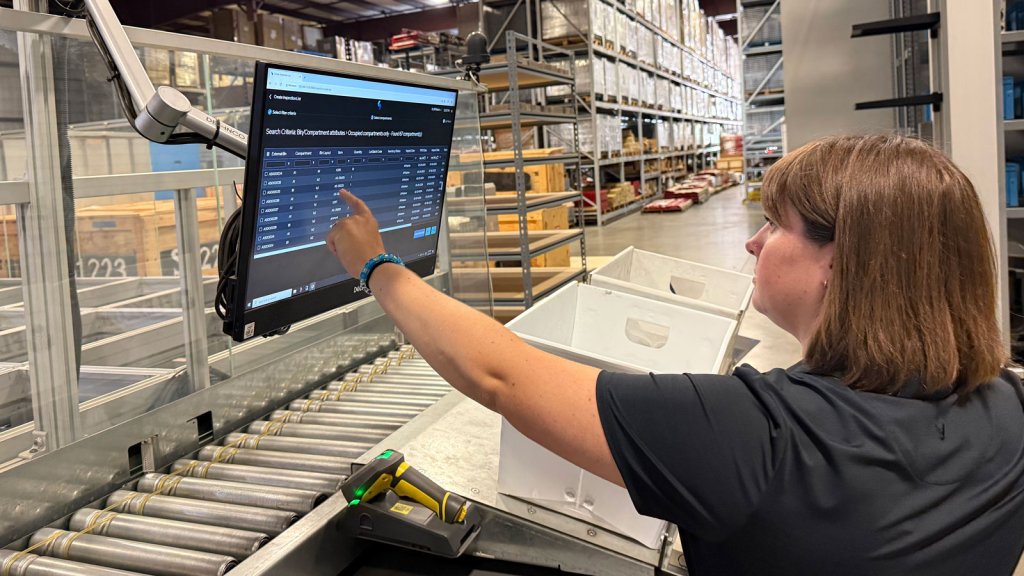
A WES provides real-time visibility into the health and performance of the distribution center. Dashboards, alerts, and analytics offer insights into task execution, equipment utilization, and labor productivity. That level of transparency supports faster decision-making and more effective resource allocation.
The visibility also enables better collaboration across departments. When supply chain, operations, and IT leaders share a standard view of performance, they can align more effectively around shared goals and initiatives.
A Foundation for Scalable Growth
Fulfillment operations must scale to meet new demands. A WES supports this growth by enabling horizontal scalability. New services, technologies, and workflows can be added incrementally without disrupting existing operations.
This scalability ensures that distribution centers can evolve in tandem with the business. It also supports continuous improvement by making it easier to test new strategies, measure results, and replicate success across the network.
Delivering on the Promise of Automation
Automation is a significant investment. But without the right orchestration layer, even the most advanced systems can fall short of expectations. A WES ensures that automation is not only integrated but optimized.
The system coordinates the movement of goods, synchronizes tasks across systems, and ensures that every piece of equipment contributes to the broader fulfillment strategy.
This coordination leads to measurable results, including higher throughput, reduced labor strain, improved accuracy, and more effective use of space and resources.
A Smarter Path Forward
For supply chain leaders, the value of a WES goes beyond operational efficiency. It is about building a fulfillment operation that is agile, scalable, and ready for what comes next. It is about reducing risk, improving responsiveness, and enabling innovation.
KPI’s Opto™ WES is designed with these priorities in mind. Its modular architecture, real-time orchestration, and technology-neutral design make it a powerful platform for modernizing fulfillment operations.
Whether expanding automation, consolidating systems, or preparing for future growth, Opto provides the strategic foundation to move forward with confidence.
Explore how KPI’s Opto WES helps you orchestrate automation, labor, and systems for smarter, more resilient fulfillment:

Categories (tags):