Empowering IT Teams Through Smarter Fulfillment Systems
The role of IT in supply chain operations has evolved. It is no longer limited to maintaining infrastructure or resolving routine technical issues. Today, IT professionals are expected to help shape fulfillment strategies, support operational agility, and ensure that systems can scale and adapt as business needs change. This shift requires tools that go beyond traditional system management. It calls for platforms that provide real-time visibility, flexible control, and seamless integration across the fulfillment environment.
In many supply chain operations, complexity has increased tenfold in recent years. Customers demand product variety and fast delivery. Facilities are managing a growing number of SKUs, integrating new automation technologies, and supporting multiple fulfillment channels. These changes introduce variability that legacy systems were not designed to handle. A warehouse execution system (WES) helps IT teams manage this complexity by serving as a real-time orchestration layer between planning systems and execution activities.
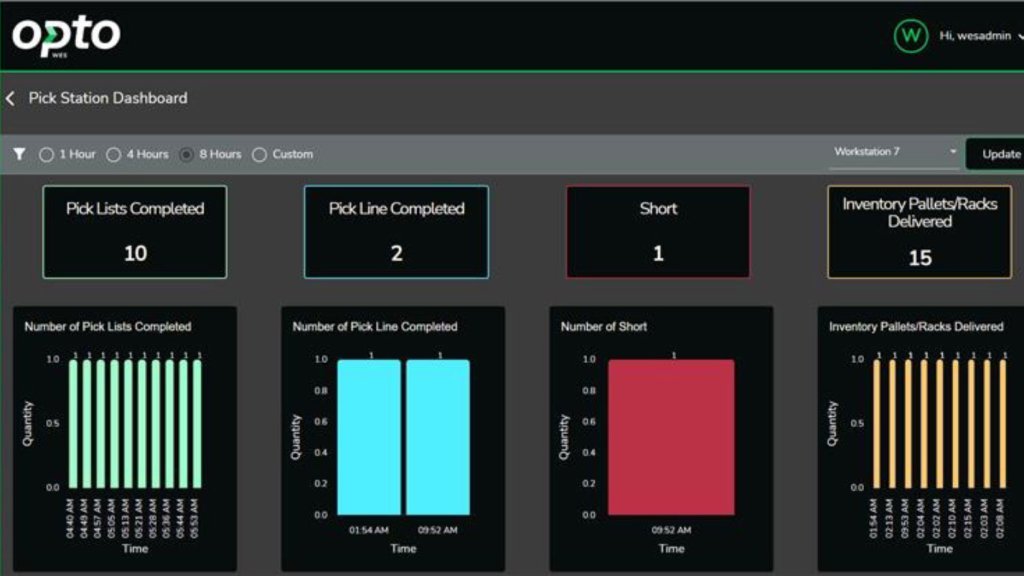
One of the most valuable aspects of a WES is its ability to simplify system interaction. When interfaces are intuitive and workflows are easy to configure, IT teams spend less time supporting users and more time focusing on strategic initiatives. A well-designed WES allows users to monitor task progress, adjust priorities, and respond to operational changes without needing to write scripts or rely on IT for every adjustment. This reduces the volume of support requests and empowers operations teams to take more ownership of their work.
Security and access control are also critical. A WES that supports role-based access allows IT administrators to define permissions based on job function. This ensures that users only see the information relevant to their responsibilities, which improves focus and reduces the risk of errors. It also simplifies onboarding and helps maintain system integrity by limiting access to sensitive configuration settings.
Flexibility is another key requirement. In fast-moving order fulfillment environments, the ability to adjust workflows without custom development is essential. A WES should allow IT teams to modify task logic, reconfigure system behavior, and adapt to new requirements through built-in tools. This capability supports faster response times and reduces the need for external development resources. It also enables continuous improvement by making it easier to test and implement operational changes.
Integration to legacy and future system addition/upgrades is a major consideration for IT leaders. Fulfillment operations rely on a variety of systems, including warehouse management platforms, automation controllers, and enterprise resource planning tools. A WES must be able to connect with these systems using open standards and modular architecture. This allows IT teams to build on existing infrastructure while introducing new capabilities incrementally. It also reduces the risk associated with large-scale system changes and supports a more agile approach to technology adoption.
As automation becomes more prevalent, the interaction between people and machines must be carefully managed. A WES helps define these interactions clearly, ensuring that tasks are assigned appropriately and that security protocols are followed. It also provides the data needed to monitor performance, identify inefficiencies, and support continuous improvement. This level of visibility is essential for maintaining service levels and ensuring that fulfillment operations remain aligned with business goals.
The benefits of a WES extend beyond operational efficiency. When systems are easier to use, more adaptable, and better integrated, IT teams can shift their focus from reactive support to proactive innovation. They can lead efforts to introduce new technologies, improve data visibility, and strengthen system resilience. This shift not only enhances fulfillment performance but also positions IT as a strategic partner in business growth.
For IT professionals seeking to modernize fulfillment operations, a warehouse execution system offers a practical path forward. Solutions like KPI’s Opto™ WES are designed to support this evolution, providing the tools and flexibility needed to manage complexity, improve responsiveness, and deliver long-term value across the supply chain.
Categories (tags):