How to Improve Storage Density Without Sacrificing Throughput
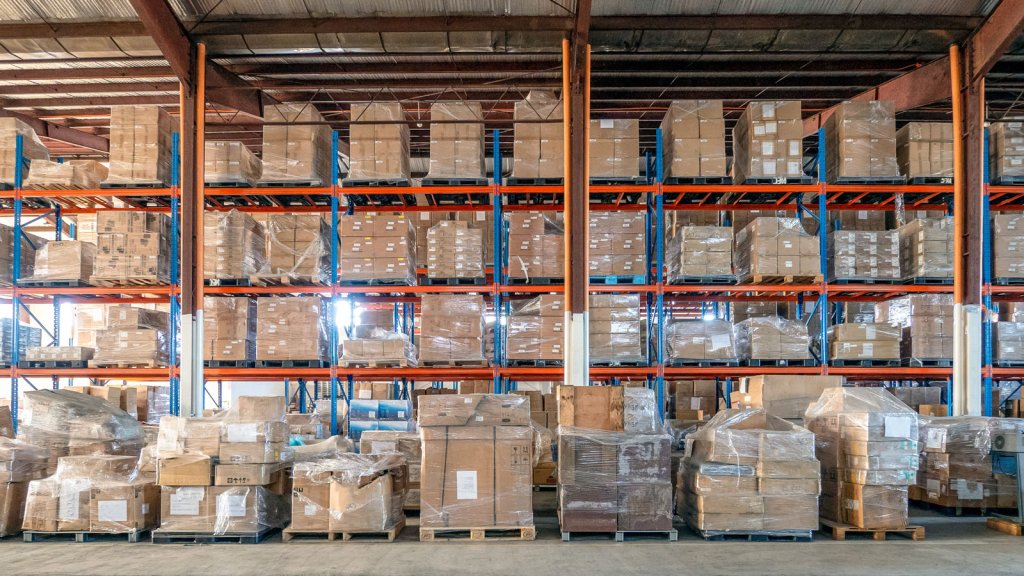
In the modern logistics landscape, the term “density” is often viewed as being at odds with “throughput.” Many warehouse managers assume that increasing the number of pallets stored in a facility must naturally lead to slower picking times and more complex replenishment cycles. However, as real estate costs continue to rise and the availability of large scale distribution centers remains limited, the ability to store more in less space has become a survival necessity. The key to success lies in choosing a storage framework that aligns with the specific velocity of your inventory. By evaluating deep lane, pushback, and double deep solutions, an organization can achieve high density while maintaining the rapid flow of goods required to stay competitive.
The Decision Framework: Matching Racking to SKU Velocity
To improve density without creating bottlenecks, you must first categorize your inventory based on how quickly it moves. A common mistake is applying a high density solution to the entire warehouse without considering the variety of products stored. A more effective approach involves a tiered framework. High-volume products with many pallets per SKU are suitable for the highest-density systems. Medium volume products require a balance of density and accessibility. Low volume items usually remain in selective racking to ensure total access.
When you analyze your data, look for the “sweet spot” where you have enough pallets of a single SKU to fill a deep storage lane. If a lane is too deep for the number of pallets you typically hold, you will experience honeycombing, which actually reduces your effective density. A well-designed system uses a mix of racking types to ensure that every square foot of the warehouse is optimized for the specific movement patterns of the products it houses.
Deep Lane Racking: High Density for Bulk Storage
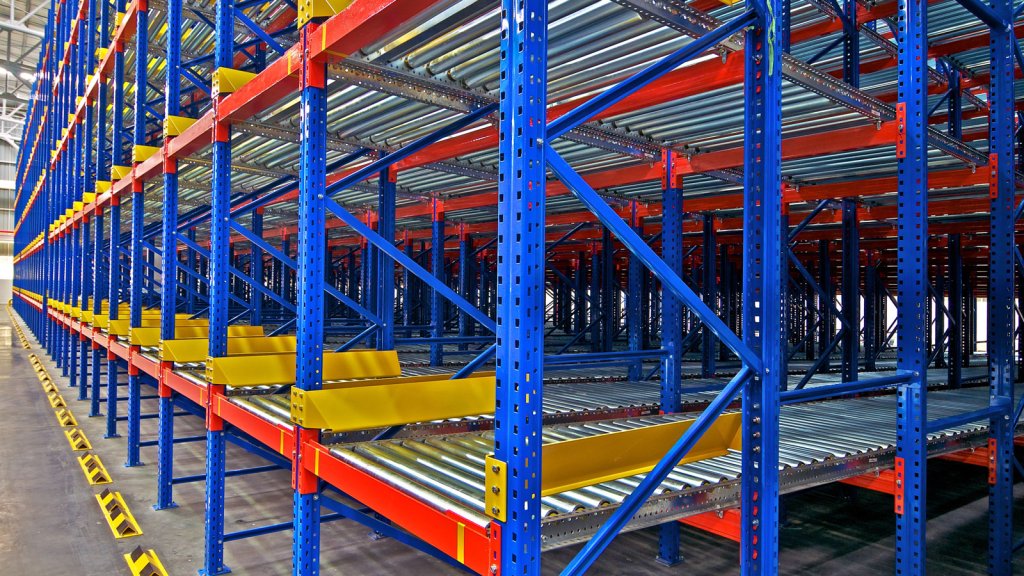
Deep lane storage systems, such as drive in or pallet flow racking, offer some of the highest density levels available. These systems are designed to store large quantities of the same SKU in long lanes. These are frequently used for raw materials or finished goods that are shipped in full truckload quantities. The primary advantage is the massive reduction in aisle space, as multiple pallets are stored one behind the other.
While density is maximized, throughput in a deep lane system is highly dependent on the “Last In, First Out” or “First In, First Out” logic. If the warehouse needs to access a specific pallet in the middle of a lane, the operation slows down significantly. Therefore, deep lane racking is best reserved for your most consistent and high volume items where individual pallet selectivity is less important than total volume. When applied correctly to the right SKU profile, deep lane storage provides immense capacity without hindering the overall flow of the facility.
Pushback Racking: Dynamic Storage for Versatility
Pushback racking offers a dynamic alternative for facilities that need more density than selective racking provides but require more versatility than deep lane systems. In a pushback system, pallets are placed on nested carts that slide on inclined rails. When a new pallet is loaded, it pushes the existing pallets back. When a pallet is retrieved, the remaining pallets slide forward to the aisle face.
This system typically stores pallets two to six deep. It provides a significant boost in density while maintaining relatively high throughput because every lane is accessible from the aisle. This makes it an excellent choice for medium velocity SKUs where you might have three to five pallets of a single item. Because the operator stays in the aisle and does not have to drive into the rack structure, the cycle times for picking and replenishment remain fast. Pushback racking is a resilient solution for warehouses that handle a wide variety of products with fluctuating demand levels.
Double Deep Racking: The Balanced Approach
Double deep racking serves as a middle ground that provides a substantial increase in density while keeping the storage logic simple. By placing two rows of selective racking back-to-back, the system eliminates every other aisle. This configuration is widely adopted because it uses standard racking components and requires only a specialized reach truck to operate.
The throughput in a double deep system remains high because only two pallets are stored in each slot. This limits the potential for deep “burying” of inventory and allows for relatively quick access to any pallet. For high volume distribution centers, double deep racking provides a predictable and scalable way to increase capacity. It is particularly effective when used in conjunction with a robust warehouse management system that can track which pallets are in the front and rear positions, ensuring that rotation is handled efficiently.
Slotting Optimization: The Secret to Maintaining Speed
No matter which racking system you choose, throughput is heavily influenced by your slotting strategy. Slotting is the process of placing the most active items in the most accessible locations. In a high-density environment, this means placing high velocity SKUs at the end of aisles or on lower levels where travel time and lift time are minimized.
Many facilities are using real time data to adjust their slotting patterns. If a product suddenly increases in popularity, the system should prompt a move to a more accessible high-density slot. By constantly refining where products are stored, a warehouse can offset the slight reduction in accessibility that comes with high density racking. Throughput is not just about the steel in the air; it is about the intelligence behind how that steel is used.
Conclusion and Strategic Growth
Improving storage density does not have to result in a slower operation. By applying the right decision framework and selecting the appropriate mix of deep lane, pushback, and double deep solutions, you can create a warehouse that is both dense and fast. The goal is to build a storage infrastructure that supports your current volume while leaving room for the growth and surges that are inevitable in the modern market.
If your facility is struggling to find the balance between capacity and speed, Twinlode Automation, a division of KPI Solutions, can provide the engineering expertise needed to design a custom solution. We specialize in high-density configurations that are built for high-throughput environments. We invite you to contact us today to learn how our racking systems can help you maximize your space without sacrificing your operational performance.
Categories (tags):