Warehouse Labor Availability: How to Do More With a Tighter Workforce

Labor availability remains one of the most significant challenges facing warehouse operations. Finding, training, and keeping enough people has grown harder even as order volumes rise, and the pressure lands hardest during peak. Many organizations are responding by looking for ways to lift productivity while easing their reliance on repetitive manual tasks, so the workforce they do have can focus on higher-value work.
This guide looks at why warehouse labor is so tight, what it costs operations, and the practical strategies, from process design to automation, that help a leaner team move more volume.
Why Warehouse Labor is so Tight
Demand for warehouse labor has climbed alongside the growth of e-commerce and distribution. Employment in warehousing and storage was about a third higher in mid-2024 than it was just before the pandemic, according to the U.S. Bureau of Labor Statistics (BLS). That growth has run into a limited pool of available workers, which makes each open role harder to fill.
Warehouse work also carries turnover well above the average across industries. Physically demanding tasks, seasonal spikes, and competition among nearby facilities all contribute to churn. High turnover is expensive in ways that reach beyond recruiting, since each departure takes process knowledge with it, stretches the remaining team, and adds training load right when volume is climbing.
The Pressures Leaders are Managing
Operations leaders tend to feel several labor pressures at once:
- Open roles that stay unfilled, capping how much the operation can move.
- Turnover that drains experience and raises training costs.
- Seasonal hiring that floods the floor with staff who are new to the equipment.
- Physically repetitive tasks that wear people down and are hard to staff.
- Rising wages that push up the cost of every manual process.
The common thread is a need to get more done with the people available, and to make the roles that remain more attractive and less punishing. is far less disruptive than reacting after service has already suffered.t.
Start With Process, Then Automation
The most effective labor strategies usually begin before any equipment is purchased. Slotting fast-moving items closer to pack-out, batching and sequencing orders intelligently, and balancing work across the shift all reduce wasted travel and idle time. A warehouse execution system supports this by sequencing tasks, allocating labor where it is needed, and adapting as volume shifts through the day, which raises the output of the existing team without adding headcount.
Once the process is sound, automation extends what that team can do.
How Automation Eases Labor Pressure
Automation is most valuable where work is repetitive, physically taxing, or hard to staff. The aim is to redirect human effort toward tasks that need judgment while machines handle the repetitive movement. Several technologies do this well:
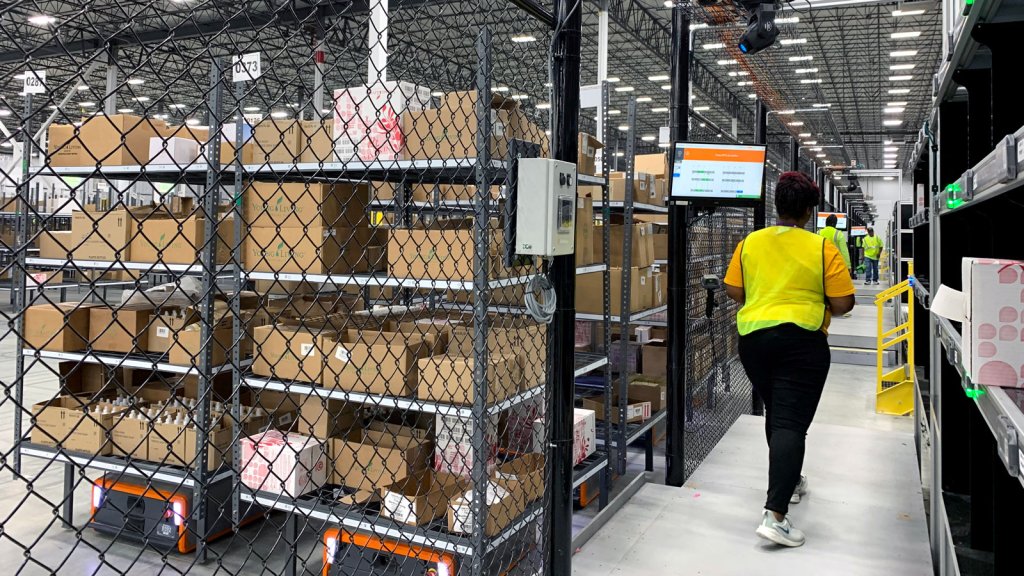
- Goods-to-person systems. Automated storage brings items to the operator at a workstation, cutting the travel that consumes much of a picker’s day and lifting productivity in a smaller footprint.
- Autonomous mobile robots. AMRs move inventory between zones and to workstations without fixed infrastructure, reducing manual transport and adapting as the operation changes.
- Robotic picking and case handling. Robotic systems automate some of the most labor-intensive and physically demanding steps in fulfillment, bringing consistency and easing the strain of hard-to-fill roles.
Beyond throughput, these approaches improve ergonomics and safety by removing repetitive lifting and long walking routes, which can also make roles easier to fill and keep.
Automation as a Workforce Strategy
There is a workforce angle to automation that is easy to overlook. Warehouse associates increasingly view modern tools and automation as reasons to join and stay, since the technology takes on the least rewarding tasks and makes the work feel more valued. Framed this way, investing in automation supports recruiting and retention at the same time it supports throughput.
Build the Business Case
Labor is one of the largest lines in most warehouse operating budgets, so gains in productivity flow straight to the bottom line. That makes the case for process and automation investments a commercial one, best framed around measures leadership can defend: cost per unit or per order, throughput per labor hour, and the capacity to absorb growth and peak without proportional hiring. Grounding the decision in those numbers, drawn from your own operation, turns a labor problem into a clear investment case.
The right mix depends on the operation. Order profiles, SKU velocity, the local labor market, and physical layout all shape which technologies fit, which is why a data-driven design matters more than any single product.
How KPI Solutions Helps
KPI Solutions designs warehouse robotics and automation around your operation rather than a fixed template. We begin by modeling your order patterns, SKU mix, and growth, then recommend the blend of process improvements and automation that reduces reliance on manual labor while building capacity. Our technology-neutral approach means the design follows your requirements, and our LifeTime Services keep the system performing after go-live.
Frequently Asked Questions
- Will automation replace my warehouse workforce? For most operations, the goal is to redirect people away from repetitive tasks toward work that needs judgment, while easing hard-to-fill roles. Automation typically reshapes the workforce rather than eliminating it.
- What is the fastest way to improve labor productivity? Process improvements often come first, such as better slotting, order sequencing, and labor balancing through a warehouse execution system. These raise output from the existing team before any capital equipment is added.
- Which automation helps most with labor shortages? It depends on where your labor goes. Goods-to-person systems cut travel time, AMRs reduce manual transport, and robotic picking automates physically demanding steps. A data-driven assessment identifies the best fit.
- Does automation help with retention? It can. Removing repetitive, physically taxing tasks improves ergonomics and job satisfaction, and many associates prefer employers who provide modern tools.
Ready to Do More with Your Workforce?
Connect with the KPI Solutions team to model where process and automation can ease your labor pressures.
Categories (tags):