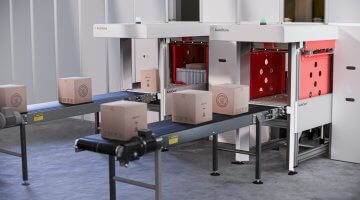
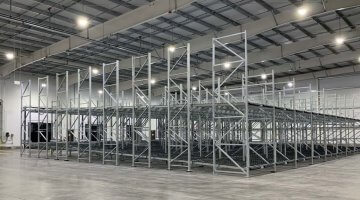
Why WES Is the Foundation Your Operations Can’t Afford to Ignore
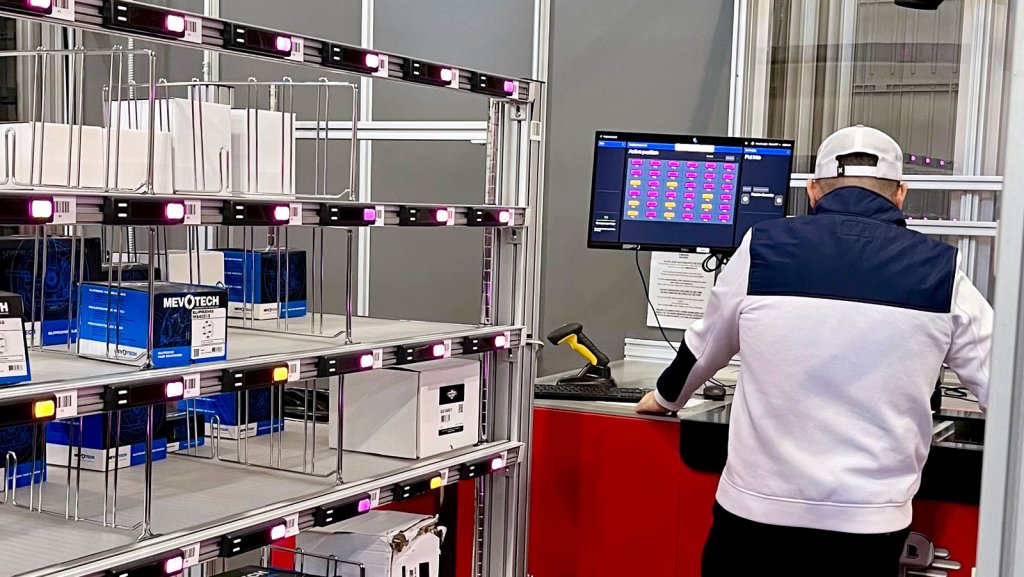

The Unsung Hero of Modern Distribution
If you’ve spent any time on a distribution center floor—especially one handling hard goods or auto parts—you already know that the physical reality of the operation rarely matches the clean diagrams drawn in a conference room.
Heavy components share conveyor space with small fasteners. A single order might include a catalytic converter, a set of brake pads, and a handful of O-rings. Urgency is constant. Margin for error is thin.
This is the environment where a Warehouse Execution System (WES) earns its keep—and, increasingly, where it becomes the critical enabler for everything else a modern distribution operation wants to accomplish.
WES Orchestration at the Speed of the Floor
A Warehouse Management System (WMS) is excellent at telling you what needs to happen. A WES is what makes it happen—right now, in sequence, with the equipment and labor you actually have available at this moment.
In hard goods and auto parts distribution, this distinction is not academic. Product variability is enormous. A distribution center serving an automotive aftermarket network might process tens of thousands of SKUs, ranging from small clips to heavy assemblies.
Weight restrictions, hazmat considerations, and dimensional constraints—all of it plays out in real time, across multiple fulfillment paths, simultaneously.
A WES sits at the intersection of systems and people, dynamically routing tasks, balancing workloads across zones, and sequencing automation to prevent bottlenecks before they form. It is not simply middleware. It is the operational brain of the distribution floor.
Why Hard Goods and Auto Parts Distribution Demands More
The automotive aftermarket operates under unique pressures. A repair shop waiting on a part cannot afford a two-day fulfillment window. The expectation of same-day or next-day delivery for critical repair components has pushed distributors to rethink how they sequence, prioritize, and execute orders at the floor level.
Add to that the product’s physical complexity. Hard goods don’t flow through a distribution center the way apparel or consumer electronics do. They require specialized handling, careful slotting strategies, and thoughtful sequencing to prevent downstream sortation systems from being overwhelmed by weight imbalances or dimensional mismatches. A well-configured WES accounts for all of this. It knows which conveyor lanes can handle a 40-pound differential case. It understands which pick zones are running hot and redirects labor accordingly. It sequences outbound orders to match carrier cut-off windows without requiring a supervisor to manually intervene every hour.
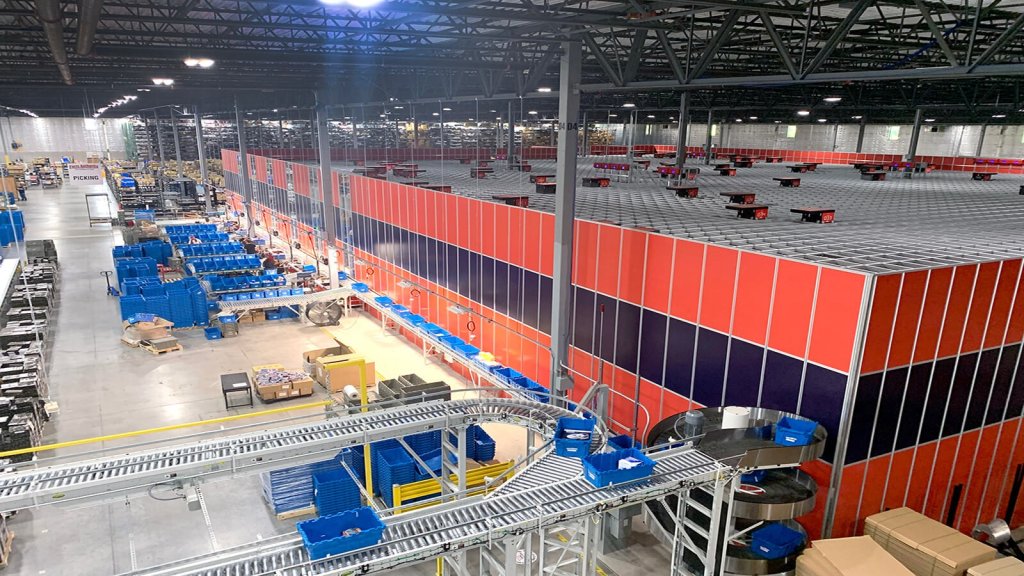
The Data Foundation That AI Actually Needs
There is a great deal of enthusiasm in our industry right now about the potential of artificial intelligence to transform warehouse operations. I share that enthusiasm—with one important caveat: AI is only as good as the operational data feeding it.
A WES is, at its core, a real-time data engine. It captures task completion times, equipment performance metrics, labor productivity by zone, and throughput rates across every node of the operation. This is precisely the structured, time-stamped, contextually rich data that machine learning models require to generate meaningful predictions and recommendations.
Organizations that have invested in a capable WES will already be building the data infrastructure required to support AI-driven demand forecasting, labor planning, and predictive maintenance. Those that have not will discover that no AI model—however sophisticated—can compensate for the absence of clean, reliable operational data at the execution layer.
Execution Intelligence Is a Competitive Differentiator
Distribution has always been a game of margins—cost margins, time margins, and error margins. As customer expectations continue to compress fulfillment windows and as labor markets remain unpredictable, the ability to execute intelligently at the floor level is no longer a nice-to-have. It is the differentiator.
The distributors who will lead their categories over the next decade—whether in automotive aftermarket, industrial hard goods, or building materials—are those investing now in the orchestration layer that connects strategy to execution. Not as a technology project, but as an operational philosophy.
A modern WES is not a cost center. It is the platform on which operational resilience is built—one that scales with volume, adapts to change, and delivers the real-time visibility that every stakeholder in the supply chain—from the DC floor to the C-suite—needs to make confident decisions.
Let’s Talk About Your Operation
If you are responsible for distribution performance in a hard goods or automotive supply chain and you’re evaluating where your operation has gaps—whether in throughput, labor efficiency, or readiness for more advanced AI-assisted tooling, I’d encourage you to take a hard look at your execution layer first.
The most sophisticated technology in the world will not overcome a weak foundation. But with the right WES in place, the path to a smarter, faster, and more resilient distribution operation becomes much clearer.
Frequently Asked Questions (FAQ)
Q: What is a Warehouse Execution System (WES), and how is it different from a Warehouse Management System (WMS)?
A WMS manages inventory, orders, and warehouse processes at a transactional level—it tells your operation what needs to happen. A WES operates in real time at the execution layer, directing how and when tasks are carried out on the floor by coordinating labor, automation, and material handling equipment simultaneously. For auto parts distributors managing high SKU counts, mixed product weights, and same-day fulfillment demands, WES bridges the gap between system directives and physical execution, ensuring the right task reaches the right resource at the right time.
Q: Why do auto parts distributors specifically need a WES?
Automotive aftermarket distribution presents a uniquely complex operational environment. A single DC may manage hundreds of thousands of SKUs—ranging from small fasteners to heavy driveline components—while serving repair shops that cannot afford fulfillment delays. A WES provides the dynamic task orchestration needed to handle this SKU complexity, manages weight and dimensional variability across conveyor systems, prioritize time-sensitive orders, and balance labor across zones in real time. Without execution-layer intelligence, even a well-configured WMS will leave throughput and service levels on the table.
Q: How does a WES improve order fulfillment speed for automotive parts distributors?
A WES improves fulfillment speed by eliminating the micro-delays that compound across a distribution shift—idle conveyors waiting on pick confirmation, sorter jams caused by improper sequencing, or zones bottlenecked while others sit underutilized. By continuously monitoring equipment status, task queues, and labor availability, WES dynamically rebalances work to maintain throughput. For auto parts operations serving next-day or same-day cut-off windows, this real-time orchestration can be the difference between making a carrier window and missing it.
Q: Can a WES integrate with our existing WMS and automation equipment?
Yes—integration capability is a core requirement of any enterprise-grade WES. A properly architected WES connects bidirectionally with your WMS to receive order and inventory data while returning real-time execution status. It also interfaces with automation subsystems, including conveyors, sorters, pick-to-light, automated storage and retrieval systems (ASRS), and robotics. For distributors with legacy systems or a mixed automation landscape, a WES with open APIs and flexible integration architecture is especially important—it should enhance what you already have, not require you to replace it.
Q: How does a WES handle the SKU complexity unique to hard goods and auto parts?
A well-configured WES uses item attributes—weight, dimensions, velocity, hazmat classification—to make intelligent routing and sequencing decisions at the task level. In an auto parts DC, this means the system can direct a 50-pound exhaust assembly to a zone with appropriate handling equipment while routing a bag of washers through a separate, high-speed fulfillment path. Slotting logic embedded in the WES can also account for pick frequency and co-location of commonly ordered items, reducing travel time and improving pick rates across SKU families.
Q: Is a WES only suitable for large distribution centers, or can mid-size auto parts operations benefit as well?
WES solutions today are available across a broad range of deployment scales and investment levels. A mid-size regional auto parts distributor processing a few thousand orders per day can realize substantial benefit from WES capabilities—particularly in labor productivity and fulfillment accuracy—even without a large automation footprint. The key is selecting a platform that scales with your operation’s trajectory. As you add automation, expand SKU count, or increase order volume, the WES should grow with you rather than become a constraint.
Q: What ROI should an auto parts distributor expect from a WES investment?
ROI from a WES investment typically manifests across three areas: labor efficiency, throughput improvement, and error reduction. Distributors commonly report 15–25% gains in labor productivity through smarter task assignment and reduced idle time, along with measurable reductions in mis-picks and shipping errors. In auto parts operations, where a single misshipped component can halt a repair job and damage a customer relationship, accuracy improvements deliver significant downstream value. Payback periods vary by operation size and baseline maturity, but a 12–24 month return is a reasonable benchmark for a well-scoped implementation.
Q: How does a WES prepare our distribution operation for AI and advanced analytics?
A WES continuously generates structured, time-stamped operational data—task completion rates, equipment uptime, labor productivity by zone, order cycle times—that forms the foundational dataset for AI-driven optimization. Distributors that implement a robust WES are, in effect, building the data infrastructure that advanced analytics and machine learning applications require to deliver meaningful results. Without this execution-layer data, AI tools lack the operational context needed to generate reliable predictions or actionable recommendations. A WES is not just today’s solution—it is the platform that makes tomorrow’s capabilities possible.
Q: What should auto parts distributors look for when evaluating WES vendors?
Prioritize vendors with demonstrated experience in hard goods or automotive aftermarket environments—the operational nuances are significant, and a generic implementation approach will fall short. Beyond industry fit, evaluate the system’s real-time decisioning capabilities, integration flexibility with your existing WMS, automation, configurability without heavy customization, and the vendor’s implementation methodology. A WES should come with a partner who understands distribution operations deeply, not just the software. Post-go-live support, ongoing optimization services, and a clear product roadmap are equally important selection criteria.
Q: How long does a WES implementation take for an auto parts distribution center?
Implementation timelines vary based on the complexity of the operation, the degree of required automation integration, and the maturity of existing systems. For a mid-size auto parts DC with a moderate automation footprint, a phased WES deployment can achieve initial go-live in four to six months, with full optimization typically realized over the following two quarters. Larger, more complex operations with multi-site automation or deep WMS customization may require longer timelines. The most important variable is not the software—it is the quality of the implementation partnership and the rigor of the process and data mapping work done upfront.
Categories (tags):