Making the Case for Warehouse Automation in Volatile Markets: A 2026 Prospective
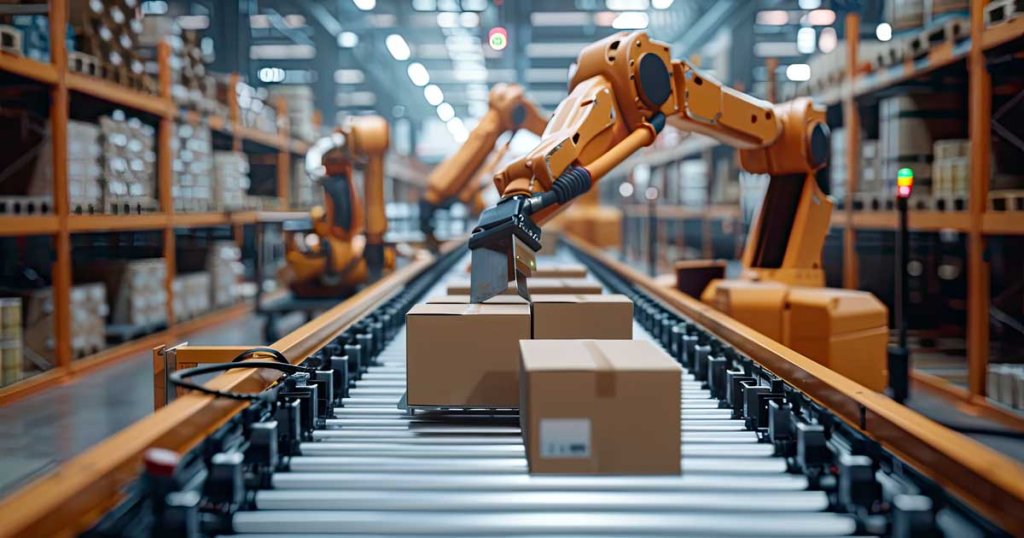
After two decades advising warehouse operations managers across diverse industries, the distribution experts at KPI Solutions have noticed a distinct shift throughout 2025 and into 2026. The question is no longer whether to automate, but how quickly can operations implement intelligent automation without disrupting existing workflows.
Data from 2025 confirms what we’ve been witnessing firsthand: market volatility has transformed automation from a competitive advantage into an operational necessity.
The Numbers Provide a Compelling Story
Current wage surveys reveal that warehouse workers nationwide now average $17-18 per hour, with some regions reaching $22+ per hour in high-cost markets. This increase in compensation represents continuous upward pressure on the single most significant operational expense for warehouses and distribution centers.
Economic forecasts point to 3-4% annual wage growth continuing through 2027. With immigration constraints and aging workforces adding to labor scarcity, logistics wages could potentially be pushed even higher.
Meanwhile, the warehouse automation market is valued at $29.9 billion in 2025 and is projected to reach $63.4 billion by 2030, reflecting a robust 16.2% annual growth rate, according to Mordor Intelligence. This shift isn’t speculative investment—it’s operations managers responding to concrete pressures with proven solutions.
The labor challenge extends beyond wages. Warehousing and storage employment has grown significantly over the past decade, but turnover remains among the highest across all industries, with over 76% of logistics facilities reporting workforce deficits. High turnover results in costly retraining cycles, productivity dips, and elevated safety risks, which compound operational expenses.
So what can warehousing professionals do?
Real-World Performance Metrics
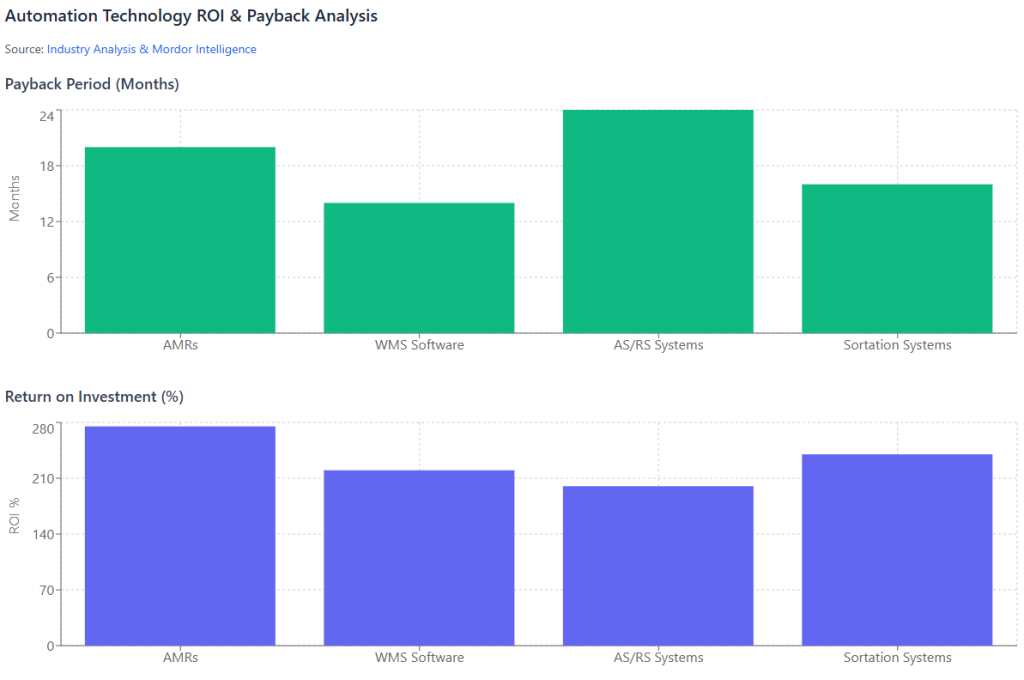
When presenting automation to leadership, specific performance data resonates more than theoretical benefits. Autonomous mobile robots are delivering payback in under two years with proven financial returns in live deployments, according to Mordor Intelligence’s warehouse automation market report. These aren’t projections—they’re documented results from operating facilities.
Recent industry analysis shows that early adopters of AI and software-enabled warehouse systems have achieved significant operational improvements. We have observed similar outcomes when facilities implement even partial automation with intelligent Warehouse Execution Software (WES), strategically focused on their primary bottlenecks.
The Phased Implementation Roadmap
The beauty of modern warehouse automation is its modularity. You don’t need to transform your entire operation overnight, and current market conditions actually favor a gradual approach.
Start with high-impact, low-disruption solutions. Automated sortation systems and warehouse management software with embedded AI capabilities typically deliver measurable ROI within 10-15 months while requiring minimal operational disruption. These foundational technologies also prepare your facility for more advanced automation in the future.
Mid-term investments might include automated storage and retrieval systems (AS/RS) or pick-assist technologies that enhance worker productivity rather than replace workers entirely. Many medium and large distribution operations continue to deploy robots for picking, unloading, and sorting tasks, integrating them with warehouse management systems to boost throughput and improve worker satisfaction.
Long-term strategies can incorporate autonomous mobile robots (AMRs) and fully integrated systems with predictive analytics and AI to optimize operations in real time based on demand patterns.
Addressing the Capital Investment Question
Capital investment concerns always arise. Our advice: compare automation costs against projected labor inflation over five years. Research indicates that labor costs account for 50% to 70% of a company’s warehousing budget, making them the highest operating cost in a warehouse. When the most significant expense is rising annually while automation delivers 18-24 month payback periods, mathematics strongly favor strategic automation investment.
Additionally, warehouse demand remained strong through 2025. According to Colliers research, companies have grown more comfortable making long-term facility commitments despite ongoing economic uncertainty, recognizing that operational efficiency determines competitive positioning regardless of external volatility.
Beyond Cost Reduction: Strategic Flexibility
Today’s flexible automation technologies deliver something manual operations simply cannot: scalability in both directions. For example, advanced AS/RS systems allow facilities to rent and add robots during peak periods (aka RaaS, Robots as a Service), then scale back afterward without disruption. This flexibility proves invaluable when demand patterns remain unpredictable.
We’ve found that automation makes companies more productive and flexible, shifting workers to other tasks. The facilities we advise are successfully using automation to handle repetitive, physically demanding tasks while creating a need for skilled technicians, system operators, and data analysts. Smart facilities use automation to upskill their workforce, improving both retention and job satisfaction.
The Competitive Reality
According to recent supply chain research, a significant portion of supply chain leaders are investing in automation to reduce dependence on labor and increase efficiency amid persistent labor shortages. Your competitors aren’t debating whether to automate—they’re executing implementation plans.
Market volatility isn’t temporary; it’s the standard operational environment of the future. Distribution centers that treat automation as optional will find themselves increasingly uncompetitive as labor costs rise, customer expectations accelerate, and operational margins compress.
The facilities thriving today aren’t necessarily the most heavily automated. They’re the ones who implemented intelligent, strategic automation to address their specific bottlenecks and vulnerabilities. Our expert advice: Start with your most significant pain point, prove the ROI with concrete metrics, then expand systematically.
In volatile markets, operational flexibility isn’t a luxury—it’s survival. Data from 2025 demonstrates that automation provides the flexibility that manual operations cannot match, with proven financial returns that justify the investment even in uncertain economic conditions.
The distribution experts at KPI Solutions can help you navigate the future with more assurance.
Categories (tags):