Selective vs. Double-Deep Racking: Which One Aligns with Your SKU Strategy?
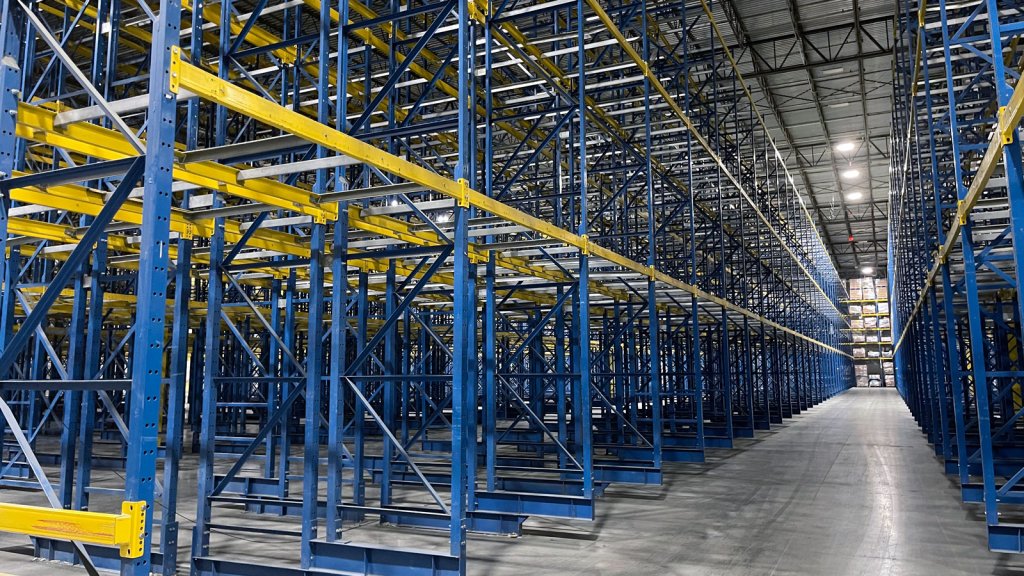
Choosing between selective and double-deep racking is one of the most consequential decisions a warehouse manager can make when designing or upgrading a facility. This choice dictates the daily rhythm of the operation, influencing everything from picking speed to total storage capacity.
While both systems are foundational to modern logistics, they serve very different operational philosophies. A selective system prioritizes immediate access to every pallet, while a double-deep system trades some of that accessibility for a significant increase in storage density.
Determining which one is right for your facility requires a granular analysis of your SKU strategy. It is not a matter of which system is objectively better, but rather which one provides the most efficient home for your specific product mix.
Understanding the Philosophy of Selective Racking
Selective racking is the most common storage configuration in the industry for a reason. Its primary advantage is total selectivity, meaning an operator can access any pallet in the system without having to move another one first. This “one pallet, one pick” model is essential for facilities that handle a wide variety of SKUs with low per-item stock levels.
When consumer expectations for rapid delivery are at an all-time high, selective racking remains the go-to solution for e-commerce and retail fulfillment centers.
These operations often handle thousands of individual line items, and the ability to retrieve any of them instantly is critical to maintaining high throughput. Furthermore, selective racking is highly adaptable. It can be easily reconfigured to accommodate changing pallet sizes and is compatible with nearly all types of standard material-handling equipment.
If your SKU strategy is built on variety and high-frequency individual picks, selective racking provides the necessary speed and flexibility.
The Strategic Value of Double-Deep Racking
Double-deep racking represents a strategic shift toward greater density. By placing two rows of racking back-to-back, this system effectively doubles the depth of the storage lane from a single aisle. The primary benefit is a massive reduction in the number of aisles required to house the same number of pallets. For facilities facing high real estate costs or limited floor space, this density is invaluable.
The trade-off for this increased capacity is a reduction in selectivity. To reach the rear pallet in a double-deep slot, the front pallet must be removed first. This creates a Last-In, First-Out (LIFO) inventory flow within each specific storage location.
Consequently, double-deep racking is most effective for SKU strategies involving high volumes of identical items. If you frequently receive and ship products in batches of two or more pallets, the reduced accessibility is rarely a bottleneck. Instead, it becomes a powerful way to maximize the utility of your building footprint.
Performing a SKU Velocity and Volume Audit
The key to aligning your racking with your SKU strategy lies in a detailed audit of your inventory data. You must look beyond just the total number of pallets and examine the relationship between SKU variety and pallet count. A useful framework for this is the ABC analysis, which categorizes products by their movement speed and volume.
“A” items are high-velocity SKUs that move quickly and often have high pallet counts. These are prime candidates for double-deep storage because the high volume ensures the rear positions are constantly cycled. “C” items are slow-moving products with low variety and may also be suitable for deep storage if held for longer periods. “B” items, or high-variety items with only one or two pallets in stock at a time, are better suited for selective racking.
By matching racking depth to the volume of each SKU category, you can create a hybrid facility that offers both high density and high speed.
Equipment and Labor Considerations
The choice between these two systems also has significant implications for your material-handling fleet and labor costs. Selective racking allows for the use of standard counterbalanced forklifts, which are generally more affordable and versatile. Because every pallet is accessible, travel paths are straightforward, and the time spent “shuffling” pallets is virtually zero.
Double-deep racking requires reach trucks equipped with telescopic forks or pantograph mechanisms to access the second position. While these machines are a staple of warehouses, they require a higher level of operator skill and can be more expensive to maintain. Additionally, the labor required for double-deep storage must be carefully managed.
If an SKU is misallocated to a double-deep slot, the labor time spent moving the front pallet to reach the back one can quickly negate the financial benefits of increased density. Efficiency in a double-deep system depends heavily on the accuracy of your warehouse management system (WMS) and the discipline of your slotting strategy.
Space Utilization vs. Throughput Targets
Ultimately, the decision comes down to your primary operational goal. If your facility is struggling with limited storage space and you frequently use off-site storage or overflow areas, double-deep racking offers a clear path to reclaiming floor space. It allows you to house more inventory under one roof, leading to significant savings on rent and utilities.
However, if your facility is judged primarily on its ability to move orders out the door as quickly as possible and you deal with highly unpredictable order patterns, the overall accessibility of selective racking is often more valuable. The hidden cost of lost throughput is often higher than the cost of extra square footage.
A resilient warehouse design often uses a mix of systems, placing high-volume buffers in double-deep sections and maintaining a fast-pick zone in selective racking.
Conclusion: Making a Data-Driven Choice
Aligning your racking system with your SKU strategy is a foundational element of long-term profitability. By analyzing your inventory movement and throughput requirements, you can select the configuration that best supports your business goals.
Whether you prioritize the absolute selectivity of a standard layout or the space-saving efficiency of a double-deep system, the goal is to create a seamless flow of goods that minimizes waste and maximizes value.
We are experts in helping warehouse leaders navigate these complex decisions. Our team provides comprehensive engineering and data analysis services to ensure that your racking system is perfectly tailored to your SKU profile. We invite you to contact us today to learn how we can help you design a more efficient, responsive storage environment to address the challenges of today.
Categories (tags):