More Throughput Doesn’t Have to Mean More Square Footage
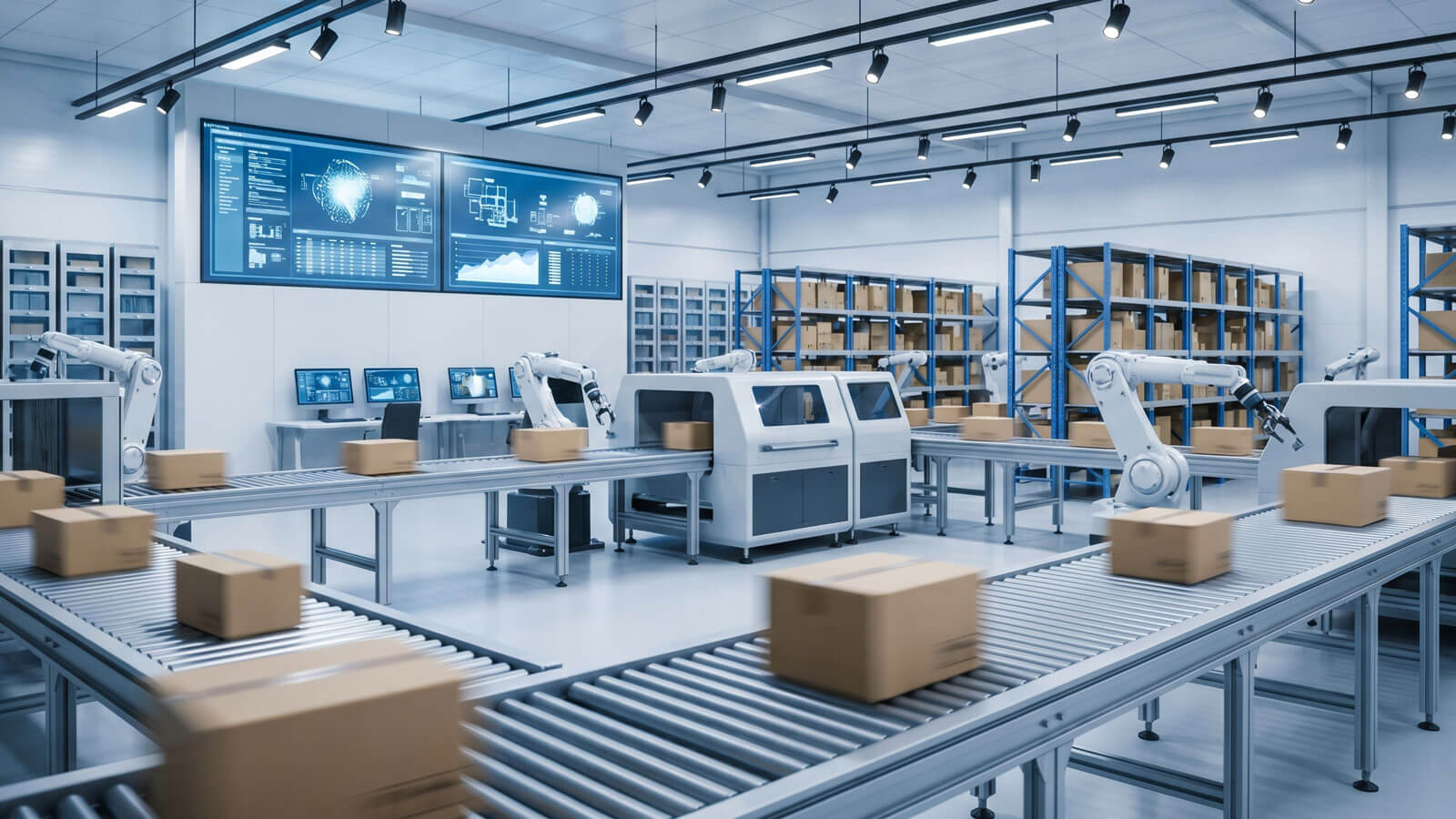
There’s a default assumption in warehouse operations planning: when volume outgrows capacity, the answer is a new building. More square footage, a second site, a fresh facility built around next year’s projected peak. It’s an understandable instinct; space feels like the constraint you can see and measure. But for a lot of operations, the real ceiling isn’t the four walls. It’s how much of what’s happening inside them is still running on manual logic.
Before a company breaks ground on a new facility, it’s worth asking a harder question: how much capacity is actually available inside the building already standing? Moving from manual, RF-directed picking to pick-to-light, from pick-to-light to goods-to-person, from goods-to-person to robotic each-picking. Each step up that automation ladder adds meaningful throughput without adding a single square foot. The catch is that each step also adds something else: complexity. And complexity, unmanaged, is exactly what turns a promising automation investment into an expensive bottleneck.
What Climbing the Automation Ladder Actually Costs You
Every upgrade in automation level changes the operating model, not just the equipment on the floor. A manual, RF-directed operation runs on relatively simple logic: a picker gets a task, walks to a location, executes it, moves to the next. Add a goods-to-person shuttle or AMR fleet, and now inventory is arriving at the operator instead of the other way around, which means something has to decide which pod goes where, in what order, and how to keep a dozen or sixty robots from queuing up at the same workstation. Layer in robotic piece-picking, sortation, or a mix of automation from different vendors, and the operation is no longer one workflow. It’s several running concurrently, each with its own timing, failure modes, and constraints, all still expected to work as one.
This is the part that gets underestimated. Each new piece of automation is usually justified on its own throughput math: this shuttle system moves X pallets per hour; this AMR fleet completes Y tasks per shift. What that math doesn’t capture is the coordination tax. The orchestration work needed to keep every subsystem fed, balanced, and sequenced correctly against every other subsystem in real time, as volume and priorities shift by the hour. A WMS can tell you what needs to happen next. It was never built to tell four different automation systems, moment to moment, how to get there without stepping on each other.
Without that coordination layer, the added automation still runs, it just runs on static rules. First-in-first-out sequencing, fixed lanes, manual intervention every time volume spikes or a subsystem goes down. The complexity a company took on to unlock more capacity ends up capped by the same rigid logic it was supposed to replace. The automation gets more sophisticated; the operation running it doesn’t.
Where Opto™ Fits and Why That’s Where the ROI Gets Proven
This is where Opto, KPI Solutions’ warehouse execution software, does the work that justifies the investment. As automation is layered in, a new shuttle system, an AMR fleet, a sortation line, a piece-picking cell, Opto absorbs each addition into a single orchestration model instead of leaving it to run as its own island. It sequences and prioritizes tasks across every subsystem competing for the same resources, balances workload so no single automation asset becomes the bottleneck, and reallocates in real time as order volume moves. Because Opto sits at the execution layer regardless of what’s underneath it, adding the next automation phase doesn’t mean replatforming the last one.
That matters for a specific business reason: proving ROI on rising complexity is hard to do after the fact, and much easier to do continuously. Opto gives operations and finance leadership the same real-time visibility into throughput, utilization, and exceptions at every phase of the buildout. Not a single before-and-after snapshot, but a running picture of what each automation investment is actually delivering. That’s what turns “we spent capital on automation” into “here’s what phase one returned, and here’s the case for phase two”: the evidence a company needs to keep approving capital for the next stage of the transition, rather than funding the whole roadmap on faith up front.
It also explains why so many operations choose to climb this complexity curve in place rather than build new. A new facility carries its own cost and timeline: site selection, permitting, construction, a new lease, a new labor market to hire into, months of running old and new operations in parallel before the new site is even at capacity. Automating in place keeps the workforce, the location, the customer proximity, and the existing lease intact, and lets capital be deployed in phases tied to demonstrated results rather than as one large bet on a facility that won’t open for a year or two. The complexity is real, but it’s complexity taken on deliberately, in exchange for capacity a company can generate without leaving the building it already knows how to run.
So the real scalability question isn’t square footage. It’s whether the execution layer inside the four walls can keep pace with how much automation gets asked of it, because the complexity of running a dozen integrated technologies is only a problem if nothing is coordinating them. Opto is built to take on that coordination at whatever stage of the automation curve an operation is climbing, so the case for the next phase is always sitting in the data from the phase before it. A warehouse doesn’t need a bigger building to scale. It needs an execution layer that scales with it.
Categories (tags):