Robotics Don’t Operate in a Vacuum: Why Orchestration Matters in an Automated Warehouse
Warehouse robotics have become an increasingly important part of modern fulfillment operations. Autonomous mobile robots (AMRs), automated storage and retrieval systems (AS/RS), robotic picking, conveyor, sortation, and other technologies can help organizations increase capacity, improve consistency, and reduce reliance on manual processes. As more of these technologies are introduced into the same facility, however, a new challenge emerges: ensuring each system contributes to the operation’s performance.
A robot may complete its assigned tasks efficiently, an AS/RS may deliver inventory at an impressive rate, and a conveyor may move cartons exactly as designed. Those individual results matter, but they do not automatically translate into an optimized warehouse. If one system works faster than the next process can handle, or if multiple technologies prioritize different things, high-performing equipment can still cause congestion, idle time, and missed opportunities. This is where warehouse orchestration becomes increasingly important.
Automation Creates a Coordination Challenge
In a largely manual operation, people often provide much of the coordination between processes. Experienced operators and supervisors can recognize when an area is becoming backed up, change priorities, redirect work, or communicate with another department. As automation takes on more physical tasks, software increasingly has to support those decisions at the pace the operation runs.
Consider a facility that uses AS/RS for storage, goods-to-person workstations for picking, AMRs for transportation, conveyor for movement, and automated sortation before shipping. Each subsystem may have its own control layer and operating logic, and each may perform extremely well within its defined process. The challenge is making sure inventory, orders, equipment, and people move through those systems in a coordinated way.
A warehouse execution system (WES) can help connect higher-level planning systems, such as a warehouse management system (WMS) or ERP, with the resources carrying out work on the floor. Rather than viewing automation as a collection of individual machines, the execution layer can consider the broader flow of work and help determine which tasks should be performed, when they should occur, and which available resources are best positioned to complete them.
Local Optimization Can Create System-Wide Problems
One of the most important distinctions in an automated warehouse is the difference between local optimization and system-wide optimization. For example, a storage system might be capable of releasing inventory faster than it currently does. Increasing its output may look like a clear performance improvement, but if downstream picking stations cannot consume inventory at the same rate, the additional output can simply create a larger queue.
The same dynamic can occur throughout the facility. Increasing picking productivity could overload packing. Increasing induction rates could create congestion at sortation. Maximizing utilization of one group of robots could unbalance work elsewhere. In each case, the individual process improves according to its own metrics while the warehouse gains little or potentially performs worse overall.
Orchestration addresses this problem by considering conditions beyond a single subsystem. Order priorities, equipment availability, workload, downstream capacity, and other operational factors can all influence the best next action. The goal is not necessarily to keep every asset running at its maximum possible rate. It is to use available resources in a way that supports the best overall flow.
What Warehouse Orchestration Actually Means
Orchestration can sound abstract, but in a warehouse, its purpose is practical: coordinate resources around what the operation needs right now. That might mean prioritizing an order approaching a cutoff time, slowing the release of work into a congested area, shifting tasks to available resources, or responding when equipment becomes unavailable.
This requires a broader view than any individual control system can typically provide. A WES can evaluate multiple processes together, coordinate labor with automated equipment, balance work across available resources, and show how changing conditions affect fulfillment. Instead of relying exclusively on predefined sequences, the operation gains a layer that can continually translate current priorities into executable work.
That distinction also helps clarify the relationship between the WMS, WES, and equipment controls. The WMS generally provides higher-level direction around inventory, orders, and warehouse processes. Equipment controls operate closer to individual machines and execute the commands that create physical movement. The WES sits between those layers, helping turn business priorities into coordinated execution across the available resources.
Why Technology-Neutral Integration Matters
Few warehouses remain technologically static. A facility may implement one robotics platform today, add a different automation technology several years later, expand its fulfillment channels, or reconfigure processes as volume and customer requirements change. Software architecture therefore has to support not only the automation in place today, but also technologies that may become part of the operation later.
Technology-neutral integration can make that evolution easier by separating the execution strategy from the individual technologies performing the work. Instead of treating every new automation investment as another isolated project or building an expanding web of point-to-point integrations, organizations can work toward a common execution framework. That flexibility can also support future innovation because technology decisions can be driven more by operational fit and less by the constraints of existing connections.
The Next Phase of Warehouse Robotics Is About Coordination
Robotics will continue to become faster, more capable, and more intelligent, but tomorrow’s warehouse performance will not depend solely on the capabilities of an individual robot. It will depend on how effectively robotics, fixed automation, labor, inventory, and business priorities can work together as conditions change throughout the day.
That is why orchestration is becoming an important part of the warehouse automation conversation. Automation can solve individual process challenges, while orchestration helps those solutions function as part of a connected operation. For organizations moving from individual automation projects to broader automation ecosystems, execution software can provide the layer needed to connect planning with what happens on the warehouse floor.
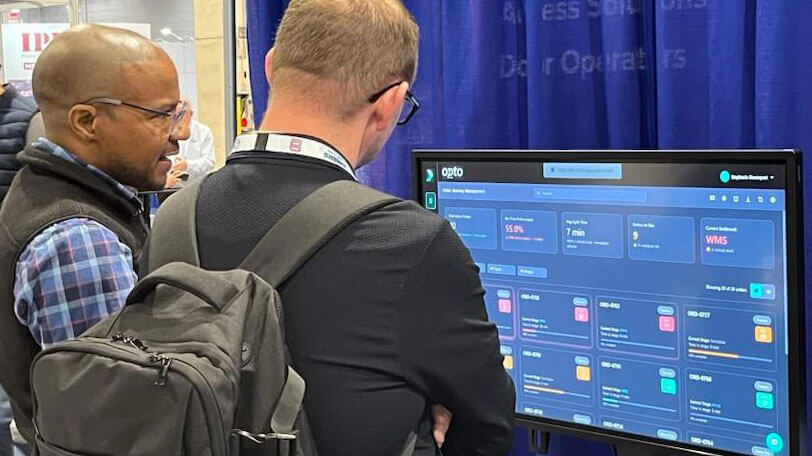
KPI Solutions’ Opto™ WES is designed around that approach, using innovation, orchestration, and integration to help different technologies operate within a coordinated execution environment. The objective is not simply to connect more equipment. It is to help the entire operation make better use of the systems and capacity already available.
Explore how a connected execution strategy can help you get more from the automation already operating across your warehouse.
Categories (tags):