Building a More Resilient Warehouse Through Smart Storage Design
Warehouse storage design has become one of the most practical levers a facility can use to manage risk. As supply chains shift away from rigid, linear models toward more fluid operational structures, the way a building stores inventory now shapes how well it absorbs volume spikes, seasonal surges, and sudden changes in SKU profiles. A resilient warehouse is one that can flex with the market instead of buckling under it, and that capability starts with the racking and layout decisions made long before peak season arrives.
This shift is being driven by trends like nearshoring, e-commerce growth, and more frequent demand swings. In that environment, a strong storage framework built around density, modularity, and data-driven organization helps a facility hold service levels even during periods of significant market stress. The strategies below outline how to design for that kind of durability:
- High-density storage to create built-in capacity buffers
- Modular, scalable racking that reconfigures as needs change
- Integration with predictive software to align layout with demand
- Diversified storage zones for operational flexibility
- Vertical space utilization to grow without new construction
How High-Density Storage Reduces Operational Risk
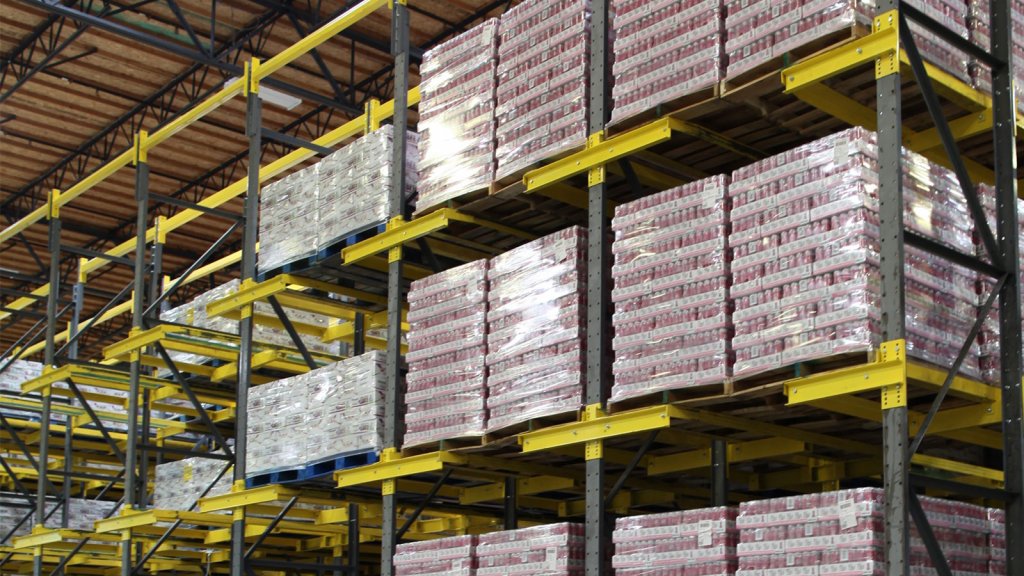
Storage density functions as a form of operational insurance. When a facility runs near capacity on standard selective racking, it has little room to accommodate safety stock or unexpected inbound arrivals, leaving the entire operation exposed to disruption. High-density solutions, such as pushback or double-deep racking, provide the capacity needed to manage that risk without expanding the building footprint.
Condensing the storage area frees up usable space that can be repurposed during peak periods. That extra room lets an organization hold more inventory when supply is volatile, so customer orders can still be fulfilled even when inbound shipments run late. High-density systems also consolidate identical products more effectively, streamlining inventory management and reducing the risk of shipping errors. Resilient warehouse storage design begins with the ability to house enough stock to withstand unpredictable demand.
Designing for Modularity and Scalability
One of the biggest constraints in warehouse management is the fixed nature of traditional infrastructure. Once a racking system is bolted to the floor, changing it can be difficult and costly. Resilience depends on the opposite quality: the ability to scale up or down as real demand dictates. Leading facilities are adopting modular designs that let sections of the warehouse be reconfigured with minimal disruption. Analysts now describe the move away from fixed, single-purpose layouts as one of the most significant shifts in warehouse design.
Modular racking components can be adjusted for different pallet heights or rearranged to open aisle space for automated equipment. That flexibility allows the storage system to evolve alongside the business. A facility that moves from bulk industrial goods to a high volume of smaller e-commerce items can adapt a modular layout to the new SKU mix rather than absorbing the expense of a full facility overhaul. Choosing a design built for change keeps an operation agile as market conditions move.
Integrating Storage with Predictive Technology
Resilience improves when physical storage and digital orchestration work together. Many facilities rely on a Warehouse Execution System (WES) to manage the flow of goods through their racking. These systems apply predictive analytics to anticipate order surges and prompt operators to move high-velocity items into more accessible locations before a peak period begins. Gartner’s supply chain technology trends point to physical AI and intelligent simulation as advances that enable more dynamic planning across logistics, transportation, and warehouse operations.
This proactive slotting keeps the busiest parts of the racking optimized for speed while slower-moving items sit in high-density zones. When the physical layout aligns with the management software’s intelligence, a facility handles higher volumes with less strain on its labor force. The strongest storage designs let racking and software operate in tandem to clear bottlenecks and keep goods moving smoothly.
Diversifying Storage Zones for Operational Flexibility
Building resilience also means creating diverse storage zones within a single facility. Rather than deploying a single racking type throughout the building, a resilient design mixes configurations to meet different needs. A facility might use double-deep racking for core inventory, selective racking for low-volume variety, and a dedicated zone for automated shuttle systems.
That diversity lets a warehouse serve different products and fulfillment requirements at the same time, and it provides a fallback when one area becomes congested. If a product line sees a sudden spike, the facility can shift labor and equipment toward the high-density zone built for that SKU profile. Spreading storage capacity across multiple system types better equips a warehouse to manage the varied needs of its client base.
Maximizing Vertical Space as a Long-Term Strategy
As industrial land grows more expensive, the most cost-effective direction left for many warehouses is up. Using the full vertical height of a facility is a foundational part of resilient warehouse storage design. Modern racking systems are engineered to reach heights that were previously impractical, letting organizations multiply capacity within the same square footage.
Going vertical increases the total volume a facility can store and protects it from the need to move to a larger building before that expense is truly necessary, which is a meaningful financial advantage. A well-designed tall-mast racking system, paired with the right reach trucks, delivers the density needed to grow without the capital burden of new construction. Treating vertical space as a valuable resource supports a more resilient and efficient operation.
Frequently Asked Questions
- What makes a warehouse resilient? A resilient warehouse can absorb unexpected volume spikes and adapt quickly when SKU profiles change. That capability is built through storage design choices that prioritize spare capacity, reconfigurable layouts, and software-driven organization, so the facility maintains service levels even under market stress.
- How does high-density storage improve resilience? High-density racking, such as pushback or double-deep systems, adds capacity within the existing footprint. That creates a buffer for safety stock and unexpected arrivals, allowing the operation to keep fulfilling orders when inbound shipments are delayed.
- What role does a WES play in warehouse storage design? A Warehouse Execution System uses predictive analytics to anticipate demand and guide slotting decisions. It moves high-velocity items into accessible locations ahead of peak periods, aligning the physical racking layout with real-time order flow.
- How does vertical storage reduce costs? Utilizing full building height multiplies storage capacity without adding square footage. This allows a facility to grow its inventory volume and delay or avoid the capital expense of relocating to a larger building.
Investing in a Resilient Future
Resilience is a continuous commitment to operational excellence and strategic design. By focusing on density, modularity, and technology integration, a facility can turn its storage infrastructure into a competitive advantage. In a fast-moving market, the ability to adapt is what separates strong logistics operations from the rest, and thoughtful warehouse storage design is where that adaptability takes shape.
At Twinlode Automation, a division of KPI Solutions, we specialize in storage designs built for the complexities of modern supply chains. Our team works with you to develop a customized racking strategy that balances capacity, flexibility, and performance. Whether you want to optimize an existing space or design a new facility from the ground up, we have the engineering expertise to help you build a more resilient operation. Contact us today to learn how our solutions can support your long-term goals.
Categories (tags):