The Robots Aren’t the Hard Part

Walk a traditional distribution center during peak and watch one associate for ten minutes. You’ll notice something that should bother you: your highest-value hourly talent spends most of that time walking. Not picking, walking. Searching a slot, waiting on a replenishment, pushing a cart down an aisle they’ve pushed down ten thousand times before. In a lot of manual operations, the actual act of picking, the only step a customer will ever pay for, is a sliver of the shift. The rest is travel. And travel is pure cost with nothing to show for it.
For two decades, our industry’s answer was to manage that cost. Tighter slotting. Smarter pick paths. More bodies in the building when volume spiked. All of it useful, and all of it optimizing around a premise that was broken from the start: that people should go to the product.
Goods-to-person (GTP) is the industry finally questioning the premise. And it’s worth understanding why it works before anyone talks about what it returns because the “why” is where most business cases quietly go wrong.
The Inversion
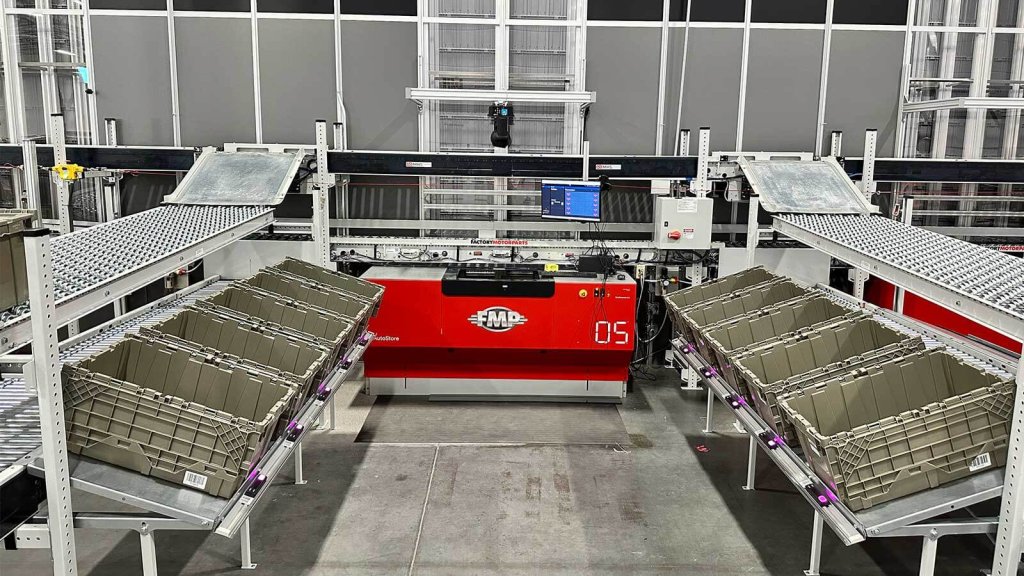
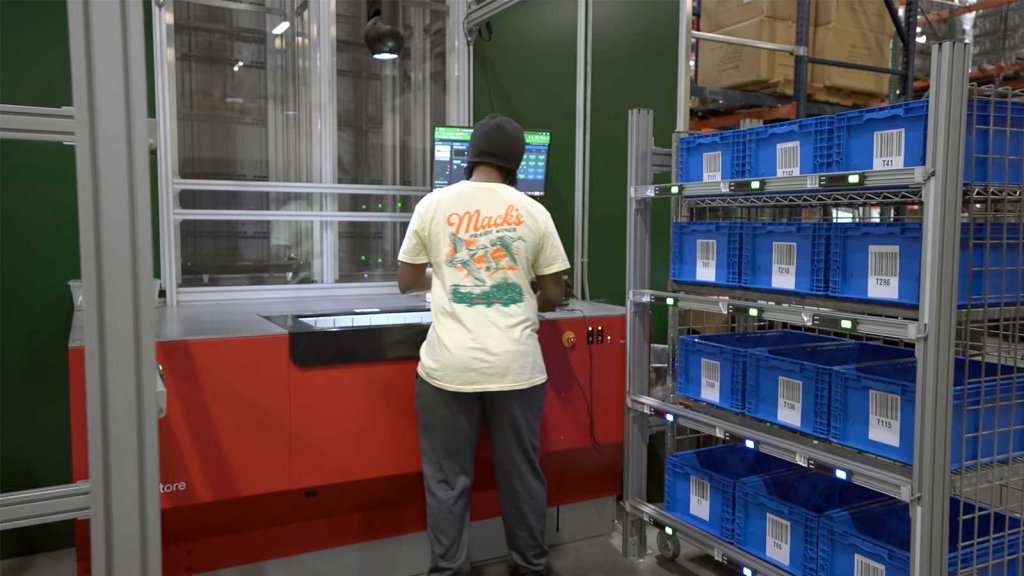
GTP does one deceptively simple thing: it stops moving people and starts moving product. The operator stands at an ergonomic workstation and stays there. Automation delivers inventory to them, on demand, in the right order. The walking disappears. What’s left is the work that actually creates value.
But, and this is the part the equipment brochures gloss over, GTP is not a machine you buy. It’s a chain you orchestrate. The graphic with this piece lays out the whole sequence, and every link matters. Goods come inbound and drop into dense, automated storage. The GTP system then runs four functions in concert: it manages inventory storage, buffers product so the right items are staged ahead of demand, executes goods-to-person picking at the station, and handles order sequencing so items show up in the order the next step needs them. From there, orders flow into consolidation for assembly and a final accuracy check, then ship outbound.
Miss the point that this is one connected system and you’ll buy a very expensive way to underperform. More on that in a moment.
Where the Money Actually Is
When teams evaluate GTP, they fixate on one number; usually pick rate. The more honest way to look at it is to ask where value actually piles up. There are four places, and each lands on a real line of a fulfillment P&L.
- Throughput. Kill the travel and you redeploy the hours your people used to spend walking into hours spent picking. Well-run GTP operations routinely multiply picking productivity several times over a manual line. That’s the difference between hiring your way through the next peak and absorbing it with the team you have.
- Accuracy. Directed picking at a controlled station drives errors toward zero; the best operations sit north of 99.9%. Don’t read that as a soft metric. Every mis-pick becomes a return, a re-ship, a service call, and sometimes a customer who doesn’t come back. Those downstream costs routinely dwarf the cost of the error itself.
- Space. Automated storage goes denser and taller than racking and aisles ever could, often clawing back a serious share of a building’s cube. In a market where industrial real estate is brutally expensive and hard to find, the new building you don’t have to lease is frequently the biggest line in the whole business case and the one people forget to count.
- Speed. Buffering and sequencing compress the gap between “order received” and “on the truck.” That’s what turns an aggressive delivery promise from a marketing line into something your operation can actually keep and what keeps revenue from leaking to whoever’s faster.
The Uncomfortable Truth
Here’s what I tell almost every team that asks me about automation: the hardware doesn’t deliver the return. The shuttles, the robots, the workstations are necessary, but on their own they’re just expensive mechanization. The return is won or lost in how intelligently the system is orchestrated.
Think about what each of those four pillars actually depends on. Buffering only pays off if the system stages the right inventory ahead of the right demand. Sequencing only pays off if orders release in the right order for consolidation and the dock. A workstation humming at theoretical capacity while the rest of the flow starves it is a beautifully engineered way to lose money.
I’ve watched two operations buy nearly identical equipment and end up in completely different places on the ROI curve. The hardware wasn’t the variable. The software making thousands of small decisions a second about what moves, when, and why, was.
That’s the real line in this industry: the difference between observing an automated operation and orchestrating one. A dashboard that tells you what happened is useful. A system that decides what should happen next, across the entire flow, is what produces the numbers people put in the business case.
Where We Come In
This is the problem we built the Opto™ platform to solve, and it’s the job Opto AS is built to do. We don’t treat GTP as a pile of machines bolted together; we orchestrate the full sequence, storage, buffering, picking, sequencing, consolidation, as one coordinated flow. Keep the workstations fed. Keep orders moving in the right order. Turn the capability of the automation into realized throughput, accuracy, density, and speed.
We do it agnostically, because real operations are almost never one vendor and one vintage of equipment; they’re a mix, and the orchestration layer has to make all of it work together instead of demanding a rip-and-replace. Our measure of success was never whether the robots run. It’s whether the operation runs better than it did the day before you invested. Goods-to-person has earned its place at the core of modern fulfillment. But the return was never in the machines. It’s in the intelligence that makes them behave as one system and that’s the layer worth your hardest questions long before you approve the capital.
Categories (tags):