

Brownfield Warehouses: Modernizing Existing Sites with KPI Solutions’ Automation

Brownfield warehouses are active distribution facilities that need a performance uplift without shutting down or constructing a new building. KPI Solutions helps companies modernize these sites with targeted automation, data-driven planning, and retrofit-friendly integration that maintains day-to-day operations while unlocking new capacity, speed, and accuracy. Whether the brownfield site is decades old or recently expanded, we design solutions that work within existing constraints and keep orders flowing.

What Is a Brownfield Warehouse Project?

A brownfield project improves an existing facility with established infrastructure such as racking, conveyors, and legacy systems. Instead of building new, automation is designed to work within constraints like column spacing, ceiling height, and current workflows.

Companies pursue brownfield modernization to overcome throughput limits, rising labor costs, and growing order complexity. Compared to greenfield projects, which start from scratch, brownfield efforts focus on integrating new technology into an active environment with minimal disruption.

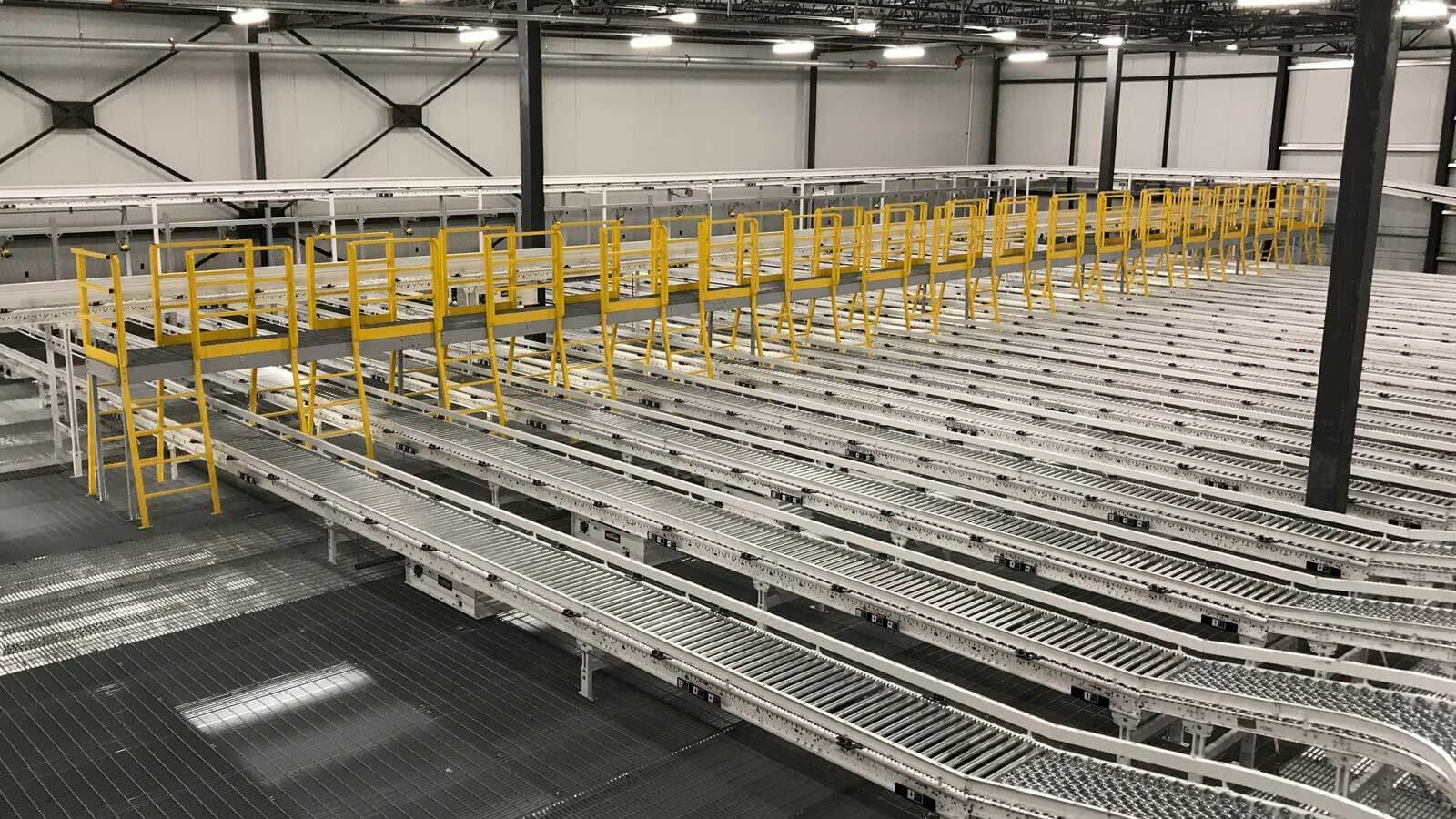
MDR Conveyor system in distribution center

Benefits of Automating Brownfield Warehouses

Brownfield automation delivers meaningful gains without the cost or disruption of a full rebuild. Targeted solutions can increase throughput, improve accuracy, and make better use of available space.

Phased deployments allow facilities to implement automation in stages, generating faster returns and reducing risk. This approach also improves safety by minimizing repetitive and physically demanding work while allowing employees to focus on higher-value tasks.

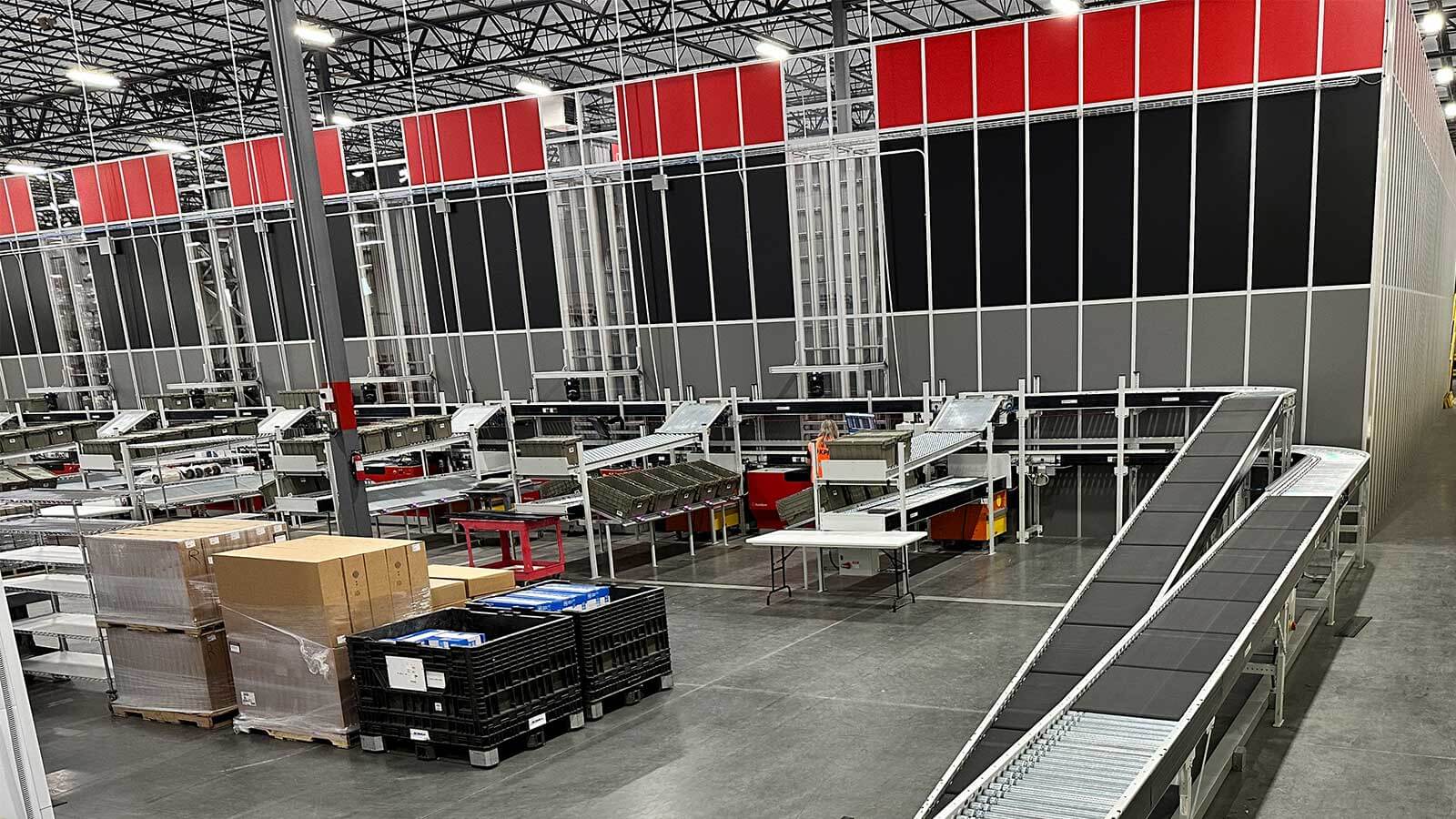
Belt and roller conveyor system in Factory Motor Parts distribution center, integrated with AutoStore designed for high-volume order fulfillment.

Where to Start with Brownfield Automation

The best place to start is where inefficiencies are already impacting performance. Picking is often the top opportunity, especially in high-SKU environments, where AMRs or goods-to-person systems can reduce travel and improve consistency. Replenishment and sortation are also strong entry points that deliver quick gains.

A focused starting point allows for fast ROI and minimal disruption. KPI Solutions uses operational data to target high-impact areas and build a foundation that can expand over time.

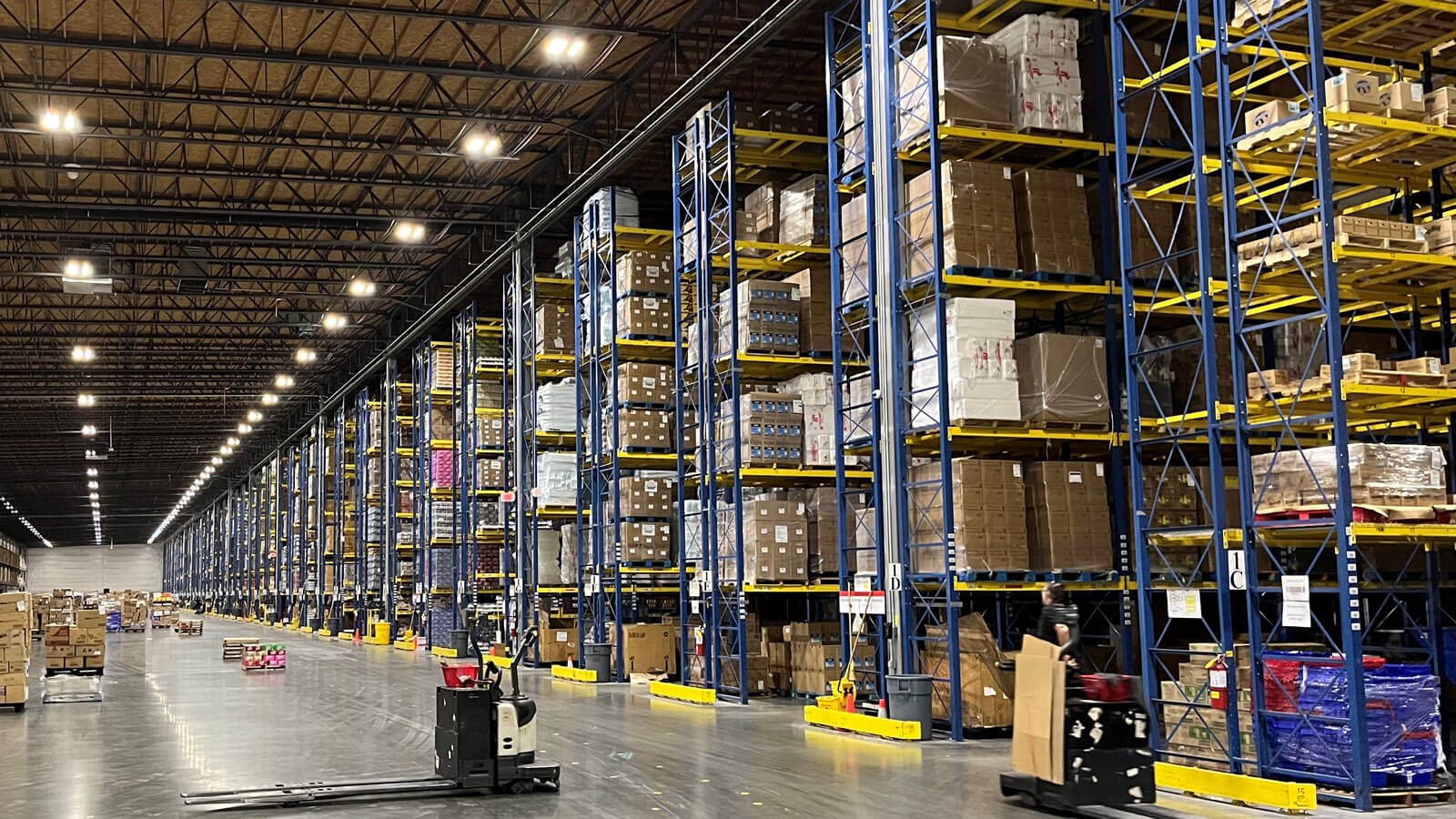
Food and Beverage Warehouse

Managing Change in an Active Warehouse

Successful automation depends on both technology and people. Clear communication and hands-on training help teams understand and adopt new systems quickly.

Phased rollouts keep operations stable while allowing employees to adjust. Hybrid workflows maintain service levels, while ongoing feedback helps refine processes. With the right approach, change management supports long-term success.

Ecommerce Warehouse WES

Challenges and Considerations for Brownfield Automation

Modernizing an existing warehouse comes with constraints. Building layout, power availability, and network infrastructure all affect what solutions are feasible. Legacy systems may also require integration through middleware or upgrades.

To reduce risk, projects are typically rolled out in phases using pilot programs and hybrid workflows. Careful planning, testing, and training ensure operations continue smoothly during implementation.

How KPI Solutions Approaches Brownfield Warehouse Modernization

KPI Solutions starts with a detailed site assessment to understand operational needs and physical constraints. From there, we develop a tailored automation roadmap with clear ROI projections and phased milestones.

Our designs focus on modular systems that fit within existing spaces and integrate with current technology. Deployment is carefully managed through staged installation and commissioning to limit downtime.

Beyond go-live, KPI provides ongoing support, training, and performance monitoring. As needs evolve, systems can scale by adding new automation or extending existing solutions, allowing facilities to continue improving without major disruption.

Project Management

Modernize Without the Disruption

Your facility does not need to start over to perform like new. KPI Solutions helps you unlock capacity, improve accuracy, and scale operations within the building you already have.

Talk with our team about what is possible in your current space. We will assess your operation, identify high-impact opportunities, and map a clear path to automation that delivers results without slowing you down.

Frequently Asked Questions (FAQs)

  1. How long does a typical brownfield warehouse automation project take?
    Project timelines vary based on complexity, but most brownfield initiatives are phased over several months. Initial pilot deployments can go live in a matter of weeks, while full-scale rollouts may extend 6–18 months depending on integration scope and operational constraints.
  2. How do you determine which processes to automate first in a brownfield facility?
    Prioritization typically focuses on bottlenecks with the highest impact on throughput or labor utilization. KPI Solutions uses data analysis to identify inefficiencies and builds a roadmap that targets quick wins before scaling automation across the operation.
  3. Can brownfield automation projects be financed or leased instead of purchased outright?
    Yes, many automation components can be deployed through flexible financing models, including leasing or Robotics-as-a-Service (RaaS). This approach helps reduce upfront capital investment and aligns costs with operational performance improvements.
  4. How does automation affect workforce retention in existing facilities?
    Automation often improves retention by reducing repetitive and physically demanding tasks. Employees can transition into higher-value roles such as system operation, supervision, and exception management, leading to improved job satisfaction.
  5. What role does data analytics play after implementation?
    Post-deployment analytics are critical for ongoing optimization. KPI dashboards track metrics like order cycle time, equipment utilization, and inventory accuracy, allowing operators to continuously refine workflows and maximize system performance.
  6. How do you handle disruptions during peak season implementation?
    Peak season constraints are typically addressed by scheduling deployments outside of high-volume periods or limiting changes to non-critical areas. Temporary hybrid workflows ensure service levels are maintained even during system upgrades.
  7. Can brownfield automation support omnichannel fulfillment strategies?
    Yes, automation can be configured to handle diverse order profiles, including e-commerce, wholesale, and store replenishment. Flexible systems like AMRs and goods-to-person solutions adapt to varying pick densities and order mixes.
  8. What cybersecurity considerations are involved in modernizing legacy warehouse systems?
    Upgrading a brownfield facility often includes strengthening cybersecurity. This may involve secure APIs, network segmentation, updated access controls, and monitoring systems to protect against vulnerabilities introduced by legacy infrastructure.
  9. How do you measure success after a brownfield automation project goes live?
    Success is evaluated using pre-defined KPIs such as throughput gains, labor savings, order accuracy, and ROI timelines. KPI Solutions benchmarks performance before and after implementation to quantify measurable improvements.
  10. What happens if business needs change after automation is installed?
    Modern brownfield solutions are designed to be scalable and adaptable. Additional robots, storage modules, or software enhancements can be added without requiring major system overhauls, allowing the facility to evolve with changing demand.