Planning for Growth: When Should Beverage Distributors Consider Automation?

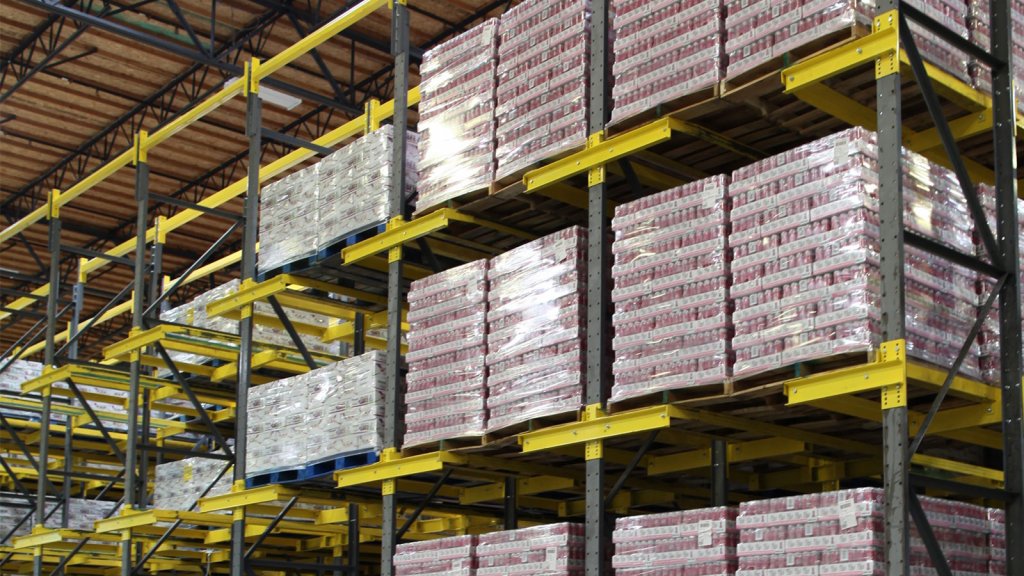
Growth is usually the goal for beverage distributors. More customers, expanding territories, new products, and higher order volumes all point to a healthy business. But growth also puts pressure on the warehouse. A distribution center that comfortably supported yesterday’s volume may struggle as demand increases. Picking paths get longer. Storage locations become harder to find. Replenishment becomes more frequent. Labor requirements increase. Trucks still need to leave on schedule, even when the operation is handling significantly more volume than it was designed for.
At some point, adding people, equipment, or warehouse space may no longer be the most practical way to keep up. That is when automation should become part of the conversation. The challenge is determining when that point has arrived.
Automation Should Be About the Operation, Not the Technology
Warehouse automation doesn’t have to start with the question, “What system should we buy?” The better starting point is understanding where the current operation is under pressure and how that pressure is expected to change. For beverage distributors, that could mean evaluating concerns such as:
- Growing case, pallet, or order volumes
- Increasing SKU counts and product variety
- Difficulty recruiting or retaining warehouse labor
- Limited storage or staging space
No single issue automatically means a facility needs automation. But when several of these pressures occur together, it can indicate that existing processes will struggle to support future growth. Rather than waiting until capacity becomes a constraint, distributors can spot these signals early and decide whether changes to processes, layout, equipment, or automation could offer a better path forward.
Look at Where Growth Is Creating Friction
Growth rarely affects every part of a beverage warehouse equally. One area may be approaching capacity while another still has room to grow. Picking could become the primary constraint while storage remains adequate. Or the opposite may occur, with the facility struggling to accommodate inventory even as order fulfillment performs well. These differences matter.
Before considering automation, distributors should identify where operational friction is actually occurring. For example, increasing SKU counts can create additional pick faces and longer travel distances. Higher throughput can put greater pressure on staging and shipping areas. More inventory can consume valuable floor space. Growing order complexity can make previously manageable manual processes increasingly difficult to execute consistently.
Looking at these problems individually helps distinguish between a temporary operational challenge and a structural limitation that will become more significant as the business grows.
Consider Labor Beyond Today’s Headcount
Labor is often one of the most visible reasons distributors begin exploring automation, but the conversation should extend beyond simply reducing the number of people required for a task. The larger question is whether the operation can reliably secure and deploy enough labor to support future demand.
If growth requires continually adding warehouse employees, distributors should consider whether that staffing model is sustainable. Recruiting conditions, turnover, training time, seasonal demand, overtime, ergonomics, and the physical nature of warehouse work can all influence the answer.
Automation can reduce reliance on labor for repetitive or travel-intensive work while letting employees focus on tasks that require judgment, flexibility, and problem-solving. This becomes particularly important when projected growth would require a significant headcount increase simply to maintain today’s service levels.
Pay Attention to Space Before You Run Out of It
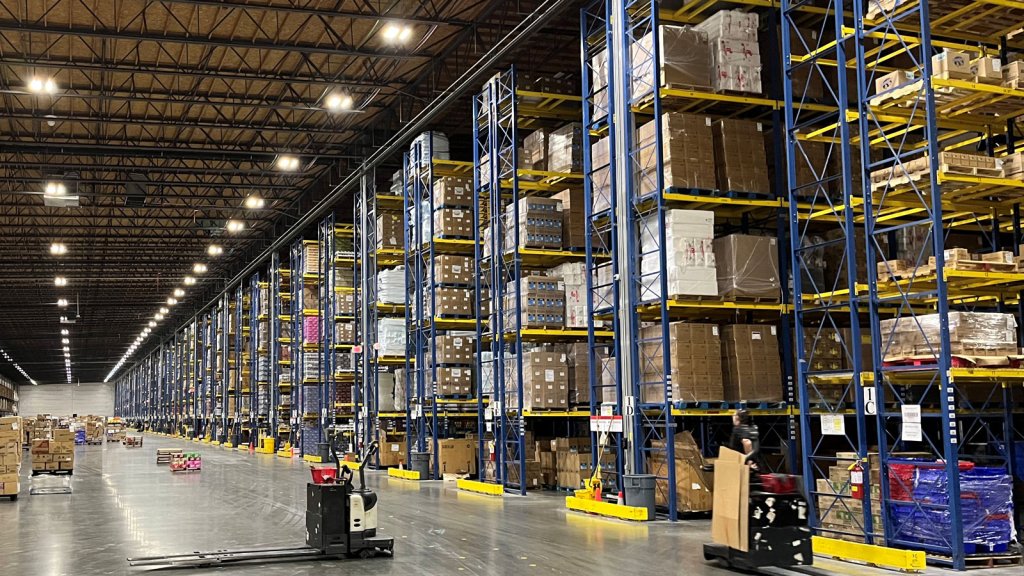
Warehouse capacity can become another major constraint as beverage operations expand. Adding SKUs or carrying more inventory may gradually consume reserve storage, pick locations, staging areas, and other valuable floor space. Eventually, distributors may consider a building expansion or an entirely new facility. Before taking that step, it is worth understanding whether the existing cube is being used effectively.
Automated storage and retrieval systems, high-density storage solutions, pallet-handling technologies, and other automation strategies can help an operation use vertical space and storage density differently than conventional approaches. That does not mean automation will always eliminate the need for additional space. But evaluating it before committing to expansion can reveal alternatives you might otherwise overlook.
Don’t Wait Until Capacity Becomes a Crisis
One of the biggest mistakes distributors can make is waiting until an operation is already at its limit before considering what comes next. Automation projects require planning. Data needs to be analyzed. Processes need to be evaluated. Technologies must be compared. A business case must be developed, and the selected solution must be designed, implemented, tested, and integrated into the existing operation.
If the project begins only after the warehouse consistently misses throughput targets or runs out of capacity, the organization may have fewer options and greater pressure to move quickly. Instead, automation planning should align with the company’s broader growth strategy.
If projections suggest the operation will reach a significant constraint in the next several years, that future requirement can become part of today’s planning. The goal is not necessarily to automate immediately. It is to understand what operational changes may eventually be required and when those changes need to begin.
Build the Business Case Around the Future Operation
The strongest automation business cases consider more than today’s operating costs. A distributor might be able to handle current demand manually, for example, but doing so at substantially higher volumes could require additional employees, overtime, equipment, or warehouse space.
That makes the real comparison less about automation versus today’s operation and more about automation versus what the operation would otherwise need to become. When evaluating potential investments, distributors should consider questions such as:
What will our volume look like in three to five years?
Growth projections provide context for determining whether today’s processes can scale.
Where will we hit capacity first?
Storage, picking, replenishment, staging, shipping, and labor may all reach their practical limits at different times.
What happens if we do nothing?
The cost of additional labor, leased space, building expansion, equipment, overtime, or service issues should be part of the comparison.
How much flexibility do we need?
An automation strategy should account for changes in volume, SKU mix, order profiles, customer requirements, and future business conditions.
Answering these questions helps shift the automation discussion from a technology purchase to a long-term operational strategy.
So, When Is the Right Time to Automate?
No universal volume, SKU count, or warehouse size tells a beverage distributor it is time to automate. The right time comes when business demands approach the practical limits of the current operation and projections indicate those pressures will continue. For some distributors, labor availability may be the catalyst. For others, it might be storage density, throughput, order complexity, service requirements, or limited room to expand.
The important part is recognizing those signals before they become urgent problems. A thoughtful automation strategy starts by understanding where the operation is today, where the business is heading, and what needs to change to bridge the gap.
Plan for the Operation You’re Growing Into
Automation should support the business’s direction, not simply address the biggest problem in the warehouse today.
KPI Solutions works with beverage distributors to evaluate operations, identify constraints, model future requirements, and determine where automation can provide the greatest operational and financial value. Whether the right answer is automation, process improvements, facility changes, or a combination of strategies, early planning gives distributors more flexibility in preparing for growth.
Categories (tags):