Why the Software Layer Now Decides the Outcome in an Automated Warehouse

The boundaries between warehouse management systems, warehouse control systems, and warehouse execution systems were never clean, and they’re getting blurrier. WMS vendors are extending downward into execution logic. WCS vendors are building upward into workflow management. Newer platforms pitch a single layer that absorbs all three.
It’s tempting to read this as a category war. That framing misses the point. The labels matter less than the capabilities underneath them. The real question is whether your software can bridge the gap between a system that tracks inventory and equipment that moves it in real time, at the pace automation demands.
That gap is the whole story. A WMS knows what should happen, but it has no visibility into what’s actually happening in the moment: a backed-up conveyor zone, a robot pulled offline, a pick station falling behind. It only knows the plan. A WCS controls the equipment, not the workflow that flows across it. WES exists to manage the distance between the plan and reality, continuously, in the time it takes for conditions to change. It isn’t a new category for its own sake. It exists because the gap is real, the cost of leaving it unaddressed is measurable, and neither WMS nor WCS was built to own it.
Why Investment is Accelerating Now
Three pressures are driving it, and they reinforce one another:
- Labor: the structural gap between available workers and operational demand has widened, so companies automate not just to cut cost but because the headcount isn’t there.
- Complexity: adding a goods-to-person system or a fleet of AMRs raises coordination requirements significantly, and AI is now entering at every layer of the stack, which only raises the stakes for getting the architecture right.
- The economics of getting it wrong: a poorly orchestrated automated facility can perform worse than a manual one. Executives who approved seven-figure automation capex are now asking hard questions about software as the decision that determines whether the whole investment holds together.
As Gartner has noted, rising automation forces companies to shift management practices from a focus on people to a focus on automation; a shift that requires software infrastructure most operations don’t have yet.
What Automation Actually Changed
In a manual warehouse, software is a record-keeping and tasking tool. In an automated one, it has to be a real-time decision engine. For decades the standard was mechanized hardware running rule-based controls, then visibility, dashboards and monitoring. The shift happening now is intelligent orchestration: software that doesn’t just show you what’s happening but coordinates work across every system and resource at once, reprioritizing as conditions shift. That’s not what legacy WMS or WCS platforms were built to do.
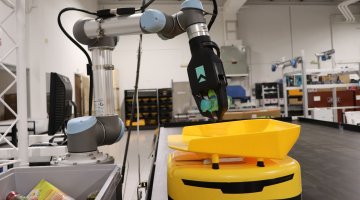
Most buyers underestimate this. They focus on the robotics and the conveyors and treat software as secondary then go live and discover that orchestration is where performance is won or lost. The hardware does what the software tells it to. If the software isn’t making good decisions in real time, the hardware just executes bad decisions faster.

Before You Choose
Know where you stand today: build an honest picture of your current automation footprint before evaluating anything. Find out where the orchestration logic actually sits. Some platforms describe execution but really run static rules set at implementation. Interrogate the integration model, because your new system has to work with the WMS, conveyors, and equipment vendors you already have. And don’t enter a selection without a long-term automation strategy; if you don’t have one, make defining it part of the process.
The Gap that Breaks Implementations is Organizational
The most preventable failures aren’t technical. IT owns the software decision, operations owns the floor, the vendor owns the equipment, finance approved the budget, and no one owns the seam between them, which is exactly where value gets lost. The companies that get this right treat it as a cross-functional initiative from day one, with IT, operations, finance, and cybersecurity at the table before a vendor is selected. Each holds part of the picture, and the goal isn’t to deliver automation, it’s to deliver business value. A well-orchestrated execution layer creates the capacity to take on more volume and scale without adding headcount proportionally. That’s the conversation finance needs to be part of from the start.
Where We’ve Placed Our Bet
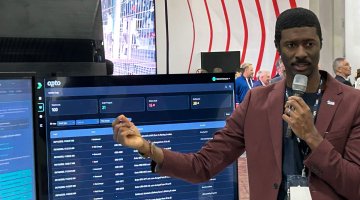
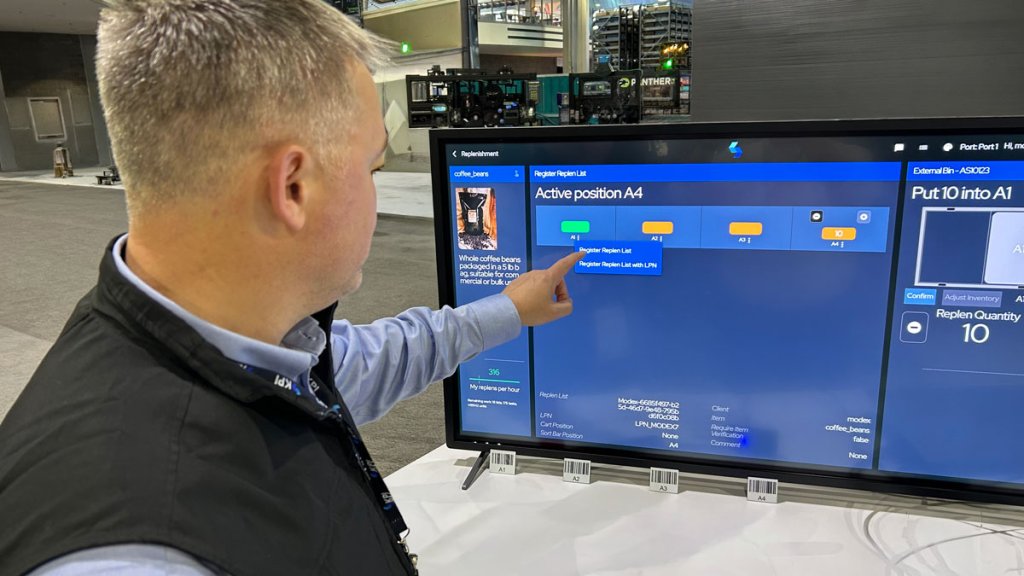
This is the problem we built Opto™ WES to address. The distinction we keep coming back to is the difference between software that observes and software that orchestrates. Plenty of systems can show you the state of the floor; far fewer are built to make continuous decisions across people, mobile robots, and fixed automation and reprioritize work as conditions change. We designed Opto WES to live in that orchestration layer; to manage the distance between the plan and reality rather than just report on it. We also made a deliberate choice to be vendor-neutral on integration. Most facilities aren’t ripping everything out, so Opto WES is built to work across an existing WMS, older conveyors, and a mixed fleet of equipment vendors. Pairing that integration breadth with orchestration depth is where we think the durable advantage sits, and it shows up in results.
The Point
The companies that get the most out of these systems understand that the software is not the finish line. It’s the infrastructure that makes everything else possible. That distinction sounds simple. It isn’t.
Categories (tags):