Cold Storage Optimization: How Racking Impacts Energy Efficiency

Managing a temperature-controlled facility is one of the most demanding tasks in the logistics industry. The intersection of rising energy costs and stricter environmental regulations has made energy efficiency a top priority for cold storage operators. Unlike a standard dry warehouse, every cubic foot of air in a cold room represents a recurring expense.
The choice of racking system is not merely a question of capacity; it is a direct driver of the utility budget. By selecting a racking configuration that maximizes density and optimizes airflow, a facility can significantly reduce the amount of energy required to maintain its cold chain.
Maximizing Density to Increase Thermal Mass
In a refrigerated or frozen environment, the primary goal is to maintain a consistent temperature for the stored product. An empty or sparsely populated cold room is much more difficult and expensive to cool than a densely packed one. It comes down to the principle of thermal mass: when a room is filled with frozen pallets, the pallets themselves act as a massive thermal battery, helping maintain a stable temperature.
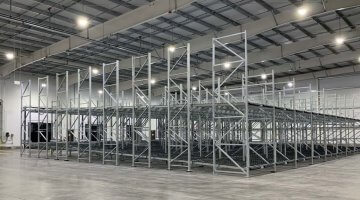
High-density racking systems, such as double-deep or pushback racks, allow a facility to pack more pallets into a smaller footprint. By reducing the amount of open-air space that needs to be refrigerated, you improve the energy efficiency of the entire system.
A densely packed room is also more resilient to temperature fluctuations caused by door openings or mechanical issues. When the racking system is designed to hold the maximum number of pallets within a given volume, the cooling equipment does not have to work as hard to compensate for empty space, resulting in lower monthly energy bills.
Optimizing Airflow and Temperature Uniformity
While density is important, it must be balanced with the need for proper airflow. If a cold room is packed so tightly that air cannot circulate, warehouse operators risk creating hot spots where temperatures exceed the required threshold. This risk can lead to product spoilage or a failure to meet safety standards.
The racking system design must allow chilled air to move around the pallets to ensure uniform temperature throughout the room.
Professional racking design for cold storage accounts for the location of cooling units and airflow direction. Features such as open-structure uprights and strategic spacing between pallet positions help facilitate air flow. Ensuring that air reaches every corner of the storage prevents the cooling units from overworking to compensate for blocked airflow.
The balance between high-capacity storage and efficient airflow is essential for minimizing energy consumption while maintaining the integrity of the cold chain.
Reducing Infiltration and Heat Gain
Every time a warehouse door opens, warm air from the loading dock or the outside environment enters the cold room. Heat gain is one of the biggest challenges in cold storage management.
High-density racking can help mitigate this issue by reducing the number of aisles leading to the doors. When the facility layout is optimized to minimize travel distance between the rack and the dock, the time the doors remain open is reduced.
Furthermore, a more compact racking layout reduces the overall building footprint. A smaller building has less surface area exposed to the outside environment, which naturally reduces the amount of heat that can seep through the walls and roof.
A company can often operate with a smaller facility by investing in a racking system that prioritizes cube utilization. In doing so, they result in substantial savings on construction and long-term refrigeration costs.
Impact of Racking Choice on Operational Efficiency
Operational speed also affects energy efficiency. When an operator can quickly find and retrieve a pallet, they spend less time in the cold room.
From a safety standpoint, this approach is especially important for human operators who require specialized gear and frequent breaks when working in sub-zero temperatures. A racking system that supports fast, accurate picking helps keep warehouse doors closed more often.
Systems like double-deep racking provide a good balance of density and accessibility, enabling rapid movement of high-volume SKUs. When the racking logic aligns with the product’s movement, the entire facility runs more smoothly.
Reduced “touches” and faster turnaround times mean the refrigeration system can maintain a more consistent state without the constant disruption from heavy traffic and open doors. Efficiency in storage directly translates into efficiency in energy use.
Sustainable Design and Compliance
Companies are increasingly required to report on their carbon footprint and their energy reduction efforts. For cold storage operators, the racking system is a key part of this sustainability story. By creating a facility designed for maximum energy efficiency, cold storage distribution centers can meet environmental targets while also improving brand reputation.
Modern racking materials are also being designed with sustainability in mind. Using high-quality, recyclable steel and ensuring that the racking components are durable enough to last for decades reduces the facility’s environmental impact throughout its lifecycle.
When a storage system is designed to be both efficient and long-lasting, it serves as a foundation for a truly green cold storage operation.
Integrating Technology with Structural Solutions
The future of cold storage energy optimization involves integrating smart building management systems with high-density racking. Sensors can monitor temperature and airflow at various levels of the rack, providing real-time data that allows the refrigeration system to adjust its output based on current occupancy.
When this data is used in conjunction with a well-engineered racking layout, the potential for energy savings is maximized.
Choosing the right racking partner is essential for navigating these complex requirements. A partner who understands the unique physics of cold environments can deliver a design that balances storage capacity and energy performance.
By focusing on the long-term operational costs rather than just the initial price of the steel, a warehouse manager can build a facility that is both cost-effective and environmentally responsible.
Building a More Efficient Cold Chain
Cold storage operators must use every tool at their disposal to manage costs. The racking system is one of the most powerful levers for improving energy efficiency. Focusing on thermal mass, airflow, and density allows facilities to achieve significant reductions in utility expenses while maintaining the highest product safety standards.
A strategic approach to storage design ensures your cold room is prepared for future energy challenges. We understand the specific pressures of temperature-controlled logistics through engineered storage solutions that help our partners optimize space and reduce energy consumption.
If you are ready to improve the efficiency of your cold storage facility, our team is available to discuss your goals.
Contact our team today to explore high-density racking options for cold storage warehouses.