The Warehouse of Tomorrow: Why Execution Software Is Becoming More Important
For years, conversations about the warehouse of the future centered heavily on hardware. Which processes would become automated? How many robots would operate inside a distribution center? Which new storage, picking, or transportation technologies would reshape fulfillment?
Those questions still matter, but another layer of the warehouse is becoming just as important: the software that coordinates everything. As warehouses become ecosystems of people, robotics, fixed automation, enterprise systems, and operational data, the challenge is no longer simply deciding what to automate. Organizations also have to determine how a growing mix of technologies will work together as priorities and operating conditions change.
That shift places warehouse execution software (WES) in an increasingly important position. Looking ahead, the ability to integrate technologies, orchestrate work, and adapt execution in real time may be as important as the capabilities of any individual automation system.
Tomorrow’s Warehouse Will Be More Heterogeneous
Warehouse automation rarely arrives all at once. Companies typically automate in phases based on changing volumes, labor conditions, service requirements, available capital, and the problems they need to solve at a given time. A facility may implement an AS/RS in one project, add AMRs later, upgrade sortation several years later, and introduce new picking technologies as its order profile evolves.
The result is a heterogeneous environment composed of technologies from different vendors, generations, and architectures. This is not necessarily a weakness. In fact, it can let organizations select technologies well suited to specific processes. The challenge is ensuring that the growing automation portfolio does not become a collection of disconnected systems that are difficult to coordinate or change.
Interoperability therefore becomes an important part of long-term automation strategy. Organizations need an architecture that lets them introduce new technologies without rebuilding the entire software environment whenever the automation mix changes. A technology-neutral execution layer can support that flexibility by separating higher-level execution decisions from the individual systems carrying out the work.
The Conversation Will Shift from Automation Adoption to Automation Utilization
As automation becomes more common, organizations will increasingly need to ask a different question: are we getting everything we can from the automation we already own?
Buying another technology is not always the answer to a capacity problem. A warehouse may already have enough theoretical capacity to meet its requirements yet still struggle to access it consistently. Storage equipment may have additional throughput available while robotic resources sit idle during portions of a shift. Picking capacity may exist, but work may not reach the right stations at the right time. One process may accelerate only to create a queue somewhere else.
Execution software can help organizations understand and manage those relationships. Rather than optimizing each subsystem independently, a WES can evaluate current warehouse conditions and help coordinate tasks across available resources. The emphasis shifts from simply automating more processes to using automation more intelligently as one connected operation.
Real-Time Execution Will Matter More as Complexity Grows
Planning will always be essential to warehouse operations, but even a well-designed plan begins to encounter change as soon as a shift starts. Orders are added or reprioritized, equipment becomes temporarily unavailable, labor fluctuates, inventory arrives later than expected, and urgent work enters the queue. The more processes are connected, the more ways those changes can affect downstream activity.
This is why real-time execution is becoming more important. A WES can help translate business priorities into work based on what is happening on the floor, not solely on what was expected. That may include adjusting task priorities, balancing workloads, accounting for resource availability, or changing work releases to prevent congestion elsewhere in the operation.
The goal is not to replace planning. It is to give the warehouse the ability to adapt when reality differs from the plan. As fulfillment environments become faster and more automated, that ability can help prevent small changes from becoming larger operational disruptions.
AI Will Expand the Possibilities, but the Digital Foundation Comes First
Artificial intelligence will remain an important part of the warehouse technology conversation as the new year approaches. Potential applications include predicting bottlenecks, identifying unusual equipment behavior, improving resource allocation, supporting predictive maintenance, and recognizing operating patterns that are difficult for people to identify manually.
Those possibilities are meaningful, but AI cannot compensate for a fundamentally disconnected operation. If operational data remains fragmented, systems cannot communicate reliably, or different processes are working from inconsistent priorities, adding more intelligence does not automatically solve the underlying coordination problem. The quality of the execution environment matters because it provides the context through which more advanced analytics and AI can influence real operations.
With a strong foundation, however, the opportunities become much more compelling. An intelligent execution layer could help identify congestion before throughput falls, recognize that equipment performance is gradually deteriorating, anticipate that an upcoming order profile will create a constraint, or recommend a different resource allocation before a problem develops. The long-term opportunity is to shift portions of warehouse execution from reactive to increasingly predictive decision-making.
Visibility Will Become an Operational Requirement
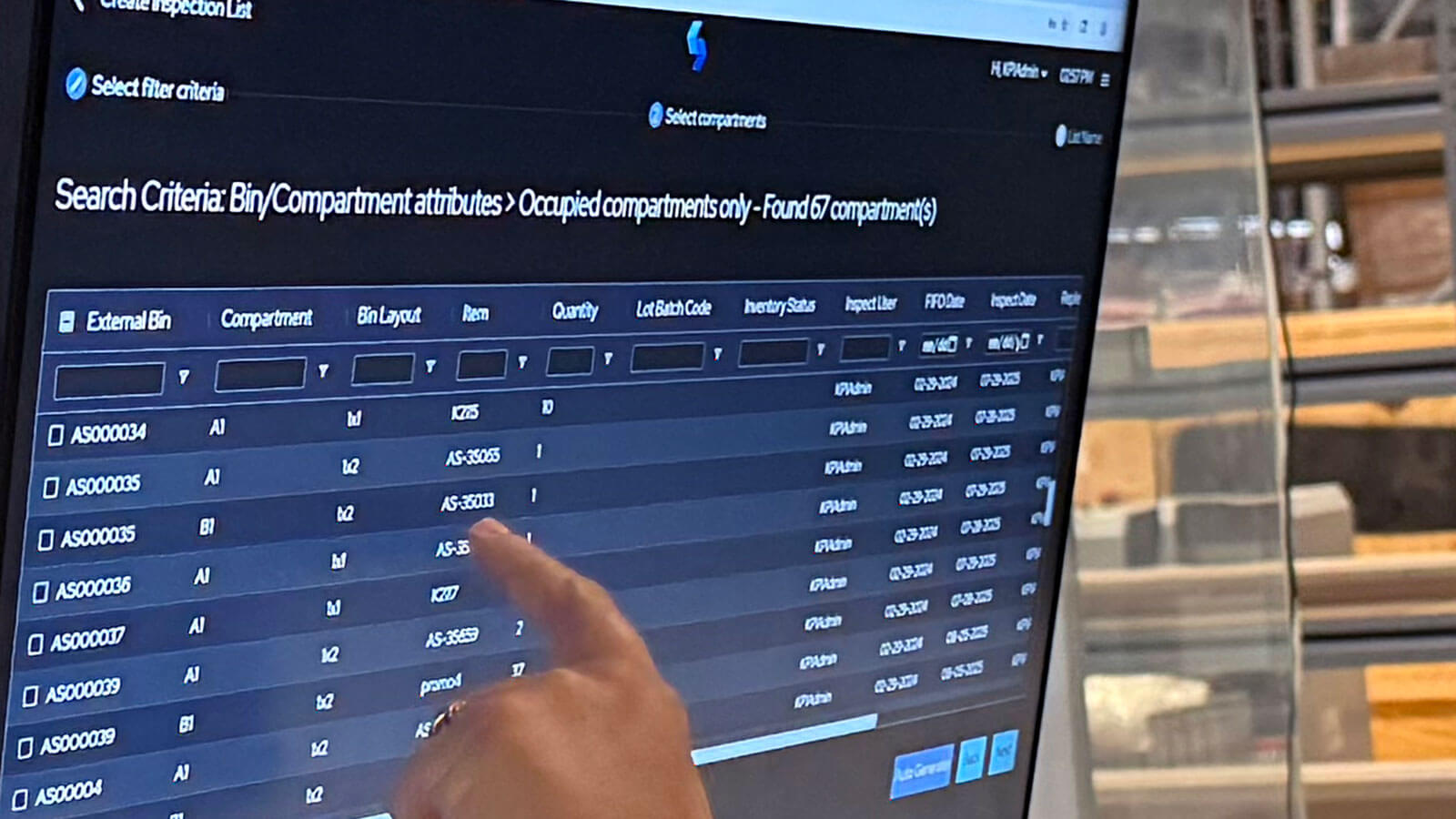
Greater automation also increases the need for visibility. Managers cannot effectively coordinate an operation if they can only see isolated pieces. Equipment-level dashboards help explain individual systems, but warehouse leaders also need to understand how work queues, resource utilization, equipment status, and shifting priorities interact across the entire fulfillment process.
Execution data can provide that broader operational context. When an order falls behind, the key question isn’t just whether a particular machine is running. Teams need to understand where work is waiting, which resources are constrained, whether priorities have shifted, and what downstream effect a decision may create. Better visibility can support faster operational decisions while also giving IT and leadership a more consistent picture of warehouse performance.
Flexibility May Be the Most Important Capability to Build For
Predicting exactly what a warehouse will look like five or ten years from now is difficult. Robotics will evolve, new automation technologies will emerge, customer expectations will change, and fulfillment networks will keep shifting. Designing a technology stack around a single view of that future can create unnecessary constraints.
A more durable strategy is to build for flexibility. Technology-neutral integration can make it easier to incorporate new systems. Dynamic orchestration can help the operation use changing resources more effectively. Continued software innovation can allow the execution layer to evolve without requiring every automation decision to be made years in advance.
This does not mean warehouses need to pursue every new technology. It means they can create an architecture that gives them more freedom to adopt the technologies that make sense when the business case is there.
Building the Warehouse of Tomorrow
The warehouse of tomorrow will not be defined by a single robot, storage technology, or software platform. Its performance will increasingly depend on how well different resources work together and how quickly the operation can respond when conditions change.
Organizations planning their next phase of automation should therefore look beyond individual equipment investments and evaluate the architecture connecting the entire operation. Warehouse execution software can play an important role by connecting enterprise planning with real-time execution, coordinating existing automation, and creating a more adaptable foundation for future technology.
That is the direction behind KPI Solutions’ Opto™ WES. Through innovation, orchestration, and integration, the platform provides a connected execution layer that can evolve alongside the warehouse rather than lock the operation into a single automation path.
As you plan your warehouse strategy, look beyond what technology you plan to add and consider how every part of the operation will work together.
Categories (tags):