Scroll Down

In today’s fast-paced distribution centers, efficiency is everything. Warehouse leaders are under constant pressure to reduce costs, increase throughput, and adapt to shifting demand. While advanced robotics and powered conveyors often grab the spotlight, one of the most cost-effective and dependable solutions remains the gravity conveyor.
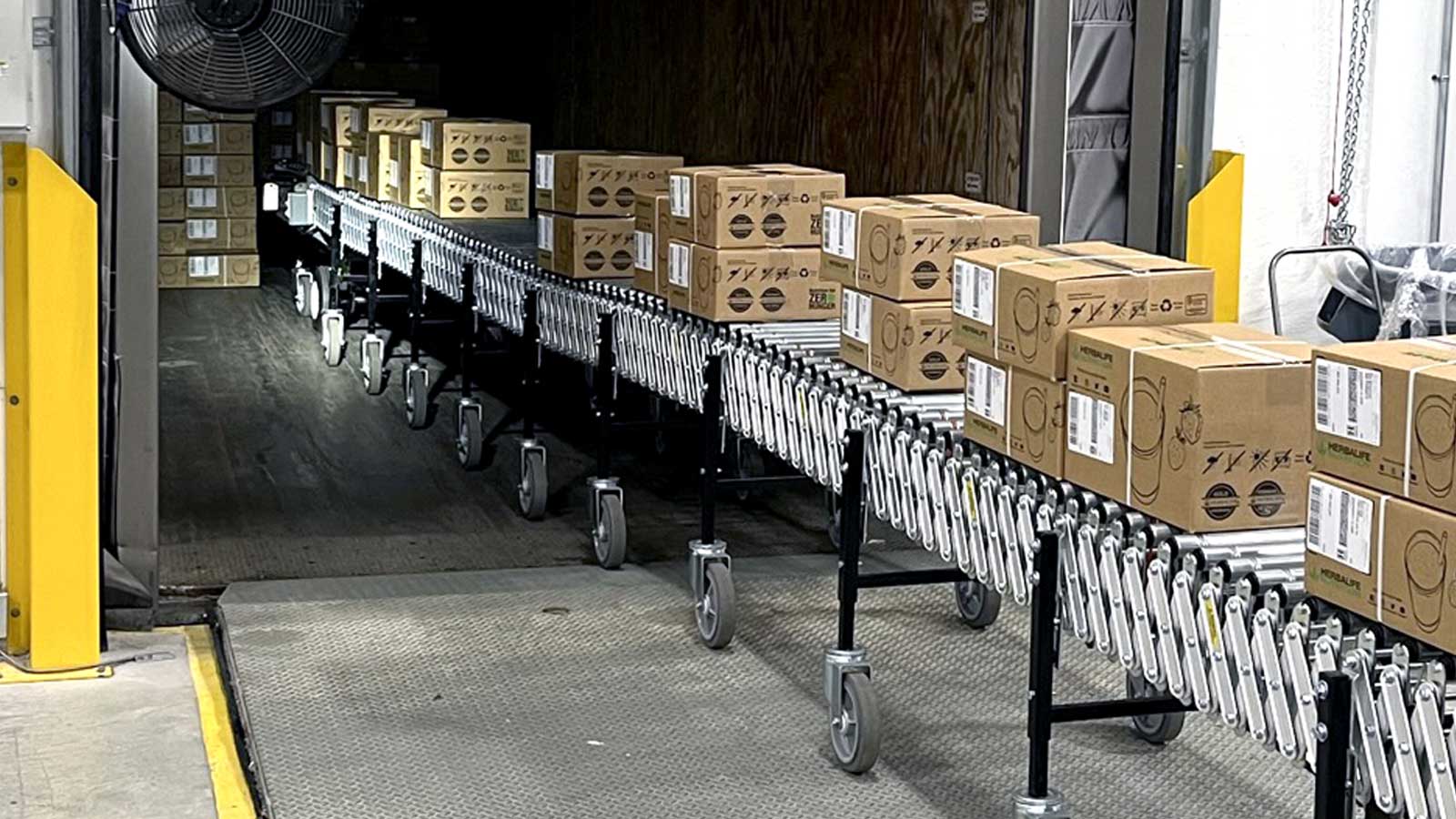
Gravity conveyors move products by harnessing the natural force of gravity, rather than relying on motors or electricity. These systems transport goods on rollers or skatewheels, making them ideal for low-throughput zones, manual operations, staging areas, and flexible layouts. For distribution centers that require a lean and reliable way to keep products moving, gravity conveyors deliver unmatched simplicity at a fraction of the cost of powered systems.
How Gravity Conveyors Work
At their core, gravity conveyors are non-powered material handling systems that rely on a slight decline or manual force to keep goods rolling. Products move smoothly along rollers or skate wheels, requiring little effort and no energy. Because there are no motors or controls to maintain, they are among the lowest-cost and most durable conveyor options available.
There are two main types of gravity conveyors used in distribution centers:
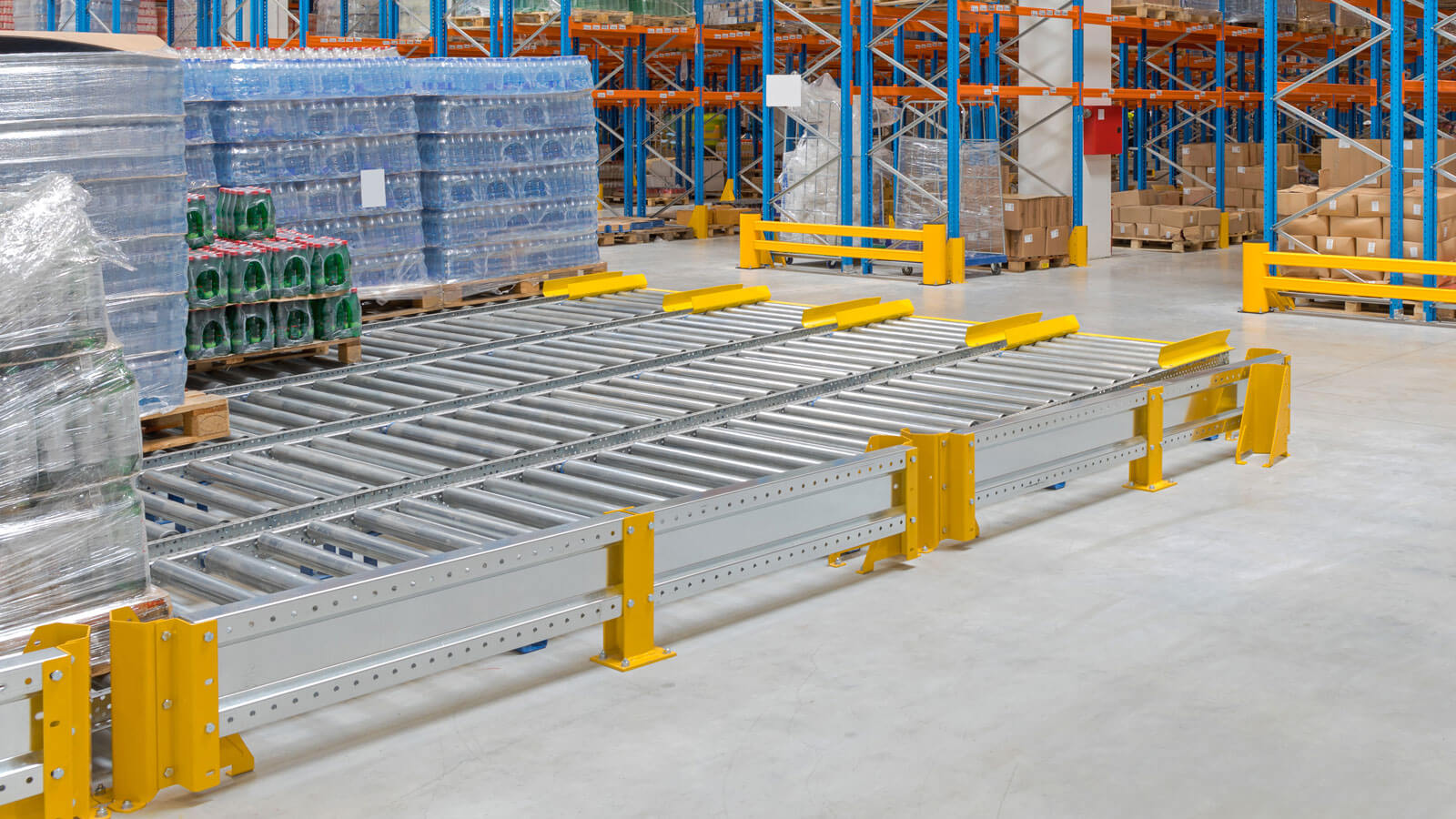
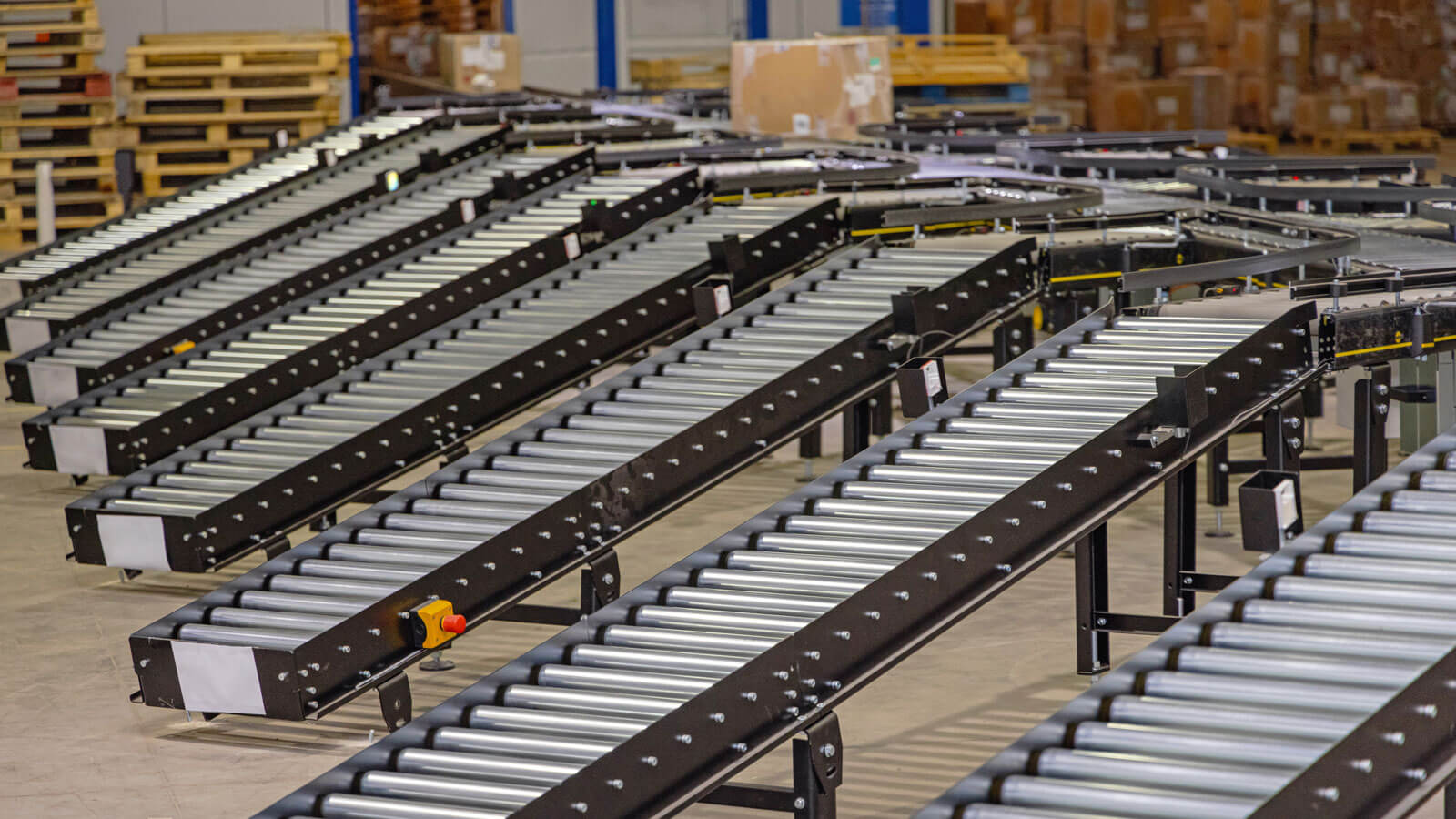
- Gravity Roller Conveyors – Best for larger, heavier loads such as totes, cartons, or cases. Rollers provide even support and a smooth ride.
- Gravity Skate-wheel Conveyors – Ideal for lighter packages or irregular items. Skate-wheels allow for curves and tighter layouts.
Both options can be used independently or integrated into hybrid systems that combine powered and gravity conveyors for a balanced material handling strategy.
Applications in Distribution Centers
Gravity conveyors are commonly found throughout distribution centers due to their versatility and ease of reconfiguration. Common applications include:
- Staging outbound shipments – A simple way to accumulate product at dock doors before loading.
- Feeding packing stations – Efficiently moving items to employees without costly automation.
- Returns processing – Handling unpredictable inbound product with low-cost flexibility.
- Buffer zones and accumulation lanes – Creating temporary holding areas that require no additional power.
- Pick-and-pack modules – Supporting manual picking while minimizing walking and lifting.
Because gravity conveyors are modular, they can be installed quickly, extended as needs grow, or relocated if workflows change, a critical advantage in today’s dynamic supply chain environment.
Benefits of Gravity Conveyors
Distribution center managers turn to gravity conveyors for good reason. Key advantages include:
- Low Cost – No motors, drives, or controls means minimal upfront investment and no ongoing energy bills.
- Flexible Layouts – Quick installation and reconfiguration allow you to adapt as operations scale.
- Minimal Maintenance – Fewer components result in less downtime and lower service costs.
- Energy Savings – 100% gravity-powered, these conveyors reduce your facility’s overall energy footprint.
- Scalability – Add, remove, or relocate sections as business needs change.
- Perfect for Manual Zones – Packing, inspection, staging, and low-throughput areas thrive with gravity solutions.
When Gravity Conveyors Make the Most Sense
Gravity conveyors are not designed to replace every powered system, but they shine when short-distance movement, staging, or flexibility is required. They are efficient in:
- Areas where automation isn’t necessary.
- Facilities operating under budget constraints but needing a reliable flow.
- Temporary or seasonal layouts requiring rapid setup.
- Low-throughput or manual work zones where simplicity matters.
For operations seeking to cut costs, reduce energy consumption, and streamline warehouse operations without compromising performance, gravity conveyors are often the ideal solution.
KPI Solutions: Designing Simplicity That Performs
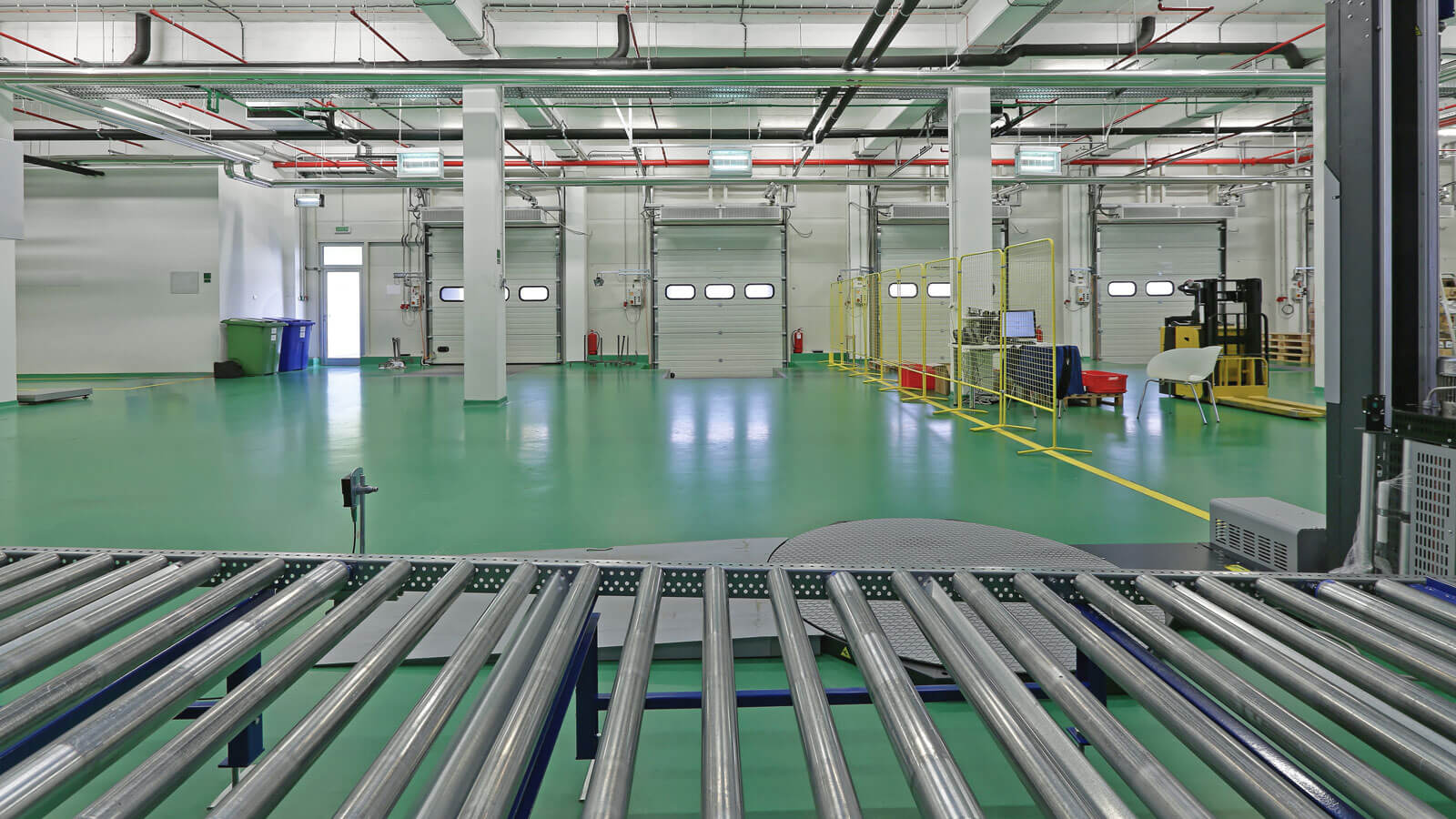
We know that even the simplest conveyor system must be strategically designed to support your facility’s unique needs. Our experts evaluate your space, throughput requirements, and labor model to create a gravity conveyor layout that maximizes efficiency.
Whether you’re building a new distribution center or optimizing an existing one, KPI ensures your gravity roller conveyors or skate-wheel conveyors are positioned to reduce bottlenecks, streamline staging, and improve worker productivity.
Beyond stand-alone systems, KPI specializes in hybrid conveyor solutions, blending gravity and powered technologies into seamless, cost-effective material handling strategies. From consulting and design through installation and support, we deliver conveyor systems that work smarter, not harder.
Let’s Simplify Your Material Handling
Seeking a proven, cost-effective method to enhance warehouse efficiency? Gravity conveyors remain one of the most reliable tools in material handling. At KPI Solutions, we help you leverage gravity conveyor systems to support your team, scale with your business, and keep your distribution center running smoothly.