Five Things to Consider Before Implementing Warehouse Automation
Buyers and users of warehouse automation have told us it’s becoming less of a choice and more of an imperative to automate their facilities.
Based on learnings from interviews with companies that have already automated their facilities, we’ve compiled a list of 5 key components for companies considering automation.
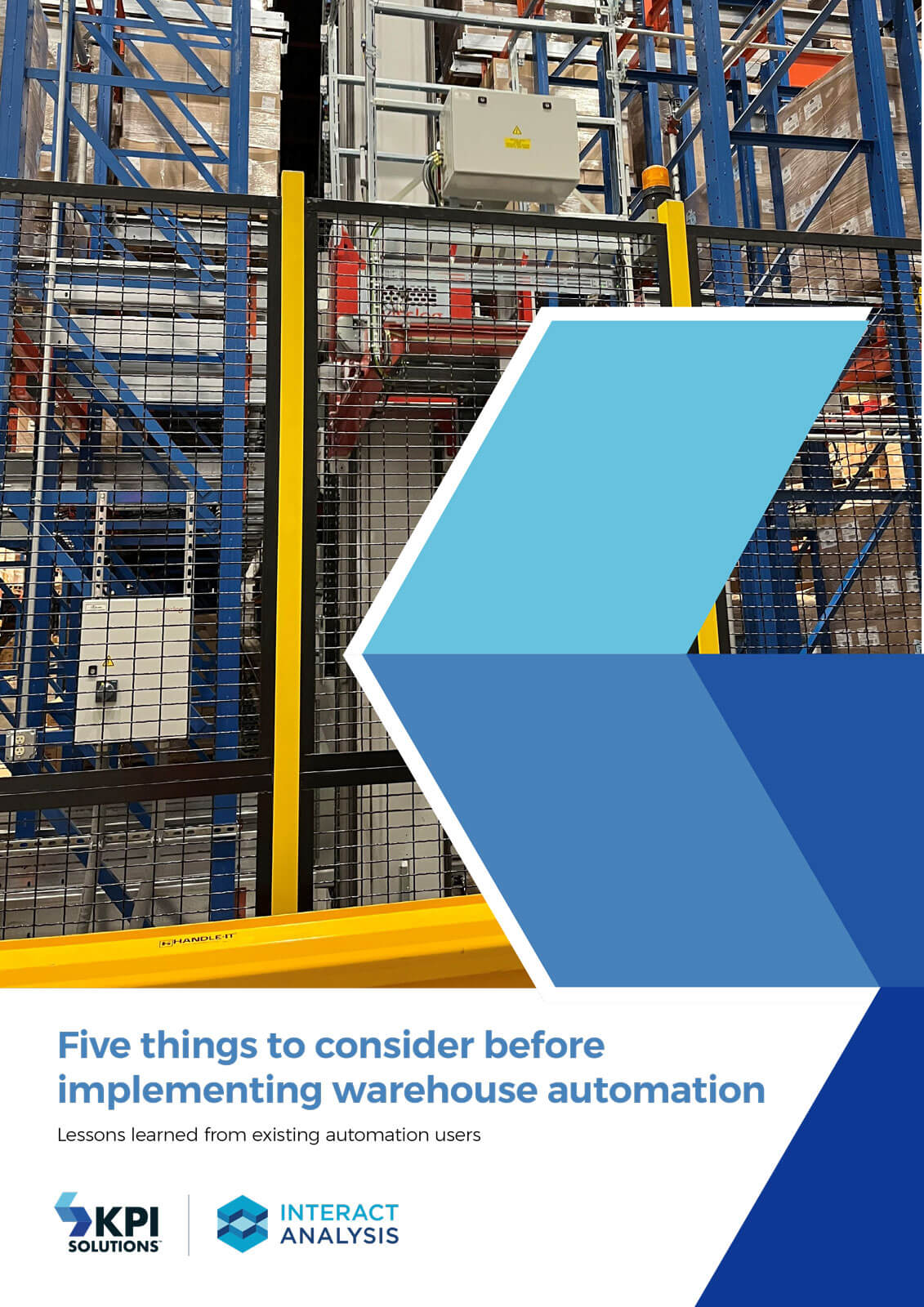
In a dynamic supply chain environment, warehouse automation has shifted from being an optional upgrade to becoming a strategic necessity.
Rising labor costs, ongoing labor shortages, and customer demands for faster, more accurate order fulfillment are forcing operations leaders to rethink traditional manual processes. The right automation strategy can boost throughput, reduce costs, and increase resilience—but only if implemented thoughtfully.
This page outlines five critical considerations every business should evaluate before moving forward with an automation investment. These insights provide a high-level roadmap, and our free white paper offers a deeper dive into practical steps, case studies, and ROI analysis.
Why Warehouse Automation Matters
Automation technology is no longer limited to large, capital-intensive projects. Flexible solutions such as Autonomous Mobile Robots (AMRs), Automated Storage and Retrieval Systems (AS/RS), robotic picking, and shuttle systems can now be scaled to match both large and mid-sized distribution operations.
By automating repetitive or labor-intensive tasks, companies can:
- Increase fulfillment speed and accuracy
- Reduce dependency on hard-to-find warehouse labor
- Improve safety and ergonomics for employees
- Optimize use of space and energy
- Build resilience to demand fluctuations
Yet, the success of an automation project depends not just on technology selection, but on how well it aligns with business goals, processes, and long-term strategy.
Define Clear Objectives
Every automation journey should start with clarity. What specific outcomes are you seeking—reduced labor cost, improved order accuracy, increased throughput, or scalable capacity for future growth?
Setting measurable objectives early helps evaluate solutions objectively and ensures executive buy-in. Without clear goals, it’s easy to chase the latest technology trend without addressing the real operational pain points.
Conduct a Thorough Operational Assessment
Before investing in automation, take a detailed look at your current operations to ensure you understand the full scope of your needs.
- Where are the actual bottlenecks—receiving, putaway, picking, packing, or shipping?
- What is your error rate, your throughput requirement, and your seasonal labor profile?
A data-driven warehouse assessment provides the baseline for improvement and highlights where automation can deliver the most significant impact. Skipping this step can lead to misaligned investments that fail to generate the expected ROI.
Ensure System Integration and Scalability
Even the most advanced automation solution must integrate seamlessly with your Warehouse Management System (WMS), Warehouse Execution System (WES), and other IT platforms. Scalability is equally important—today’s requirements may look very different in five years.
Select partners and platforms that enable modular growth, phased implementation, and flexibility to adapt as your product mix or customer expectations change.
Evaluate the Right Technology Fit
No single automation technology is a silver bullet. The optimal solution often involves a blend of technologies, including conveyors, shuttle systems, AMRs, and robotic picking.
A technology-neutral evaluation ensures that the chosen system aligns with your business model, rather than forcing operations to adapt to the equipment.
Key factors to consider include throughput capacity, SKU profile, storage density, maintenance requirements, and long-term support.
Plan for Budget, ROI, and Change Management
An automation project is more than a capital expenditure—it’s an organizational transformation that extends beyond the upfront investment—factor in the total cost of ownership, including maintenance, software, and workforce training.
Build ROI models that account for labor savings, increased capacity, and reduced error costs. Just as important, create a change-management plan: prepare your workforce, provide training, and establish ongoing support to ensure adoption and long-term success.
We understand that automation is not a one-time purchase but a long-term commitment.
Our LifeTime Services program offers ongoing support, resident maintenance, spare parts, and continuous optimization to keep your system running at peak performance. Coupled with our consulting expertise, this ensures your automation investment continues to deliver value year after year.
Ready to Take the Next Step?
Implementing automation can be transformative—but only if you begin with the proper roadmap. By focusing on these five considerations, you can reduce risk, accelerate ROI, and build a more resilient supply chain.
Connect with KPI Solutions today to schedule a warehouse assessment and discover how the right automation strategy can position your business for future success.