

Opto™ Connect
Powers Seamless Integration
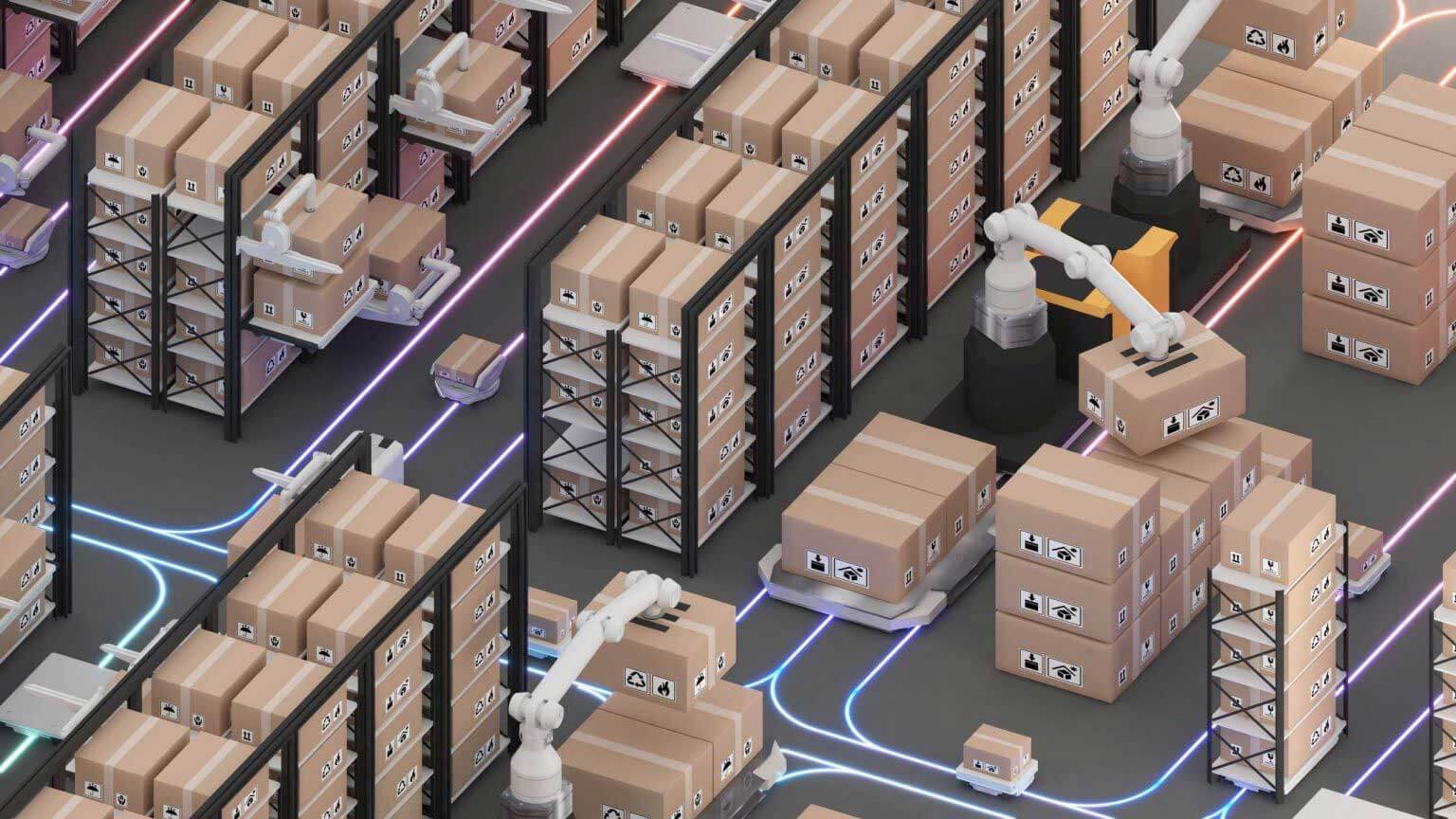
Providing a secure communication layer between the KPI WES, warehouse automation technology, and your WMS or ERP, Opto offers pre-built host integrations for a “plug and play” model. Use your existing data formats to interact with KPI systems.
Our technology-neutral solution offers you one point of connection to any upstream system and to downstream automated materials handling, integrating seamlessly and simplifying security and maintenance.
Opto Connect’s
Module-Driven Approach
- Host Interfaces: ERP and WMS systems provide inventory and order management to WES systems. Connect enables generic interfaces to external systems such as Blue Yonder, Koerber/HighJump, Manhattan Associates, SAP, etc.
- Automated Sortation Systems: Sortation is the process of identifying items on a conveyor system and diverting them to a warehouse location using bar codes, RFID, or sensors. Companies use automated sortation systems for receiving, picking, packing, and shipping.
- Automated Storage and Retrieval Systems (AS/RS): AS/RS is a form of Goods-to-Person (GTP) technology that includes automated equipment such as pallet shuttles, tote shuttles, and mini-loaders to store and retrieve materials or products. High-volume warehouse applications with space constraints tend to utilize AS/RS systems.
- Automated Guided Vehicles: This class of mechanized automation has minimal onboard computing power. These vehicles use QR codes, magnetic strips, wires, or sensors to navigate a fixed path through the warehouse. AGVs are best suited for warehouse environments without complex layouts, much human traffic, and space constraints.
- Autonomous Mobile Robots: More flexible than AGVs, AMRs use GPS systems to create effective routes through a specific warehouse. They use advanced laser guidance systems to detect obstacles, so AMRs can safely navigate dynamic warehouse layouts and environments with human traffic.
- Pick-to-Light and Put-to-Light Systems: These systems use mobile barcode scanning devices synced to digital light displays to direct warehouse pickers where to place or pick up selected items. They can dramatically reduce walking and searching time and increase order fulfillment accuracy in high-volume facilities.
- Voice Picking and Tasking: The use of voice-directed warehouse procedures, also known as pick-by-voice, uses speech recognition software and mobile headsets. Voice systems create optimized pick paths to direct warehouse workers where to pick or put away a product. Voice systems can be customized for the individual user and eliminate the need for handheld devices like RF scanners, so pickers can concentrate on their task with improved safety and efficiency.
Opto Connect provides one point of connection to any upstream system and to downstream automated materials handling, integrating seamlessly and simplifying security and maintenance.
The Value of Opto Connect
Benefits include:
-
 Faster delivery and implementation
-
 Simplified upgrades and maintenance
-
 Enhanced flexibility with its modular approach
-
 Increased reliability using your standard data formats
Frequently Asked Questions (FAQ)
1) What is a Warehouse Execution System (WES)?
A Warehouse Execution System (WES) is software that coordinates and optimizes warehouse operations in real time by managing the flow of inventory, orders, and tasks across both manual processes and automated equipment. Unlike a Warehouse Management System (WMS) that focuses on inventory tracking and order management, a WES serves as the intelligence layer, determining the optimal execution strategy—deciding which equipment to use, when to use it, and how to balance workloads for maximum efficiency.
A WES continuously monitors warehouse conditions, equipment availability, and order priorities to make dynamic decisions that improve throughput and reduce bottlenecks. For facilities with automation, a WES is essential for orchestrating conveyors, sorters, AS/RS systems, and robotic equipment to work together seamlessly.
2) When does a warehouse need a WES?
Your warehouse likely needs a WES if you’re experiencing any of these scenarios: you’ve invested in automation (sorters, conveyors, AS/RS, AMRs) that needs intelligent coordination; your WMS alone can’t optimize task execution across multiple zones or technologies; you’re facing throughput bottlenecks during peak periods; or you need better visibility into real-time equipment performance and task status.
Warehouses processing 10,000+ orders daily, facilities with mixed automation and manual processes, and operations planning to scale automation over time typically see the greatest ROI from WES implementation. The system becomes especially valuable in environments where order profiles vary significantly—mixing e-commerce, retail, and wholesale—requiring dynamic allocation of resources.
3) What’s the difference between WMS, WES, and WCS?
A Warehouse Management System (WMS) manages inventory, orders, and labor at the transactional level—tracking what you have, where it is, and what needs to ship. A Warehouse Execution System (WES) sits between the WMS and equipment, making real-time decisions about how to execute tasks most efficiently across available resources. A Warehouse Control System (WCS) provides low-level control of individual automated equipment, such as a specific conveyor or sorter.
Think of it this way: your WMS says, “pick these 500 orders,” your WES determines the optimal picking strategy, zone allocation, and equipment utilization to complete those orders efficiently, and your WCS controls the motor speeds and routing logic for each piece of equipment.
4) How does a WES integrate with existing WMS and ERP systems?
WES integration with host systems requires exchanging inventory positions, order details, task confirmations, and status updates—often in real time. The challenge is that every WMS and ERP uses different data formats, communication protocols, and timing requirements, making custom integration expensive and time-consuming.
Modern integration approaches use pre-built connectors that understand the specific data structures and business logic of major platforms like Blue Yonder, Manhattan Associates, SAP, Körber, and Oracle. These connectors translate between your host system’s native format and the WES, eliminating months of custom development.
5) How does a WES communicate with warehouse automation equipment?
A WES must exchange commands, status updates, and real-time data with diverse automation technologies—conveyors, sorters, AS/RS systems, robotic picking stations, AGVs, and AMRs—each using different communication protocols and data structures. Traditional approaches require custom integration for every device, creating maintenance nightmares as equipment is added or updated.
Effective automation communication requires the WES to send task assignments (what to pick, where to store, how to route), receive status confirmations (task complete, equipment fault, inventory position), and handle exception scenarios (jams, misreads, equipment offline). This data exchange happens continuously, often multiple times per second, for high-speed sortation systems.
6) What automation technologies can a WES control?
A modern WES should orchestrate the full spectrum of warehouse automation, including sortation systems (shoe sorters, tilt tray, cross-belt), AS/RS technologies (unit-load, mini-load, pallet shuttles, tote shuttles), automated guided vehicles (AGVs following fixed paths), autonomous mobile robots (AMRs with dynamic navigation), robotic picking systems (piece-picking arms, collaborative robots), and operator guidance technologies (pick-to-light, put-to-light, voice-directed picking).
The key is integration flexibility—your WES should work with automation from multiple vendors without requiring proprietary equipment. This prevents vendor lock-in and allows you to choose best-of-breed technologies for each function.
7) What does a typical ROI on a WES implementation look like?
The ROI calculation should consider labor savings, throughput improvements, error reduction, and automation optimization. Well-implemented WES typically delivers 15-30% productivity gains and can pay for itself within 18-36 months.
8) Can a WES scale as our warehouse automation grows?
Scalability is critical because warehouse automation is rarely deployed all at once—most facilities phase in new technologies over 3-7 years as budgets allow and needs evolve. Your WES architecture should accommodate adding new automation types, expanding to additional facilities, and increasing transaction volumes without requiring a complete system replacement.
Key scalability factors include modular integration (adding equipment shouldn’t require re-engineering existing connections), performance headroom (the system should handle 2-3x current transaction volumes), flexible licensing (costs should scale proportionally with growth), and upgrade paths (you should be able to adopt new WES features without disrupting operations).
9) How does a WES ensure reliable, secure communication across all warehouse systems?
Warehouse operations depend on continuous data flow between WMS/ERP systems, execution logic, and automation equipment. Any communication failure—whether due to security breaches, protocol mismatches, or network issues—can halt operations and cause costly downtime. Security is especially critical as warehouses become more connected and potential vulnerabilities increase. Reliable WES communication requires standardized protocols, redundant connections, real-time error detection, and secure authentication across all system interfaces.
The communication layer must handle varying data formats, manage network latency, queue messages during temporary outages, and protect against unauthorized access—all while maintaining sub-second response times for high-speed automation.